P
Loading blog...
Loading blog...
Losing a proposal to someone less qualified is frustrating. Losing it for a fixable reason is worse.
Amina Idris
Apr 10, 2026•4 min read
You know you could have done that project better than whoever won it. You have seen the final report. You were right.
But they won, and you did not. And the reason probably was not that your methodology was weaker. It was almost certainly something else entirely.
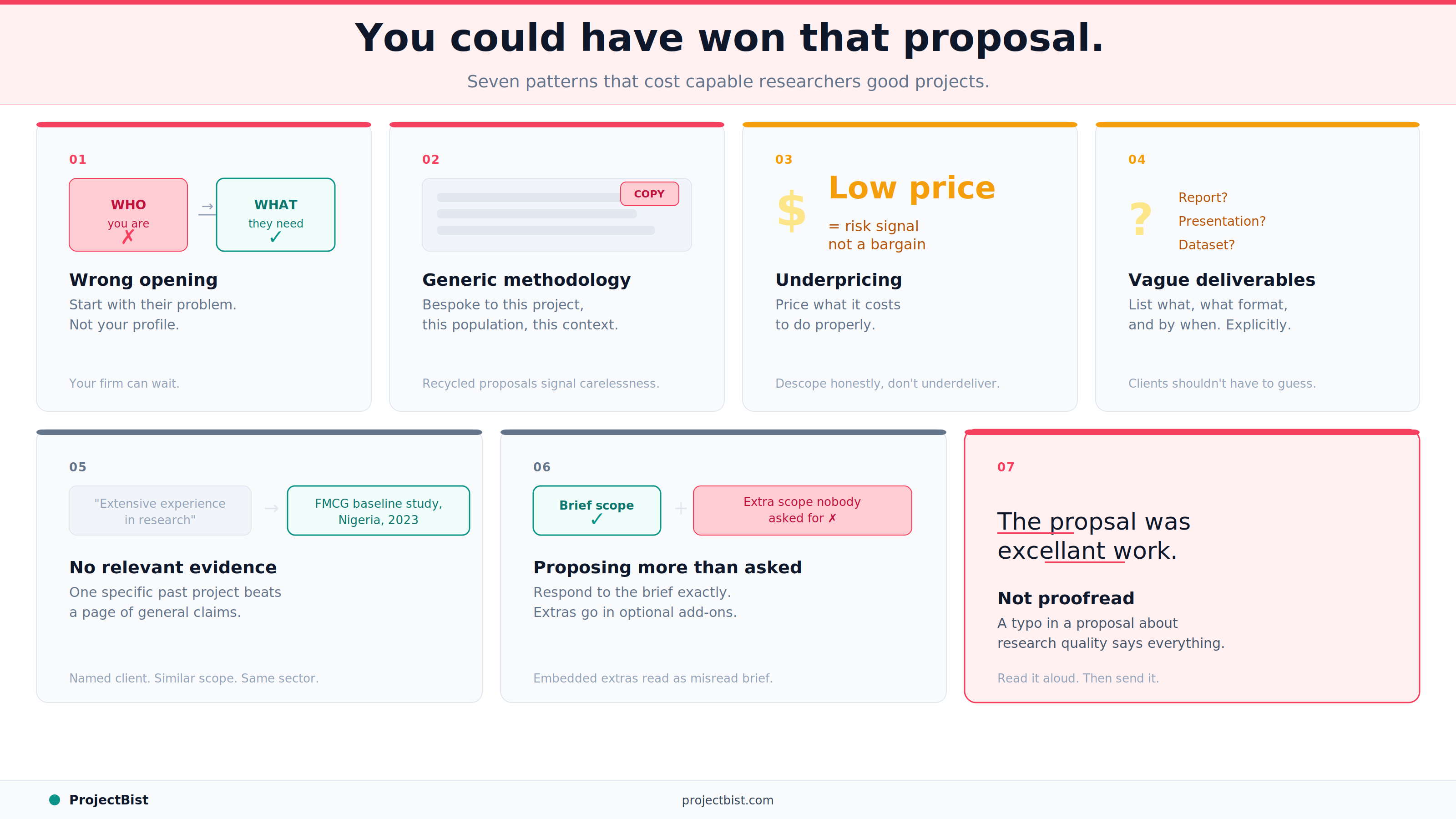
The most common opening mistake in a research proposal is an extended company profile or biography before addressing the client's problem. The client already knows who you are well enough to have invited your proposal. What they need to see in the first two paragraphs is that you understand their problem precisely.
Start by restating the research question or problem in your own words. Show that you read the brief carefully enough to understand not just what they asked but why they asked it. Everything about your firm can wait until after they are convinced you understand what they need.
A methodology section that reads like a textbook entry on qualitative or quantitative research is a red flag. It tells the client that the proposal was recycled from another project, or that the researcher does not yet understand this specific problem well enough to design a bespoke approach.
Every section of the methodology should reference this specific project: this population, this context, these research questions. If the client reads it and thinks it could have been written for a different client's brief, it needs to be rewritten.
Pricing significantly below market rate to secure a first engagement rarely works the way researchers hope. Experienced clients recognize abnormally low prices as a risk signal, not a bargain — it suggests the researcher either does not understand what the work involves or is planning to cut corners in delivery.
Price the work at what it costs to do properly. If budget is a genuine constraint, have an honest conversation about what can be descoped rather than delivering a full scope at a rate that makes it impossible to resource adequately.
Proposals that describe the research process extensively but are vague about the final product create anxiety for clients. What exactly will I receive at the end? Is it a written report? A presentation? A dataset? In what format? Of what length? By when?
List deliverables explicitly and specifically. If the final deliverable includes an executive summary, a full report, and a presentation deck, say so. If the data will be delivered in a specific format, specify it. Clients should not have to guess what they are buying.
'Extensive experience in research' is not evidence of relevant experience. Clients want to see that you have done something similar to what they need done. A one-paragraph description of a past project with similar scope, methodology, and sector, with the client named if possible, is far more persuasive than a general experience summary.
If you genuinely do not have a closely relevant past project, be honest about it and compensate by being exceptionally specific and credible in the methodology section. Do not pad the experience section with loosely related work and hope the client will not notice.
Researchers sometimes add scope, additional deliverables, or extra analytical components to demonstrate value. This usually backfires. It makes the proposal more expensive without the client having asked for the additional work, and it signals that the researcher either did not read the brief carefully or cannot stay within scope.
Respond to what was asked for. If you see a genuine gap in the brief that you think warrants additional scope, flag it explicitly as an optional add-on with separate pricing, not as something embedded in the base proposal.
A research proposal with typographical errors, inconsistent formatting, or grammatically awkward passages tells a client something about the quality of work they can expect in the final report. This is especially damaging for written deliverable proposals, where the writing in the proposal is the first sample of the researcher's written output.
Have someone who was not involved in writing the proposal review it before it is submitted. Read it aloud. Print it. The errors that survive screen review usually become obvious on paper.
How long should a research proposal be?
There is no universal rule, but most competitive research proposals fall between 8 and 20 pages. More important than length is density: every section should contain information the client needs to evaluate the proposal. Padding — repeating the brief back to the client, adding boilerplate methodology descriptions, or including unnecessary background — makes the proposal harder to evaluate, not easier.
Should I include a draft timeline in a proposal?
Yes, always. Clients need to know when they will have findings, not just how the research will be conducted. A clear timeline broken into phases (inception, data collection, analysis, reporting) with realistic durations signals project management competence and helps clients evaluate whether your approach is feasible within their decision-making timeline.
Should I follow up after submitting a proposal?
Yes, once. A brief email three to five days after submission confirming receipt and availability to answer questions is appropriate. Repeated follow-ups signal anxiety rather than confidence. If you have not heard back after two to three weeks, a single brief follow-up is reasonable.
Newsletter
Personalize your updates! Subscribe to ProjectBist's Newsletter and choose from the following categories.
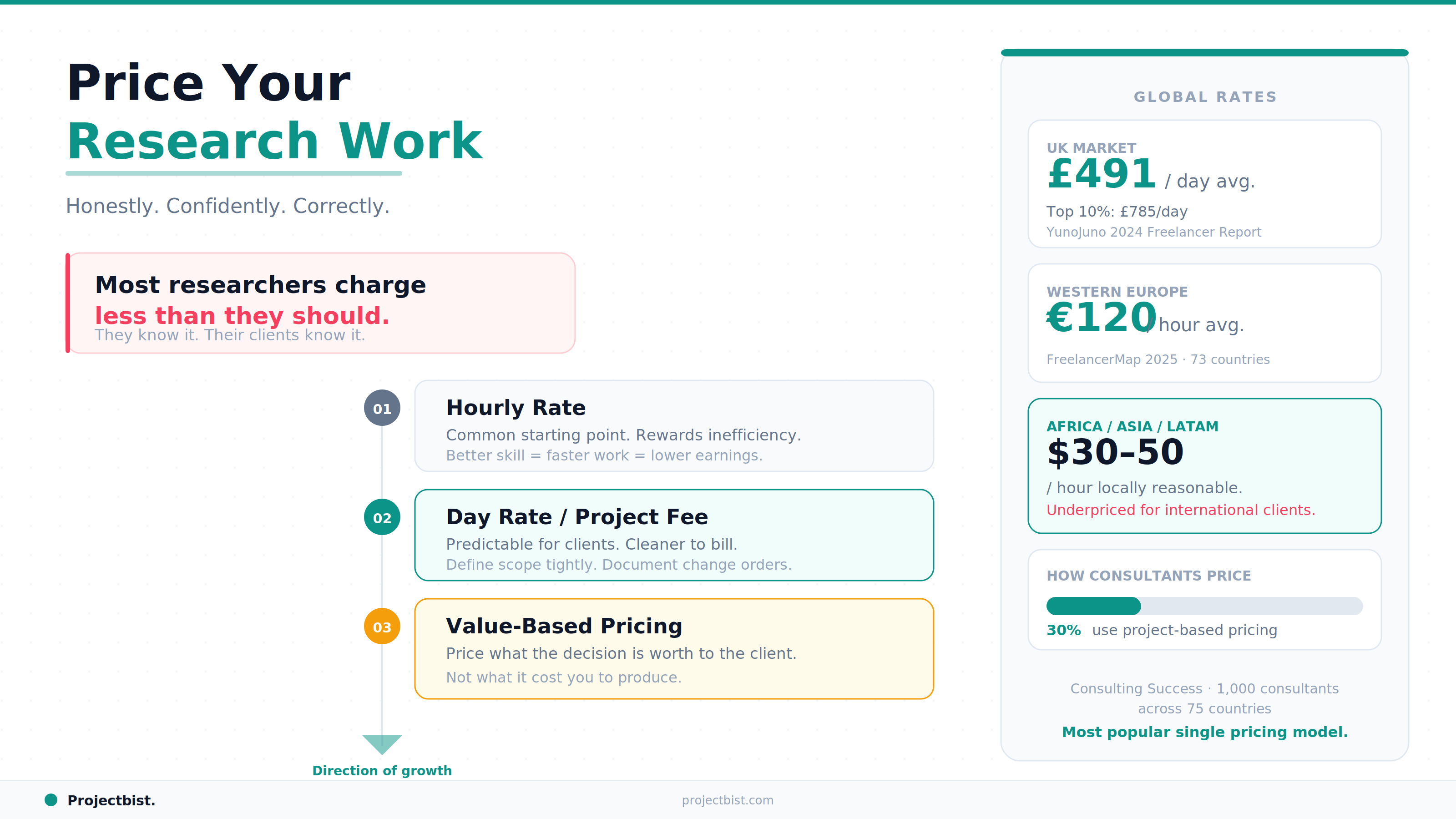
How to Price Your Research Consulting Services: The Honest Guide for Independent Researchers Globally
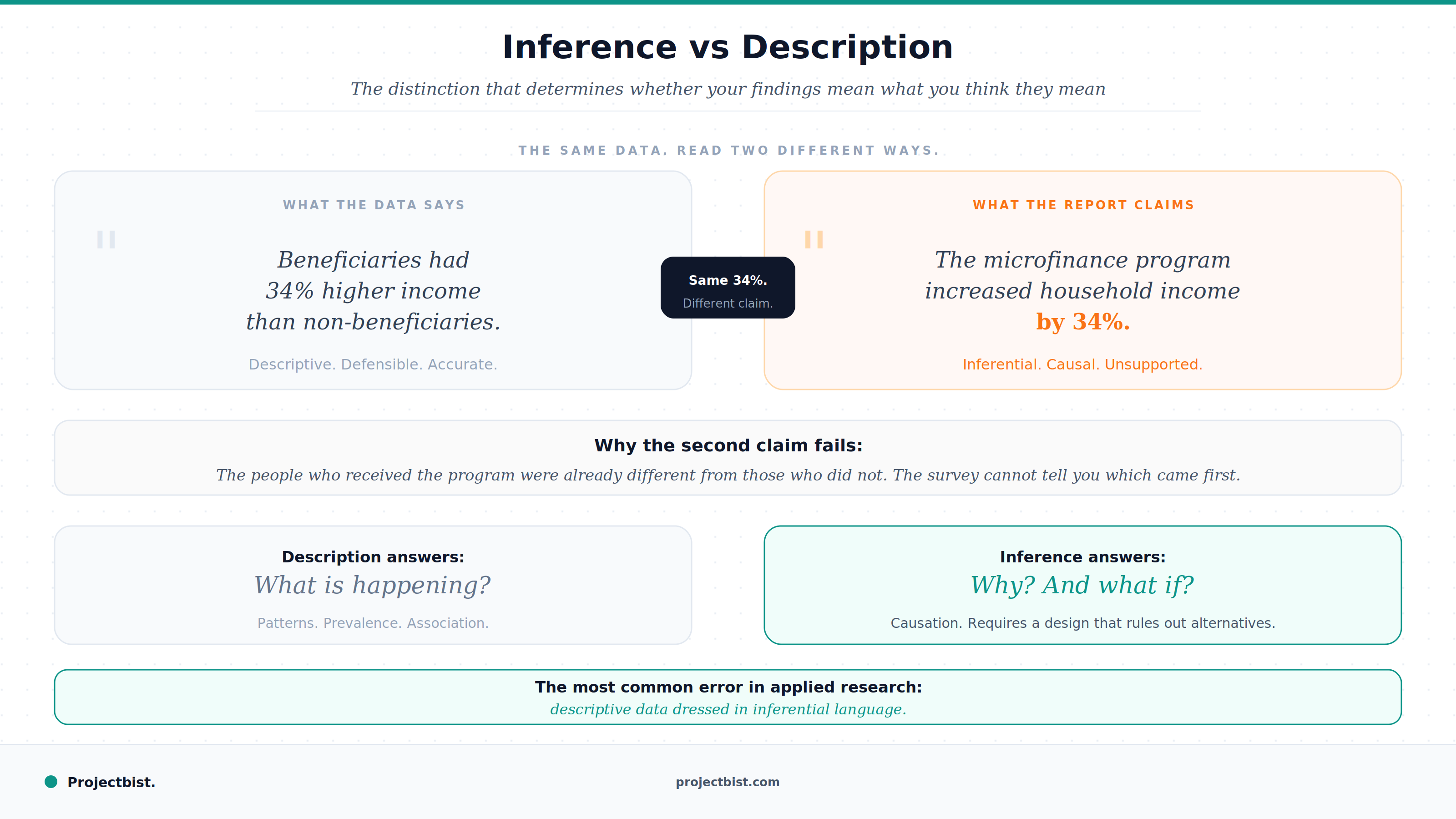
Inference vs Description: The Distinction That Quietly Determines Whether Your Research Findings Mean What You Think They Mean

Time Use Surveys: The Research Method That Makes Invisible Work Visible