P
Loading blog...
Loading blog...
Most research firms are technically excellent. The gap that costs them bids is almost never technical.
Jordan Blake
Apr 17, 2026•4 min read
There is a research firm in Accra that has done excellent work on livelihoods surveys, social protection evaluations, and community needs assessments for the past seven years. Their methodology is sound, their fieldwork teams are experienced, and their clients, the ones they have, are genuinely satisfied.
They bid for two or three projects a year. They win maybe one. Not because the others were better. Often because the decision was made before the bid was opened.
This is not unusual. And the firms that have figured out how to change it are not doing anything exotic.
Many procurement decisions in research, particularly in development, government, and corporate sectors, are made within a shortlist that existed before the RFP was formally issued. The issuing organization has already identified two or three firms they expect to shortlist. The open bid process is real, but it often confirms a predisposition rather than creating a level playing field.
The firms on that pre-existing shortlist got there through one of three routes: they were referred by someone the client already trusts, they appeared when the client searched for firms with the specific expertise they need, or they had a prior relationship with the client organization.
The firms that are not on the shortlist are almost never excluded because their methodology would have been inferior. They are excluded because they were unknown at the time the shortlist was formed.
The bid is often decided by who the client thought of before they wrote the RFP. That is the moment research firms need to be present for.
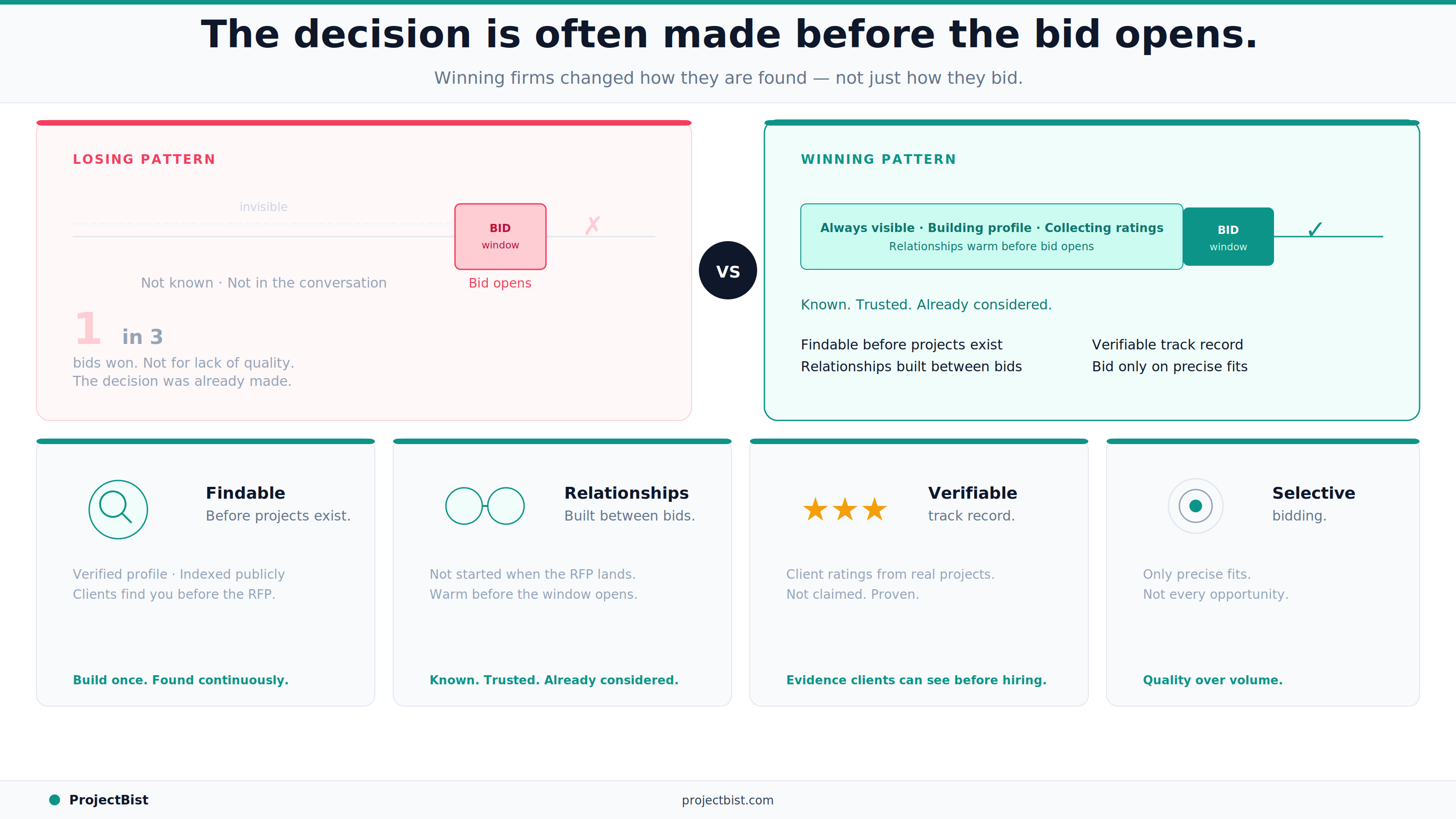
Firms that win consistently are visible in the places clients look before they issue an RFP. That means having a clear, specific online presence that describes not just what they do but what specific types of projects they are best at. It means having documented past work that can be found and evaluated. It means being present in the relevant professional networks in their sector.
A firm website that lists ten service areas with no specificity does less for findability than a profile that clearly states: we specialize in household welfare surveys and M&E evaluations for development programs in West Africa.
The firms that win competitive bids most reliably are the ones who were already in conversation with the client before the bid was issued. Not necessarily pitching. Just visible: attending relevant events, sharing relevant work, being present in professional communities where their target clients are active.
When an RFP is issued, these firms are not unknown quantities. They are familiar names whose competence the client has already started to form a view of.
Development sector clients in particular are under pressure to justify procurement decisions. A firm with documented past work, published reports, and client testimonials provides the social proof that supports a hiring decision under scrutiny. A firm with a polished website but no visible track record is harder to defend as a selection decision.
This is one of the structural advantages that a verified profile on a platform like ProjectBist provides. Documented project history, methodology specializations, and client ratings give clients the verifiable evidence they need to feel confident in a selection decision, not just the assurance that the firm seemed credible in a proposal.
Firms that bid for everything tend to develop generic proposals that win nothing. Firms that focus on opportunities that match their specific expertise invest more in each proposal, write with real specificity, and win a higher proportion of what they bid for.
Selectivity looks like discipline from the inside. From the client's perspective, it looks like expertise.
Business development in research is often treated as the thing that happens when there is no active project. The firms that grow consistently treat it as an ongoing, parallel activity: building the database of relationships, maintaining visibility in the right channels, and investing in the verifiable credentials that make each proposal easier to win.
The pipeline does not fill itself. But the firms who understand that the bid is decided by who the client already trusts spend less time on proposals and more time being trusted.
Newsletter
Personalize your updates! Subscribe to ProjectBist's Newsletter and choose from the following categories.
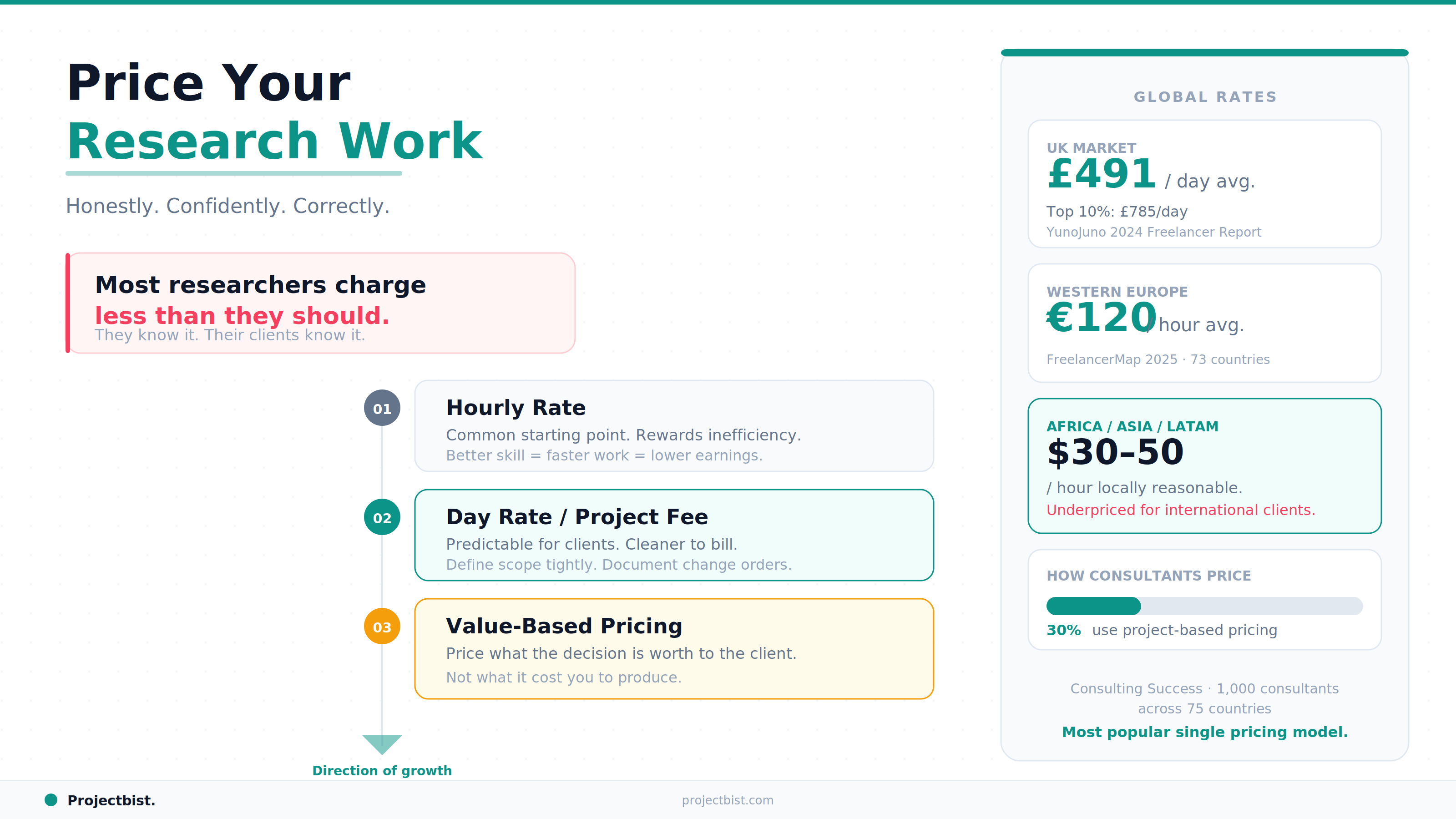
How to Price Your Research Consulting Services: The Honest Guide for Independent Researchers Globally
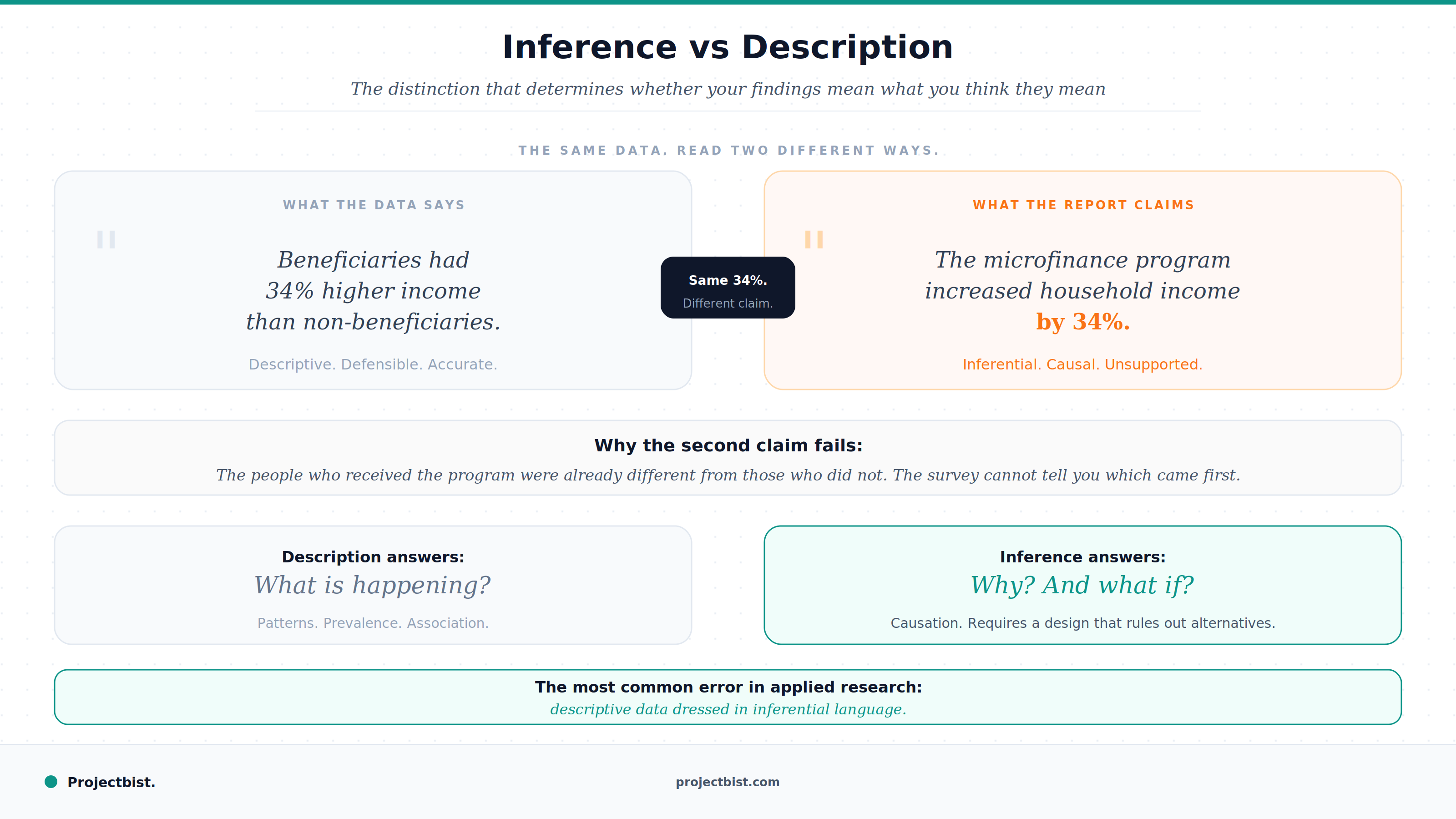
Inference vs Description: The Distinction That Quietly Determines Whether Your Research Findings Mean What You Think They Mean

Time Use Surveys: The Research Method That Makes Invisible Work Visible