P
Loading blog...
Loading blog...
Qualitative research is the most commonly misunderstood methodology in the research toolkit. These misunderstandings cost clients valuable insight and budget.
Jordan Blake
May 07, 2026•4 min read
A client receives a qualitative research report and immediately asks: but this is only 24 people. How can we make decisions based on that?
The answer is that they always were going to make decisions based on 24 people. The question was just not framed that way during the brief. The client expected qualitative research to function like a survey, and when it produced depth instead of statistical confidence, they felt they had received the wrong thing.
This is not a failure of the research. It is a failure of the brief. And it is far more common than it should be.
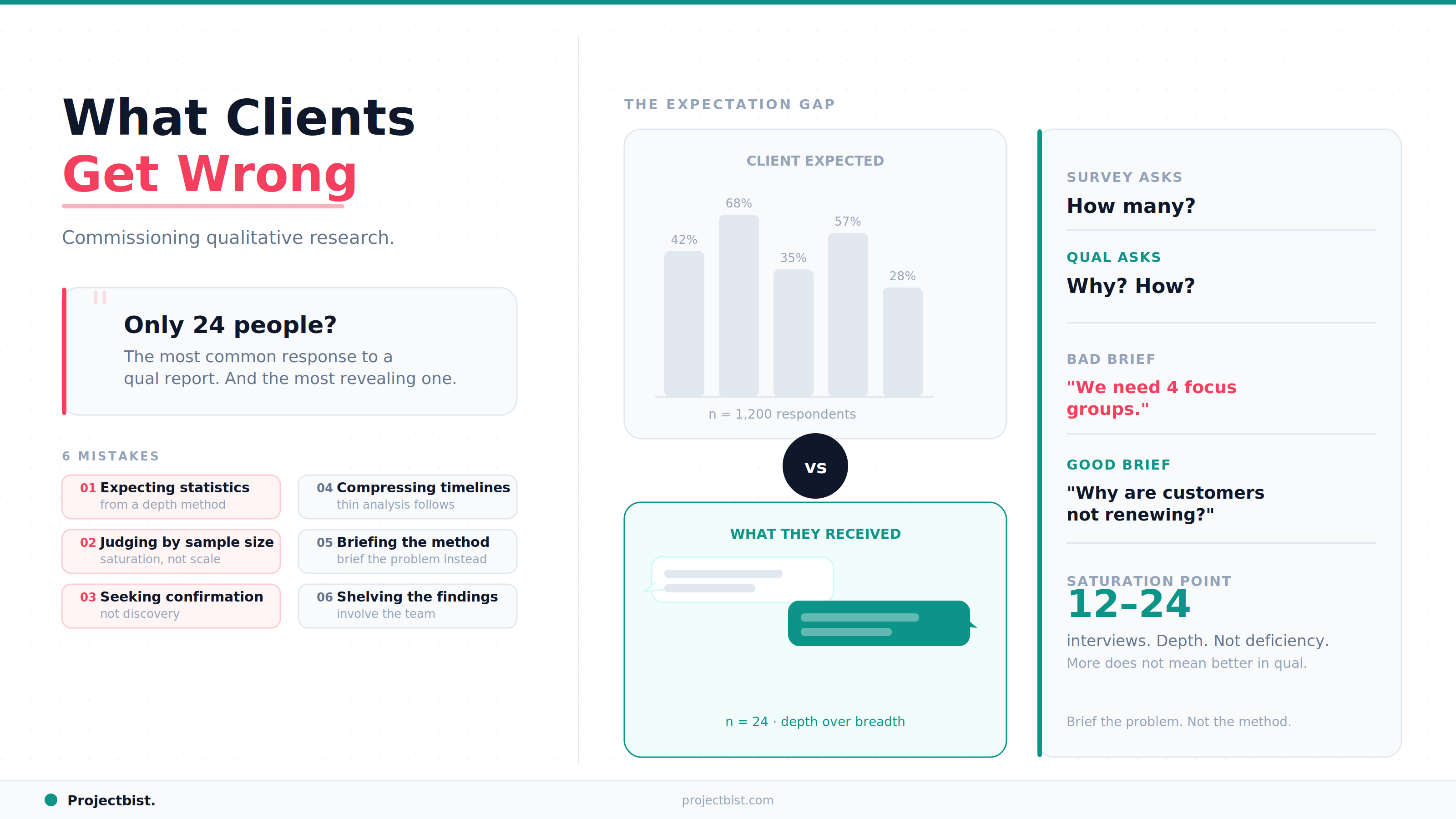
Qualitative research is not designed to produce statistically reliable estimates of how many people in a population hold a particular view. It is designed to understand why people hold views, how they make decisions, and what their experience of a topic or product is.
If you need to know that 68 percent of your target market has heard of your brand, that is a survey question. If you need to understand why those who have heard of it have the specific associations they do, that is a qualitative question. Both are valuable. They answer different questions.
Qualitative researchers regularly face pushback when clients see sample sizes of 12 to 24 respondents. The assumption is that more respondents means better research. In qualitative work, that assumption does not hold.
Qualitative samples reach thematic saturation: the point at which additional interviews stop producing new insight. Beyond that point, more interviews produce redundancy, not quality. A well-designed study of 15 respondents can produce richer, more actionable insight than a poorly designed study of 50.
Qualitative research commissioned to validate a decision already made is not research. It is confirmation-seeking. The most valuable qualitative research produces findings that challenge assumptions, surface unexpected barriers, and reveal user perspectives that the commissioning organization did not anticipate.
Clients who use qualitative research to learn something they did not already know get better return on their investment than those who use it to feel confident about something they already believe.
Qualitative research that tells you what you already think is not worth what you paid for it. Its value is in what it shows you that you had not considered.
Quality qualitative research requires time for recruitment of appropriate participants, designing and piloting the discussion guide, conducting interviews or sessions, transcribing and analyzing responses, and synthesizing findings into clear, accurate outputs. Each of these steps has a minimum viable time requirement.
Clients who compress qualitative timelines to two or three weeks for a multi-session study often receive technically completed work that is analytically thin, because the time for genuine iterative analysis was not available. Good qualitative analysis is not a finishing task. It is an ongoing process that runs alongside data collection.
Clients often commission qualitative research by specifying the method rather than the question. 'We need four focus groups' is a method brief. 'We need to understand why customers are not renewing their subscriptions despite high reported satisfaction' is a problem brief.
The method should be selected by the researcher based on the problem. Four focus groups may not be the right approach. Two focus groups and six in-depth interviews with churned customers might produce far more useful findings for the same budget.
A qualitative research report delivered to a client and then left on a shared drive is not completed research. Research findings need to be worked with: presented to the teams who will act on them, used as inputs to workshop discussions, tested against existing organizational knowledge.
The researchers who conducted the work are often the best people to facilitate that process. They have the contextual understanding of why specific findings matter. But clients rarely include researcher involvement in implementation in their initial scopes. Building that into the engagement from the start produces significantly more impact from the investment.
Newsletter
Personalize your updates! Subscribe to ProjectBist's Newsletter and choose from the following categories.
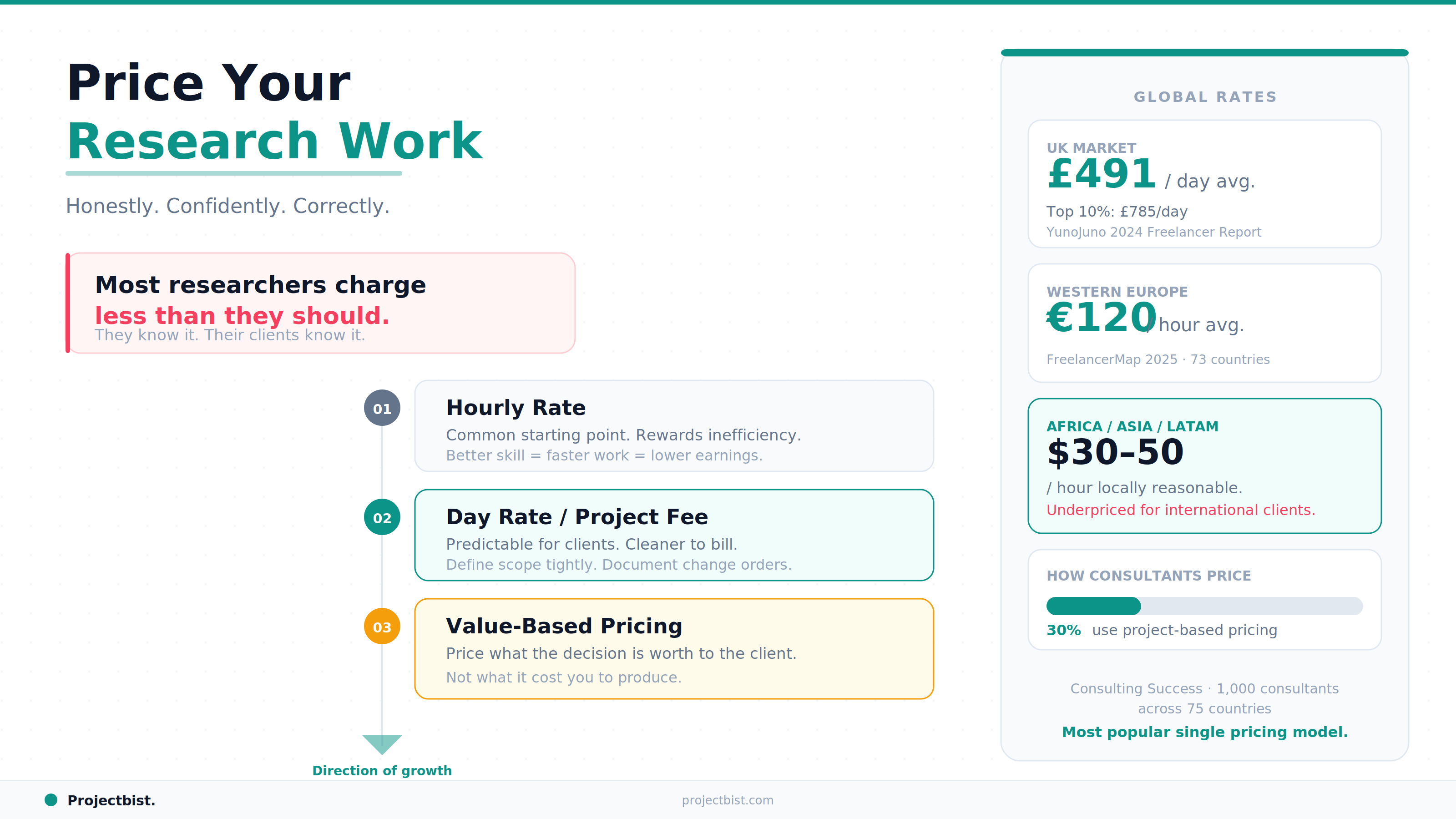
How to Price Your Research Consulting Services: The Honest Guide for Independent Researchers Globally
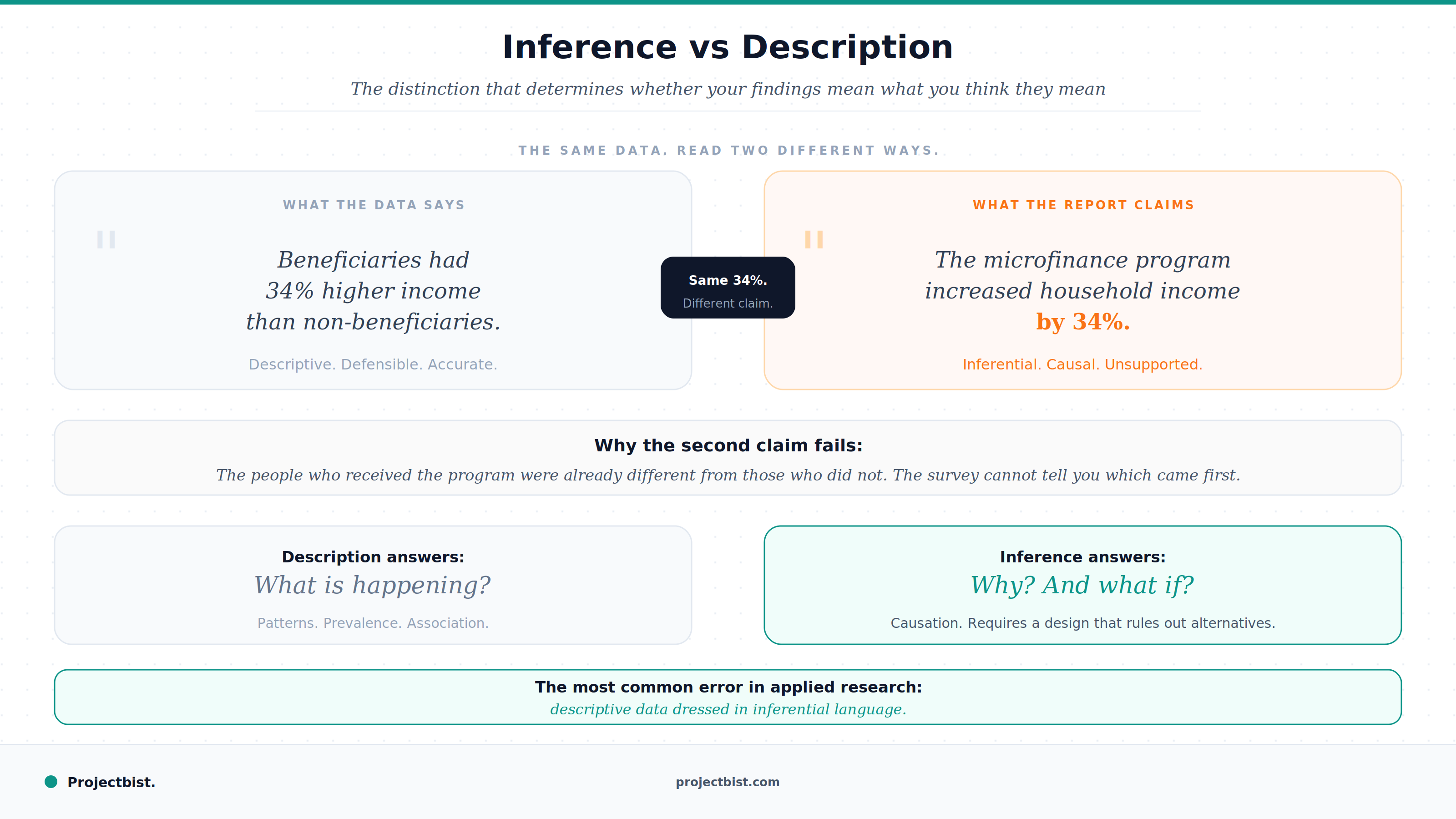
Inference vs Description: The Distinction That Quietly Determines Whether Your Research Findings Mean What You Think They Mean

Time Use Surveys: The Research Method That Makes Invisible Work Visible