P
Loading blog...
Loading blog...
Most economic statistics measure what gets paid for. Time use surveys measure everything else: caregiving, domestic work, community labor, and subsistence production that supports entire economies without appearing in any GDP figure.
Priya Nair
Jun 09, 2026•4 min read
Every morning in Sub-Saharan Africa, an estimated 40 billion hours are spent by women and girls collecting water. This work does not appear in GDP statistics. It does not appear in labor force participation rates. It does not appear in employment surveys. In standard economic measurement, it is invisible.
Time use surveys are the instrument designed specifically to make this kind of work visible. They capture how people actually spend their time across all activities in a defined period, including the unpaid labor that sustains households and communities, the leisure that standard productivity measures ignore, and the simultaneous activities that other survey methods cannot capture.
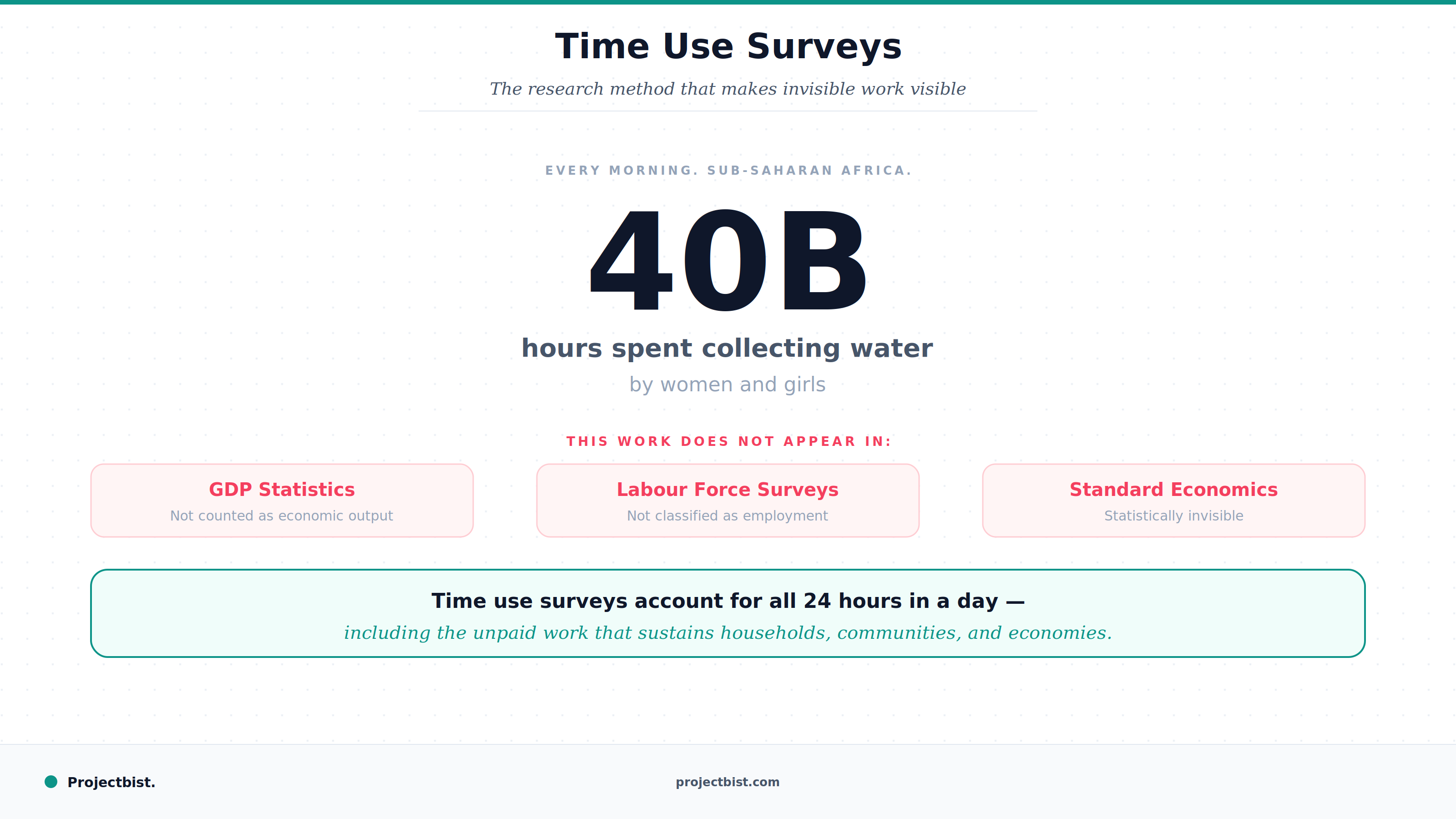
A time use survey collects data on the time respondents spend on different activities during a reference period, typically a full day or week. The distinguishing feature is comprehensiveness: unlike labor force surveys that only capture paid employment, or activity diaries that focus on specific behaviors, time use surveys aim to account for all 24 hours in a day across all activity categories.
The major international framework for time use classification is the ICATUS (International Classification of Activities for Time-Use Statistics), developed by the United Nations Statistics Division. It organizes activities into ten broad categories including paid employment and related activities, unpaid domestic services, community services and volunteering, learning and education, socialization, and personal care.
The care economy, comprising all unpaid domestic work, childcare, elder care, and household maintenance, is one of the largest sectors of economic activity in every country that has measured it and one of the least included in standard economic accounting. In developing countries, unpaid care work often constitutes 20 to 40 percent of GDP when valued at replacement cost. Without time use data, this contribution is invisible to policymakers, invisible to labor economists, and invisible to planners of social protection systems.
Survey respondents tend to describe gendered divisions of labor in ways that minimize inequality, either because they normalize it or because they do not want to appear to criticize their household situation to an interviewer. Time use data bypasses this self-censoring by asking about specific activities rather than attitudes toward gender roles. The result is often a more accurate picture of gender inequality than attitudinal surveys produce.
Time poverty, having insufficient time for rest, leisure, and personal care after meeting work and care obligations, is a dimension of poverty that income measures miss entirely. Women with extremely high time burdens due to unpaid care responsibilities may have incomes that place them above poverty lines while experiencing a quality of life that income data does not capture. Time use data makes this visible in ways that enable more effective program design.
Respondents are asked to recall all activities they performed in the previous 24 hours, walking through their day chronologically. The interviewer records start and end times for each activity, what was done simultaneously (for example, cooking while supervising children), and where the activity took place. This is the most widely used approach in national time use surveys and the basis of the UN ICATUS framework.
Respondents receive random prompts throughout the day and record what they are doing at that exact moment. This is methodologically stronger because it eliminates recall entirely, but it requires significant participant cooperation, smartphone access, and creates a much larger burden on respondents. It is used primarily in research settings rather than large-scale national surveys.
Time use surveys do not create new facts about how people spend their time. They reveal facts that were always true but never counted. That distinction matters enormously for how policymakers understand and respond to inequality.
How long does a time use survey typically take to administer?
A standard 24-hour recall time use interview takes 30 to 60 minutes. The length depends on the level of activity detail captured and the number of simultaneous activities to record. Trained interviewers significantly reduce interview duration without sacrificing data quality.
Can time use data be collected alongside other household surveys?
Yes. Time use modules are often appended to standard household welfare surveys to add the care economy dimension without running a separate survey. The challenge is interview length: a welfare survey with a time use module can run to two hours or more, which affects response quality toward the end.
What is the LSMS and does it include time use?
The Living Standards Measurement Survey (LSMS) is a World Bank multi-topic household survey program. Some LSMS surveys include time use modules, but coverage is not universal. Researchers seeking time use data for specific countries should check the World Bank's LSMS data portal and the IPUMS Time Use database maintained by the University of Minnesota.
Newsletter
Personalize your updates! Subscribe to ProjectBist's Newsletter and choose from the following categories.
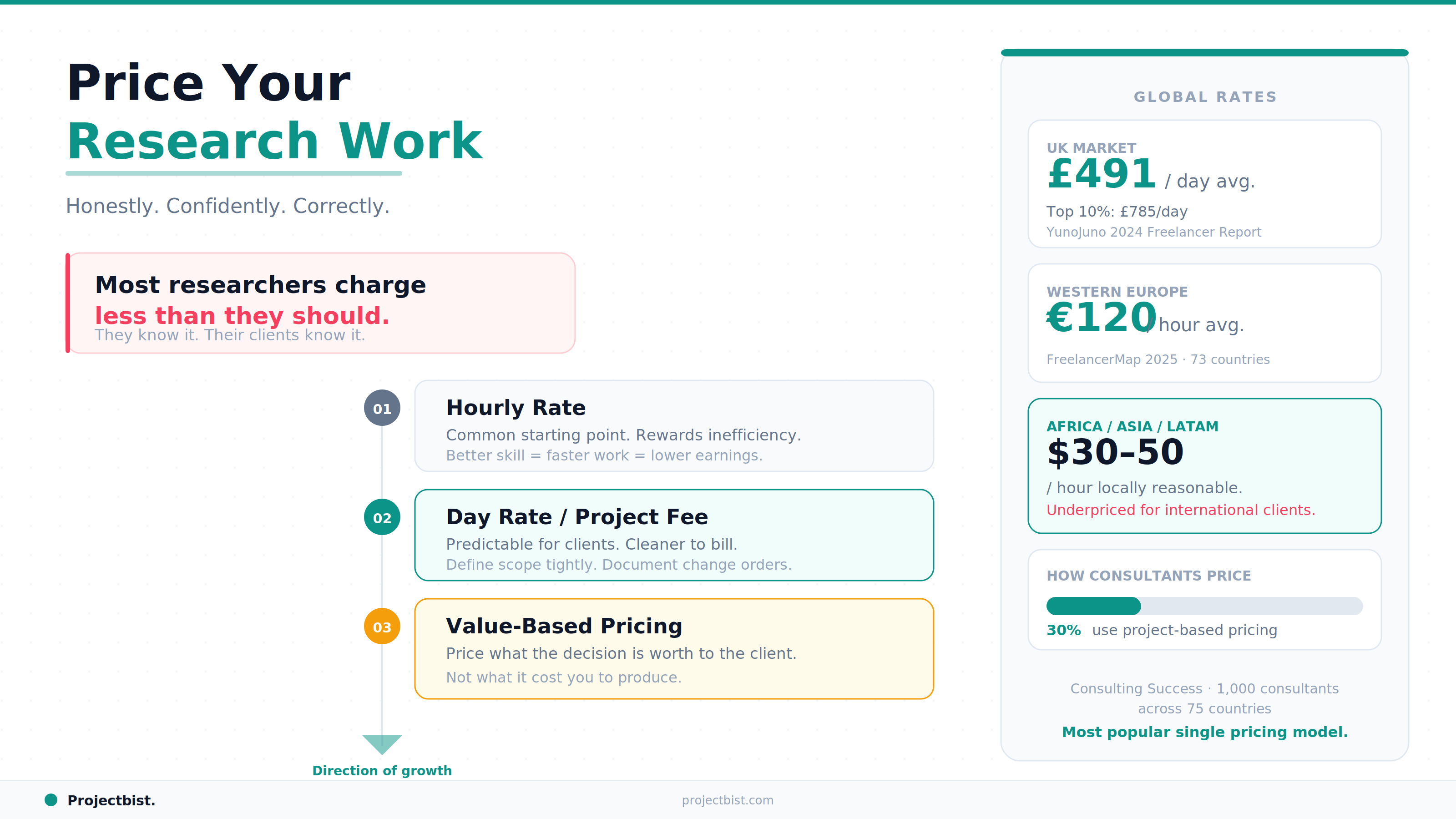
How to Price Your Research Consulting Services: The Honest Guide for Independent Researchers Globally
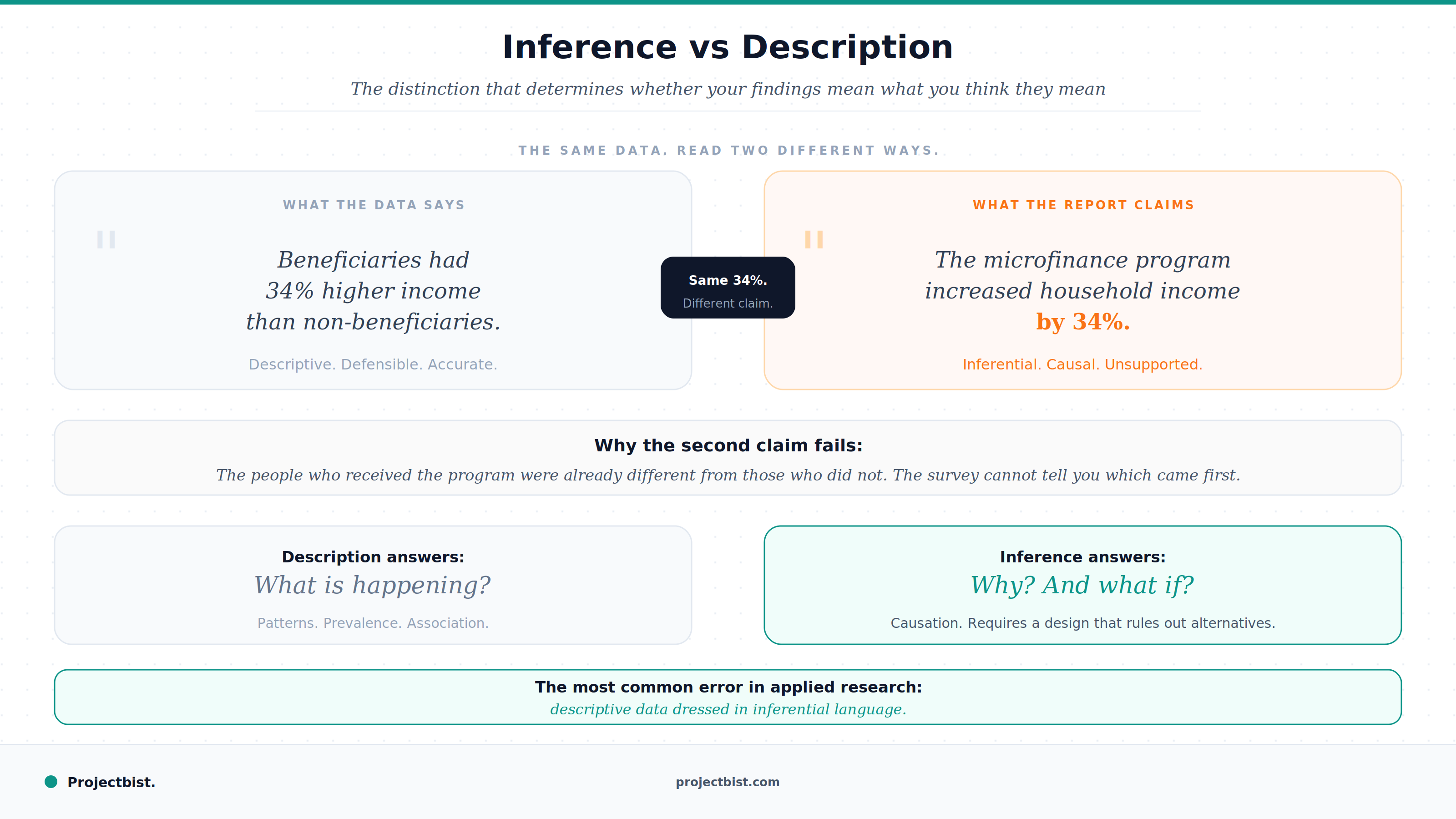
Inference vs Description: The Distinction That Quietly Determines Whether Your Research Findings Mean What You Think They Mean

Research in Humanitarian and Conflict Settings: Why Standard Methods Often Fail and What Works Instead