P
Loading blog...
Loading blog...
Most research reports make inferential claims using descriptive data. That is not a statistical error. It is a conceptual one, and it is far more common than the research industry acknowledges.
Jordan Blake
Jun 11, 2026•4 min read
A program evaluation finds that beneficiaries who received microfinance loans had 34 percent higher household income three years after the program than non-beneficiaries. The executive summary states: 'The microfinance program increased household income by 34 percent.'
These are not the same claim. The first describes a difference between two groups. The second claims a causal relationship. The data supports the first. Whether it supports the second depends entirely on why the two groups differ, and cross-sectional household surveys almost never resolve that question.
This is the inference versus description problem, and it runs through a significant proportion of published research findings, evaluation reports, and policy briefs in ways that go largely unexamined.
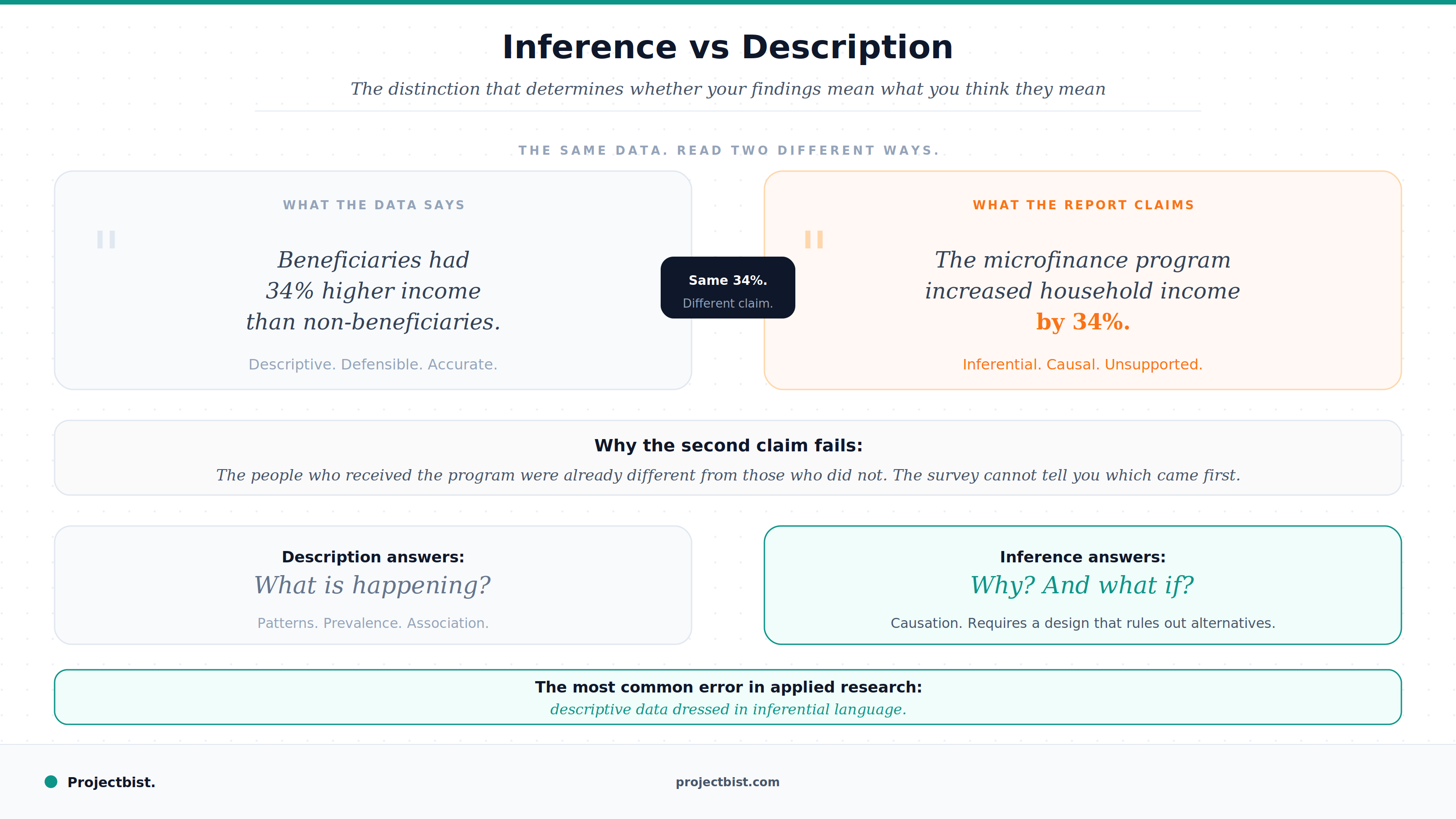
Descriptive research answers the question: what is happening? It documents patterns, prevalences, distributions, and associations in a population or dataset. A nationally representative survey that finds 42 percent of children under five are stunted in a given region is descriptive research. It tells you something real and important about the current state of the world.
Inferential research answers the question: why is it happening, and what would change if we did something different? It attempts to establish causal relationships, not just statistical associations. To do this, it requires a research design that rules out alternative explanations for the pattern observed.
The confusion happens when descriptive findings are reported in inferential language. 'Children in households that received the intervention are less stunted than those who did not' is descriptive. 'The intervention reduced stunting' is inferential. The second claim requires evidence about why the two groups differ, which a simple comparison of group means rarely provides.
In our observation at ProjectBist, the most common methodological error in applied research is not in the statistical analysis. It is in the match between what the design can support and what the report claims. Descriptive data dressed in inferential language is the most prevalent version of this problem.
Research is often designed with modest descriptive aims and then reported with inferential framing to seem more impactful. A monitoring survey becomes an 'impact assessment.' A cross-sectional comparison of program participants and non-participants becomes evidence that the program 'caused' the difference. This framing is often chosen unconsciously, because causal language is more compelling and more fundable.
The reason a cross-sectional comparison cannot establish causation is selection bias: the people who received a program are systematically different from those who did not, in ways that may fully explain any outcome difference regardless of whether the program had any effect. These differences may not appear in the variables you measured. You cannot control for what you did not collect.
A microfinance program that targeted women with existing entrepreneurial activity would produce beneficiaries with higher incomes than non-beneficiaries regardless of any program effect, because they started with more economic potential. The 34 percent income gap could be entirely pre-existing. The survey comparison cannot tell you which interpretation is correct.
A correlation can be statistically significant at any p-value threshold without being causal. Statistical significance tells you that a pattern is unlikely to have occurred by chance in the data. It says nothing about whether the relationship is causal. Confusing these two things is the original sin of a substantial proportion of applied social research.
Three research designs provide the strongest basis for causal inference in social and development research:
These are not the only valid research designs. Descriptive research is not inferior to inferential research. But it is different. And reporting it as if it were inferential is a claim the data cannot support.
Newsletter
Personalize your updates! Subscribe to ProjectBist's Newsletter and choose from the following categories.
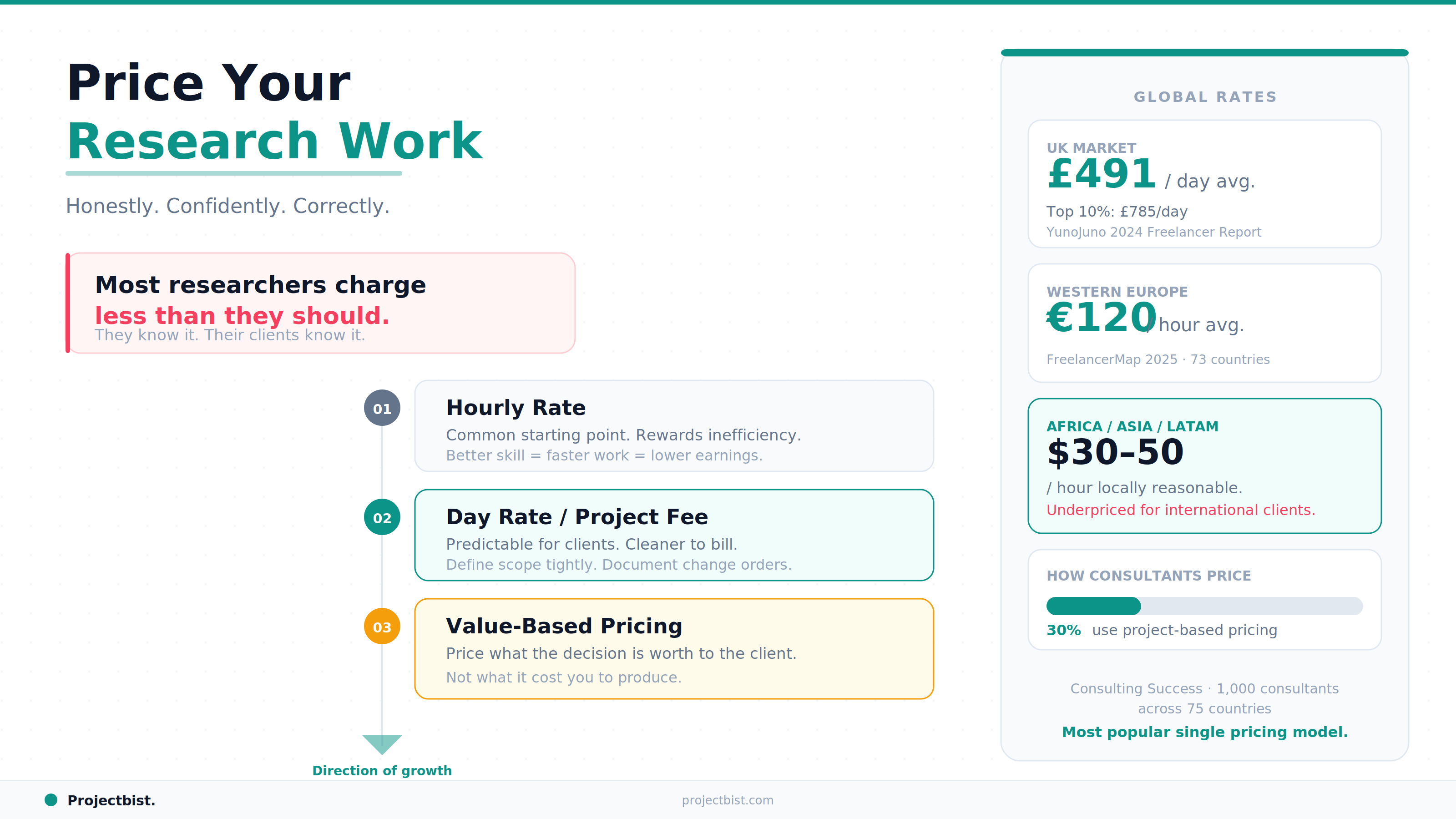
How to Price Your Research Consulting Services: The Honest Guide for Independent Researchers Globally

Time Use Surveys: The Research Method That Makes Invisible Work Visible

Research in Humanitarian and Conflict Settings: Why Standard Methods Often Fail and What Works Instead