P
Loading blog...
Loading blog...
Before commissioning new primary research, ask whether the answer already exists in the literature. Often it does. Often nobody has synthesized it properly.
Priya Nair
Jun 01, 2026•4 min read
Before designing a primary research study, ask yourself: has this question already been studied? And if it has, do any of those studies add up to an answer?
In many research domains, particularly health, education, agriculture, and social protection, large bodies of primary research already exist on questions that practitioners and policymakers need answered. The problem is not a shortage of studies. It is a shortage of rigorous synthesis: someone who can identify all the relevant studies, evaluate their quality, extract their findings systematically, and draw defensible conclusions about what the evidence collectively says.
That is what a systematic review does. And it is a research product that is in high demand precisely because primary data collection is expensive and policymakers increasingly require evidence-based decisions.
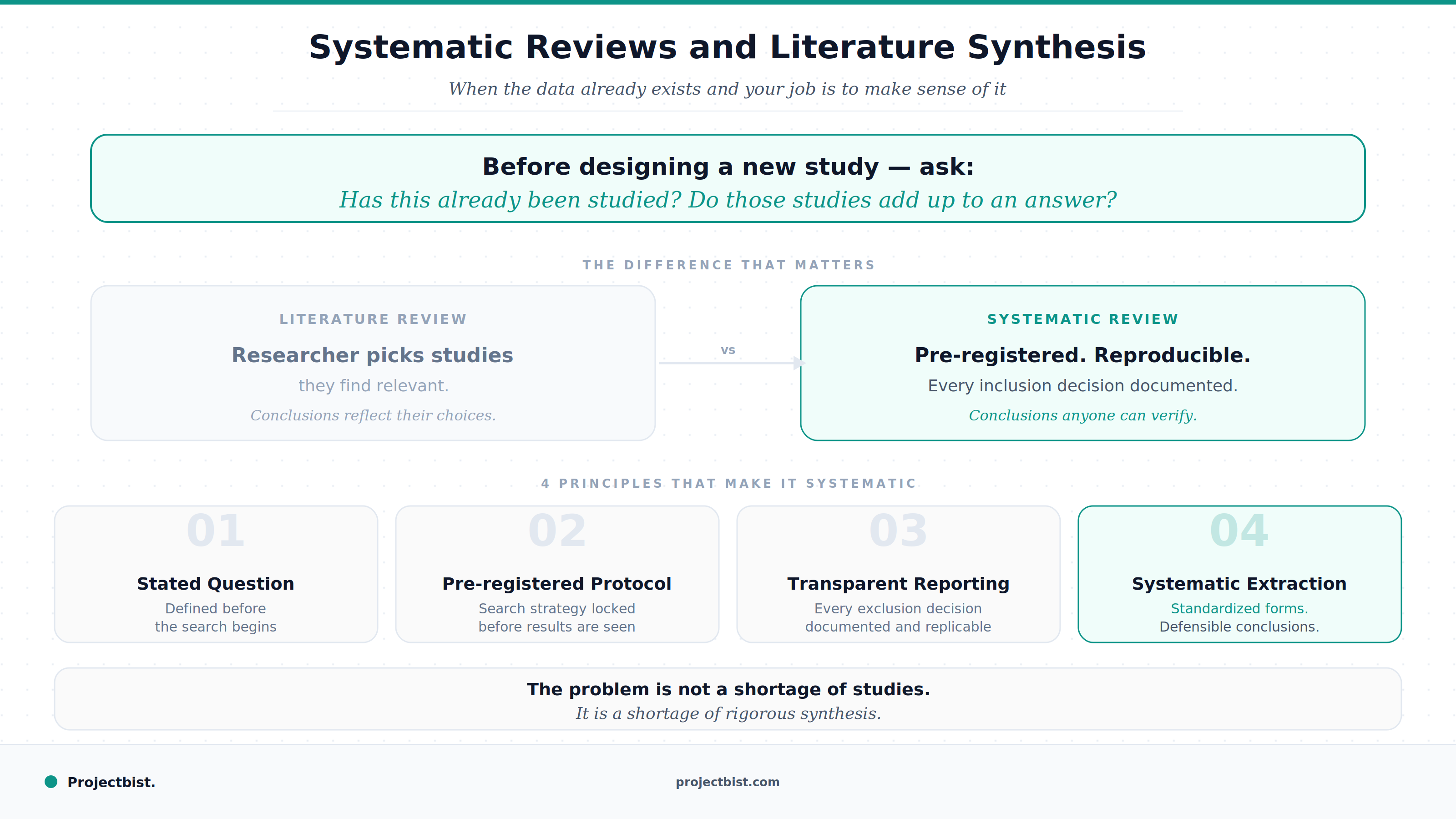
A traditional literature review is a narrative summary of relevant studies, selected at the researcher's discretion. Its conclusions reflect the literature the researcher chose to include and how they interpreted it. This is not inherently problematic for exploratory work, but it is insufficient for drawing conclusions about what evidence supports a specific intervention or finding.
These requirements exist because the conclusions of a systematic review are only as trustworthy as the process that generated them.
Before searching a single database, the research question, inclusion and exclusion criteria, search strategy, and planned synthesis approach should be documented. Registering the protocol with a database like PROSPERO for health research prevents publication bias: the practice of registering the review protocol means the review exists on record regardless of what the findings turn out to be. See PROSPERO for health systematic review registration
A systematic search covers multiple databases relevant to the question (PubMed, Scopus, Web of Science for health; EconLit for economic studies; ERIC for education; 3ie's EPPI database for development interventions) plus grey literature sources such as working papers, policy reports, and conference proceedings. Search strings should be developed with librarian input and documented in full.
Titles and abstracts are screened against the inclusion criteria, typically by two independent reviewers with disagreements resolved by discussion or a third reviewer. Full texts of potentially eligible studies are then screened against the same criteria. Exclusion reasons for each excluded study should be documented.
Each included study is assessed for methodological quality using a validated tool appropriate for its design. This is not a threshold for exclusion: low-quality studies can be included but their limitations must be noted and factored into how their findings contribute to conclusions.
Narrative synthesis describes the findings and relationships across studies in prose. Meta-analysis statistically combines quantitative findings from studies that are sufficiently similar in population, intervention, and outcome measures to produce a pooled effect estimate. Meta-analysis is not always appropriate: it should not be conducted when studies are too heterogeneous in design or context.
Commission a systematic review when a significant body of primary research on your question already exists and you need a defensible synthesis of what it shows. Commission primary research when the question has not been adequately studied, or when the existing studies were conducted in contexts too different from yours to be transferable.
Many clients commission primary research when a well-executed systematic review would produce more reliable answers at lower cost. And many practitioners assume no evidence exists because they have not searched systematically, when in fact multiple relevant studies have been conducted and just never synthesized.
Newsletter
Personalize your updates! Subscribe to ProjectBist's Newsletter and choose from the following categories.
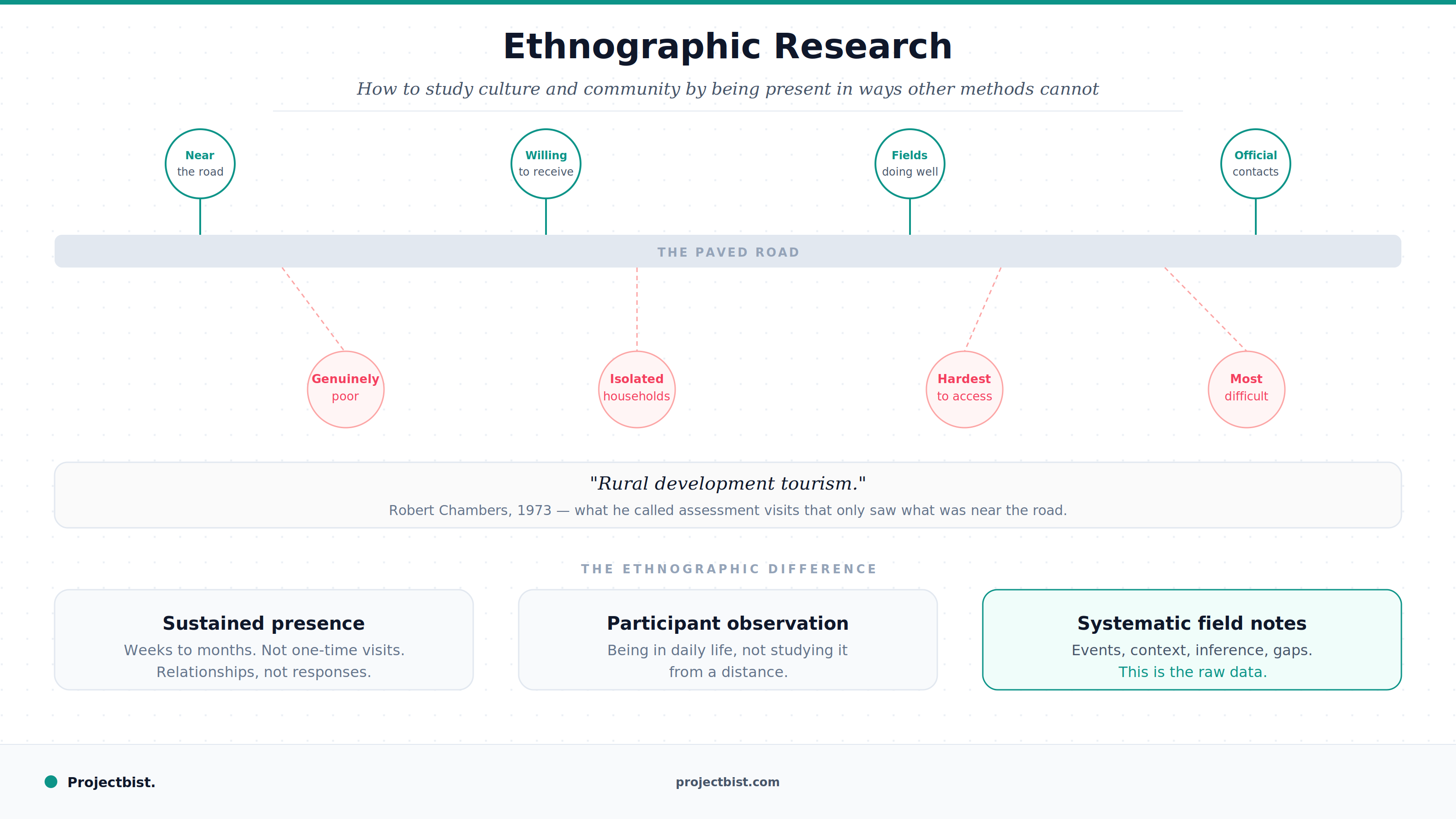
Ethnographic Research: How to Study Culture and Community by Being Present in Ways Other Methods Cannot
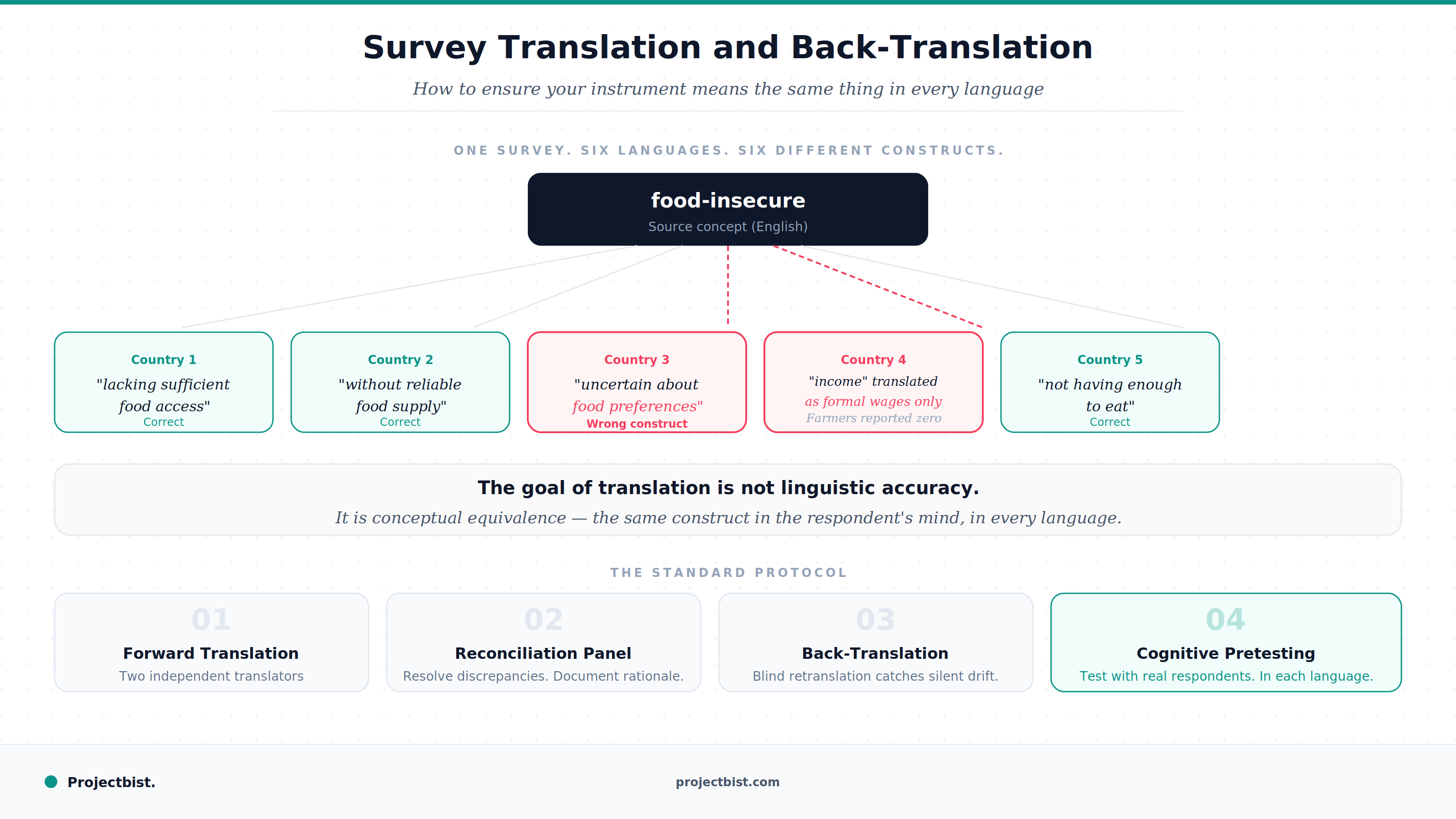
Survey Translation and Back-Translation: How to Ensure Your Instrument Means the Same Thing in Every Language
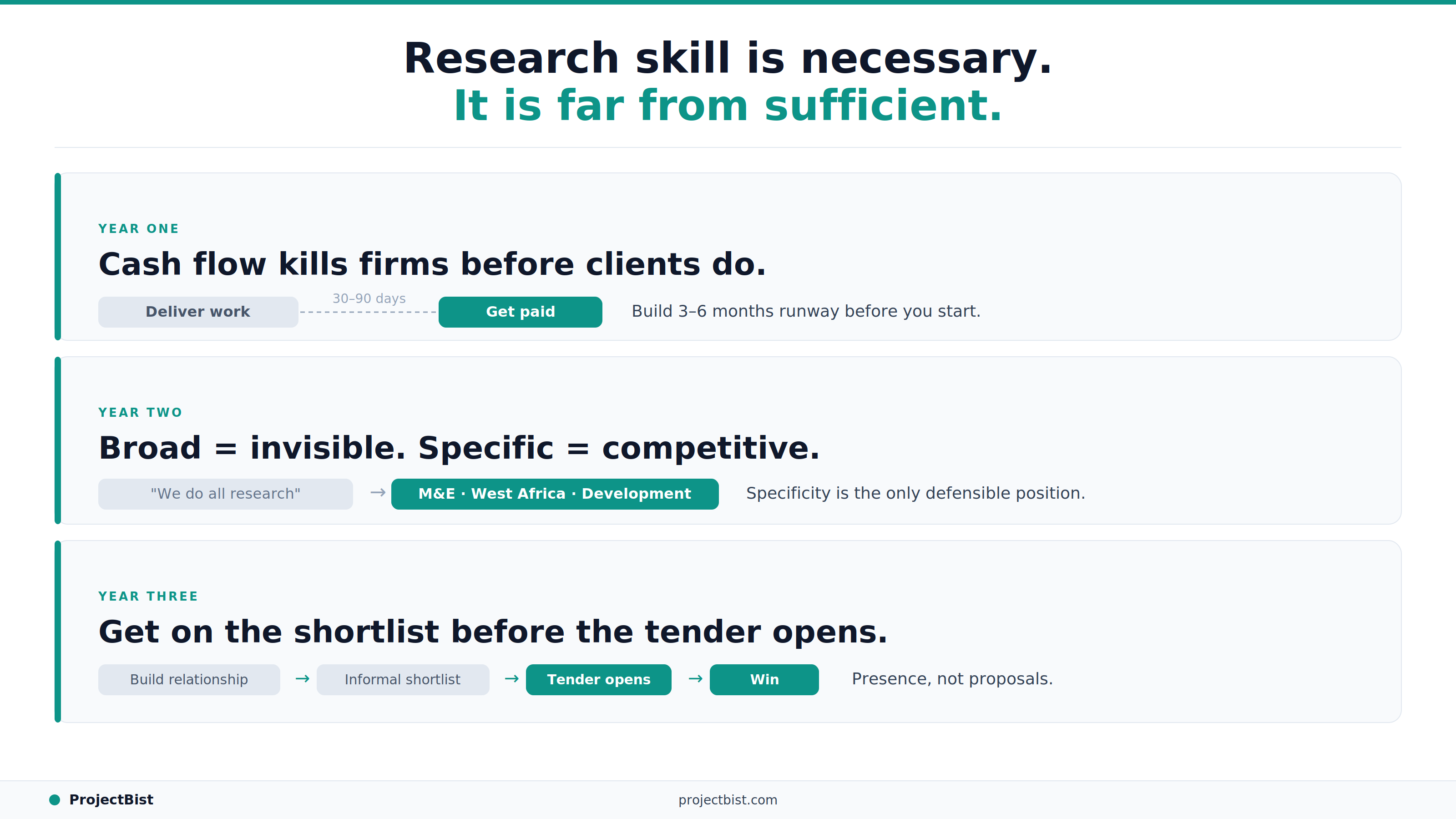
How to Build a Research Firm From Scratch: What the First Three Years Actually Require