P
Loading blog...
Loading blog...
Starting a research firm is not difficult. Building one that sustains itself past year two and grows into year five is a different challenge entirely.
Chloe Dubois
Jun 10, 2026•4 min read
Most research firms are founded by people who spent years working for someone else, got frustrated with the constraints of institutional research, and decided they could serve clients better on their own. That frustration is often entirely correct. The gap between what they assumed running their own firm would feel like and what it actually feels like in year one is usually significant.
Research skill is necessary. It is far from sufficient.
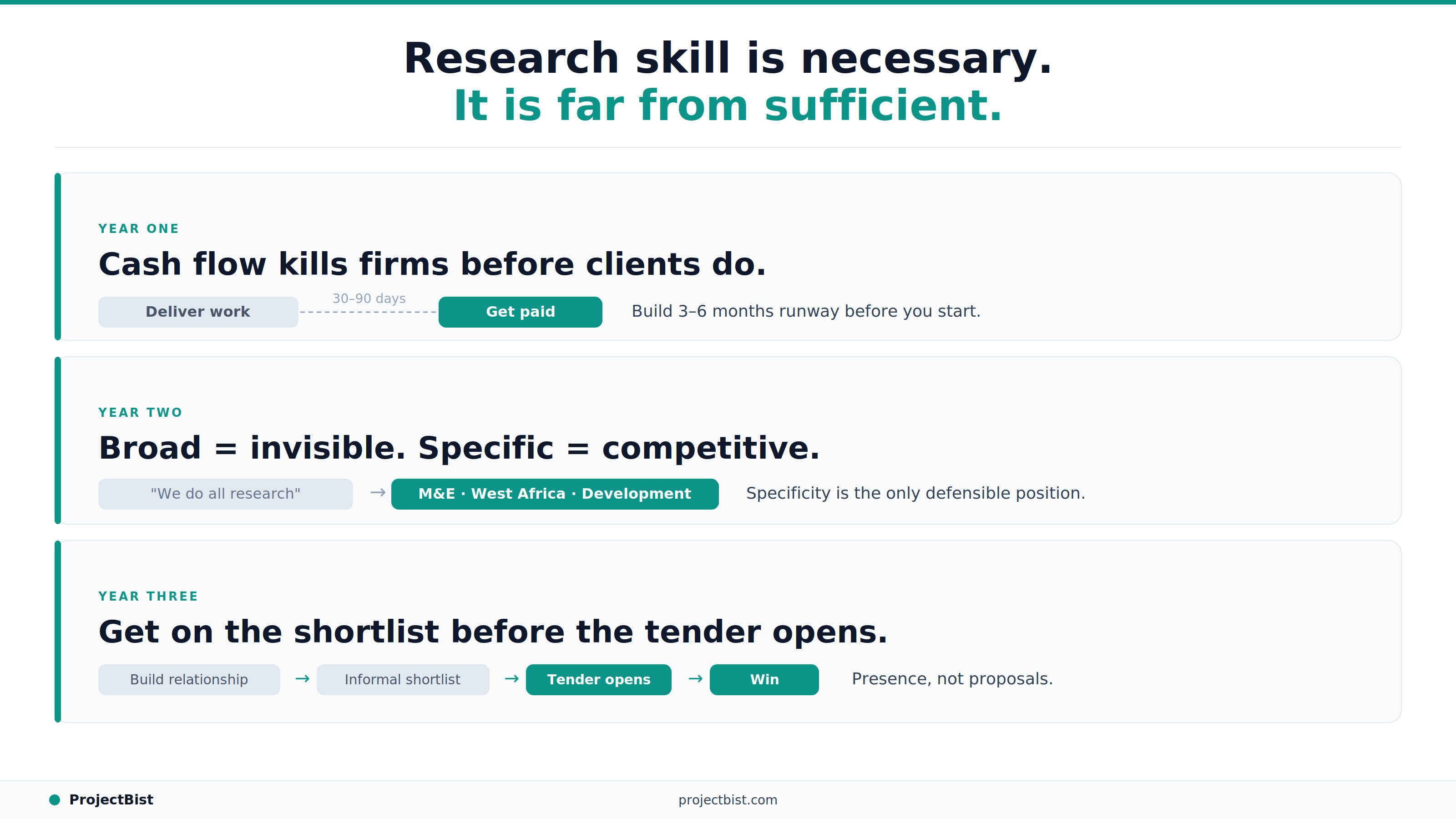
The first existential challenge of a new research firm is not finding clients. It is managing cash flow between when work is delivered and when it is paid for. Research projects typically run on payment terms that are generous to clients and brutal to small firms: a 30-day invoice payment on a project that took two months to deliver means you have been financing the client's research for three months before you see a cent.
In the early months, when projects are small and client relationships are new, late payments are common. Building a reserve of at least three to six months of operating expenses before leaving stable employment is not caution: it is the minimum viable runway for a new firm in this sector.
New research firms almost universally make the same mistake: they describe their services as broadly as possible to appear capable of everything. The result is a firm that is indistinguishable from every other small research provider and that competes entirely on price.
The firms that grow past year two have usually made a clear specialization decision: they serve a specific sector, use specific methods, or work in a specific geographic context with unusual depth. That specificity is uncomfortable when you are trying to build a client base. It is also the only thing that gives you a defensible position in a competitive market.
The specialization that tends to generate the most sustainable early traction is the one that matches a real gap: a sector or geography where demand exists but supply of quality local expertise is limited. For research firms in Nigeria, Kenya, Bangladesh, or Indonesia, that is often in locally grounded evaluations of international development programs, or in sector-specific market intelligence for regional and international clients entering those markets.
The firms that collapse by year three almost always have the same post-mortem: they did excellent work for too few clients at rates that did not cover their actual costs, and they ran out of time to change it.
The most reliable client development strategy for new research firms is not bidding for open tenders. It is building relationships with the organizations that write the tenders. Development agencies, foundations, government ministries, and large private sector companies almost always have an informal shortlist of firms they consider for projects before the formal procurement process begins. Getting on that shortlist requires presence, not just a website.
Presence in the early years means: publishing findings from completed projects (with client permission) in places where target clients look, attending the sector events and conferences where procurement officers and program managers are present, and maintaining relationships with the individual people who commission research rather than just the organizations they work for.
For a new or early-stage research firm, establishing verifiable credibility quickly is one of the hardest problems. A firm profile on ProjectBist that documents methodology specializations, shows completed project ratings from real clients, and maintains an Excellent quality score provides a form of third-party credibility that a firm website alone cannot replicate. Every project delivered through the platform is a rating that follows the firm forward, building a verifiable track record faster than referral chains alone allow.
Newsletter
Personalize your updates! Subscribe to ProjectBist's Newsletter and choose from the following categories.
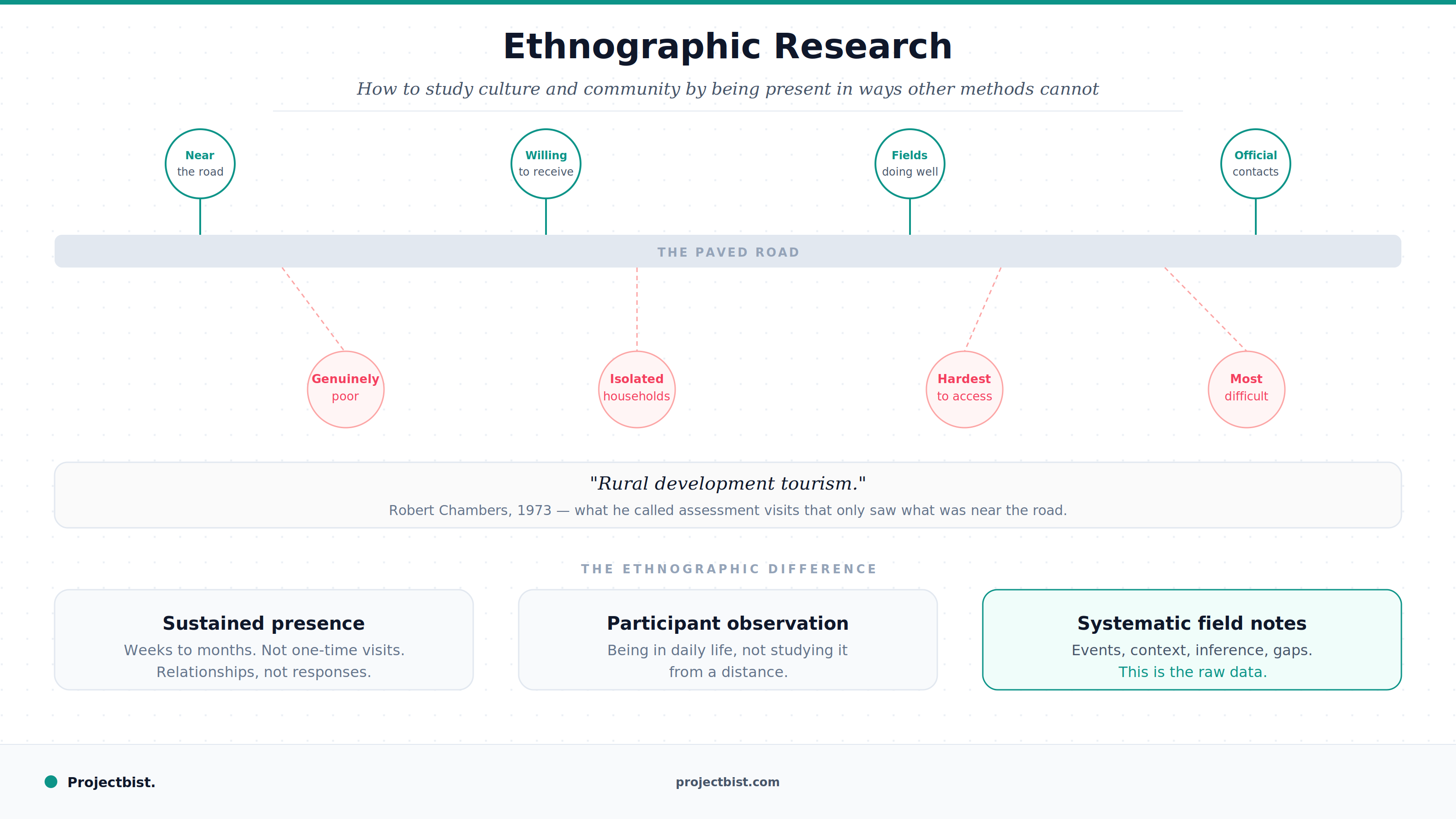
Ethnographic Research: How to Study Culture and Community by Being Present in Ways Other Methods Cannot
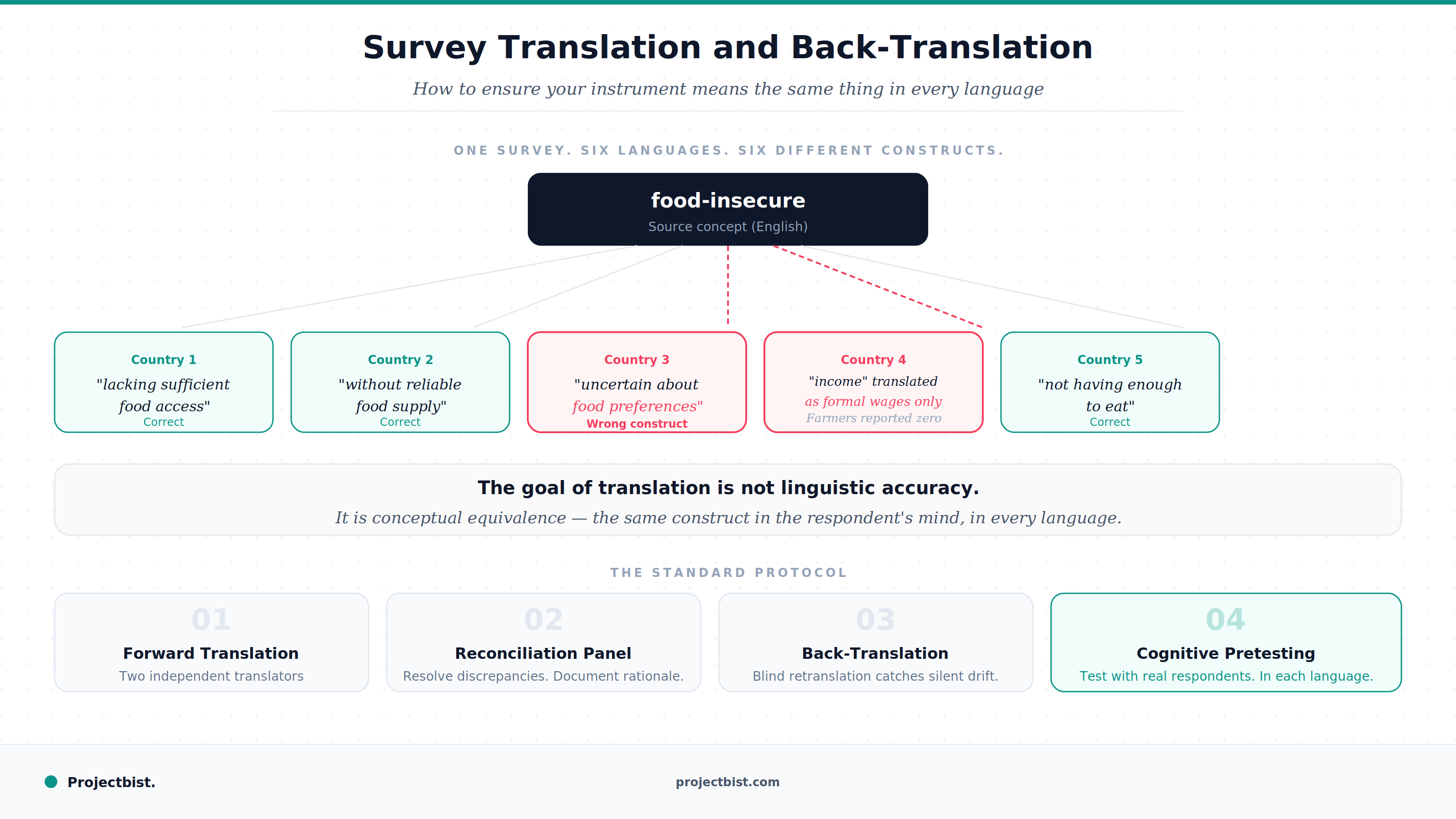
Survey Translation and Back-Translation: How to Ensure Your Instrument Means the Same Thing in Every Language
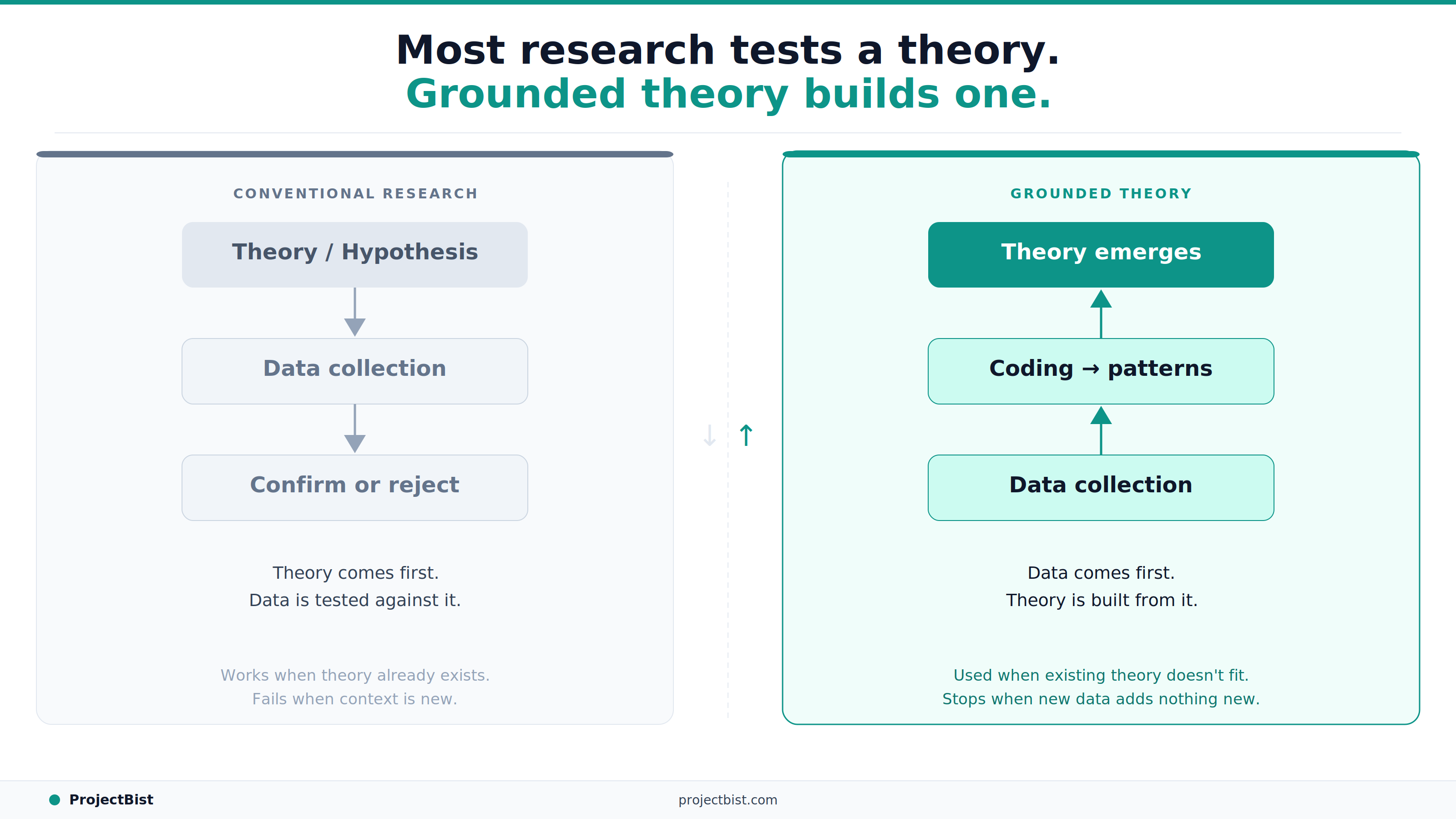
Grounded Theory: Building Theory From Data Rather Than Testing It