P
Loading blog...
Loading blog...
Size used to be a proxy for quality. Clients are figuring out that it never really was.
Amina Idris
Apr 01, 2026•3 min read
A regional consumer goods company recently ran a competitive pitch for a product positioning study. Three large multinational research agencies responded. So did a three-person boutique firm with a very specific track record in FMCG consumer research.
The boutique firm won.
This is becoming a less surprising outcome. And there are structural reasons for it that go beyond pricing.
The Greenbook GRIT Report 2024 found that client satisfaction with large research suppliers has been declining steadily, particularly around responsiveness, customization, and the seniority of the team actually working on the project. Clients increasingly pay large agency rates and get junior team execution.
At the same time, smaller firms have gotten better at demonstrating their track record. Digital profiles, online portfolios, and client review systems now allow a boutique firm to show evidence of delivery quality in a way that previously required a lengthy reputation-building process.
Clients used to hire big agencies because they could not verify small firms. That information gap is closing.
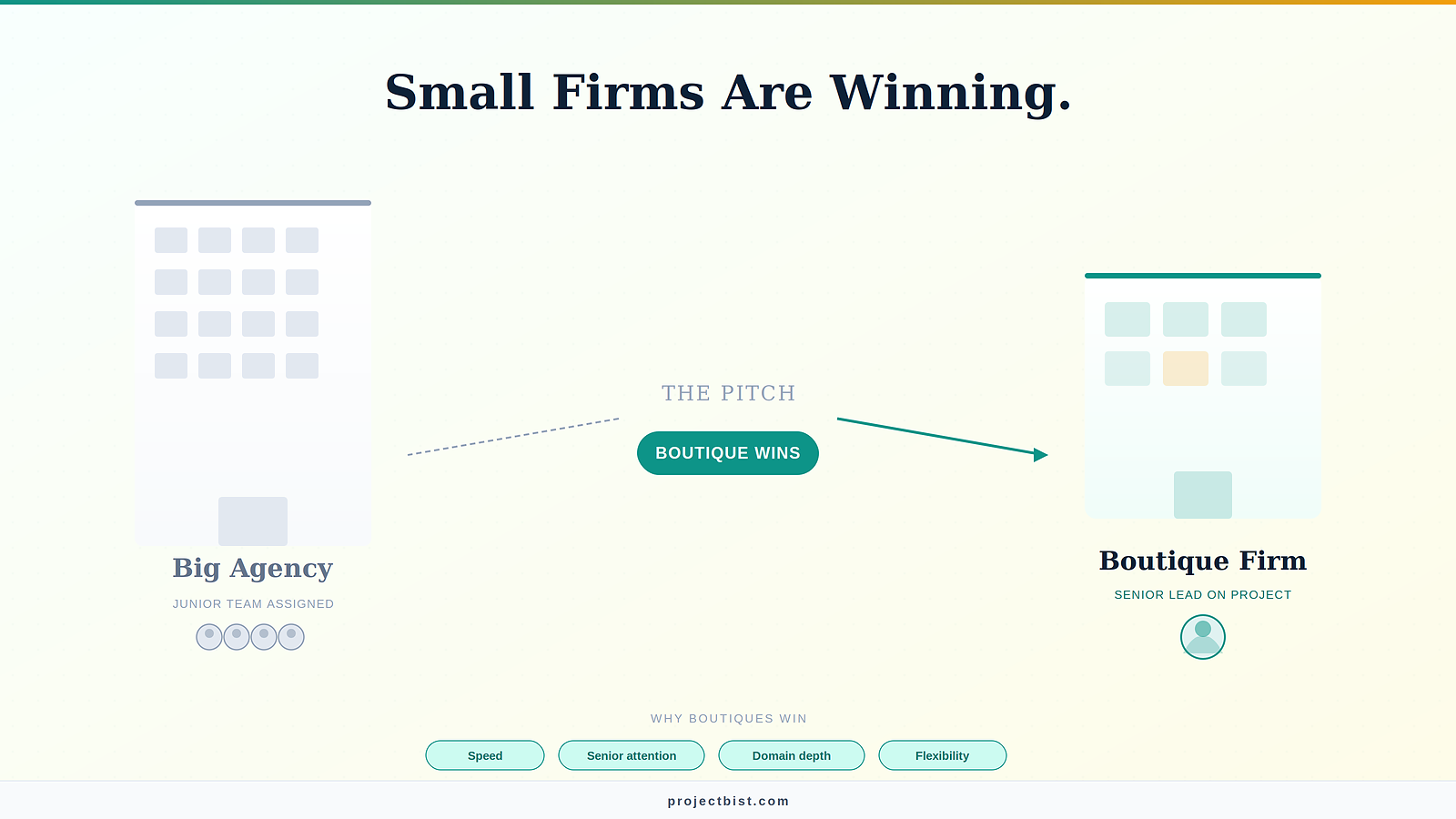
The structural advantages are real, but they do not sell themselves. Small firms that are winning work are doing a few things consistently:
The era when a large brand name was sufficient to win research work is fading. What clients want now is confidence in delivery, and that is something a small firm with a strong, verifiable track record can offer just as convincingly as a multinational agency.
Often, more so.
Join ProjectBist and compete on what actually matters: your track record.
Create Your Firm Profilearrow_forwardNewsletter
Personalize your updates! Subscribe to ProjectBist's Newsletter and choose from the following categories.
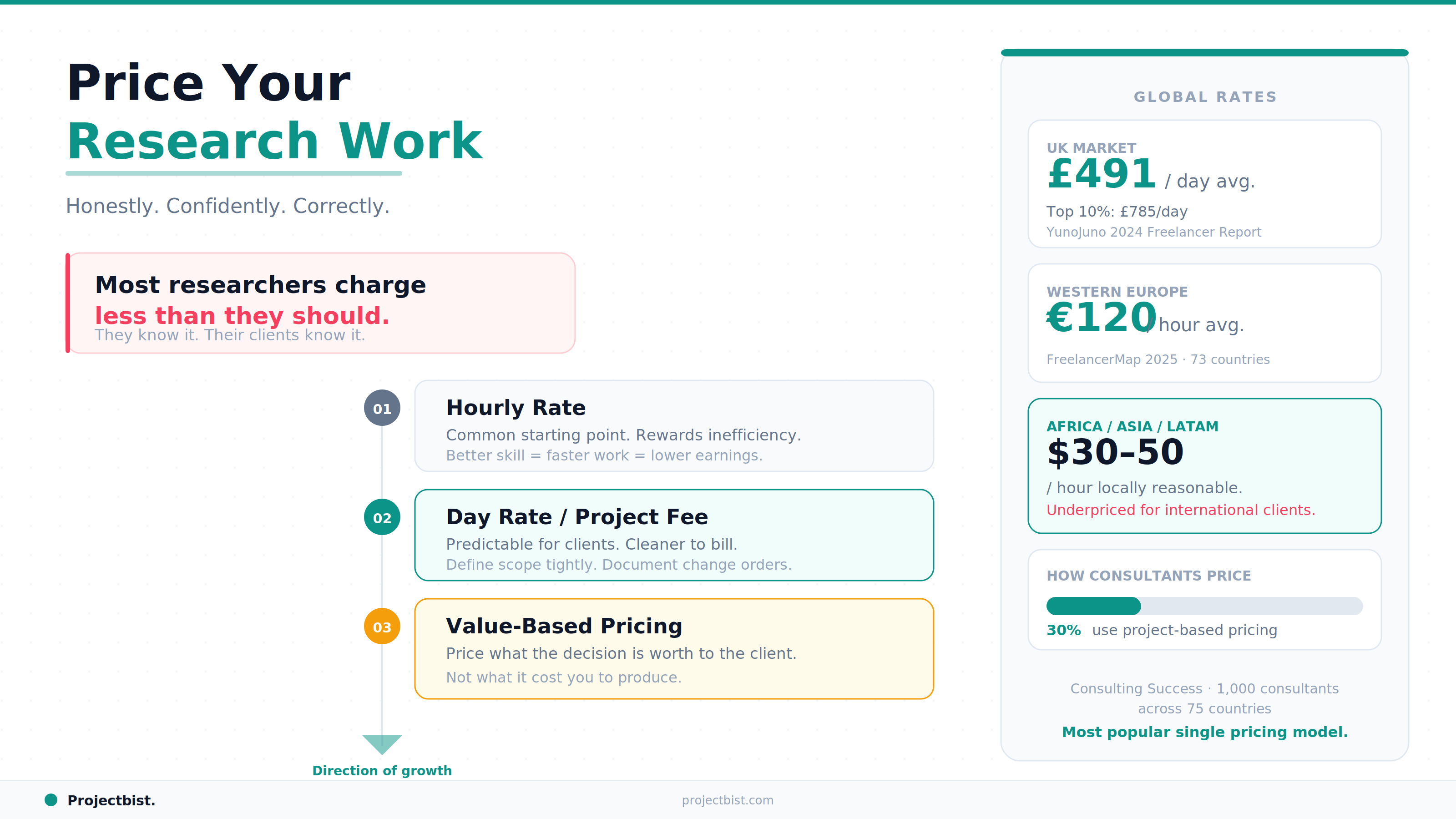
How to Price Your Research Consulting Services: The Honest Guide for Independent Researchers Globally
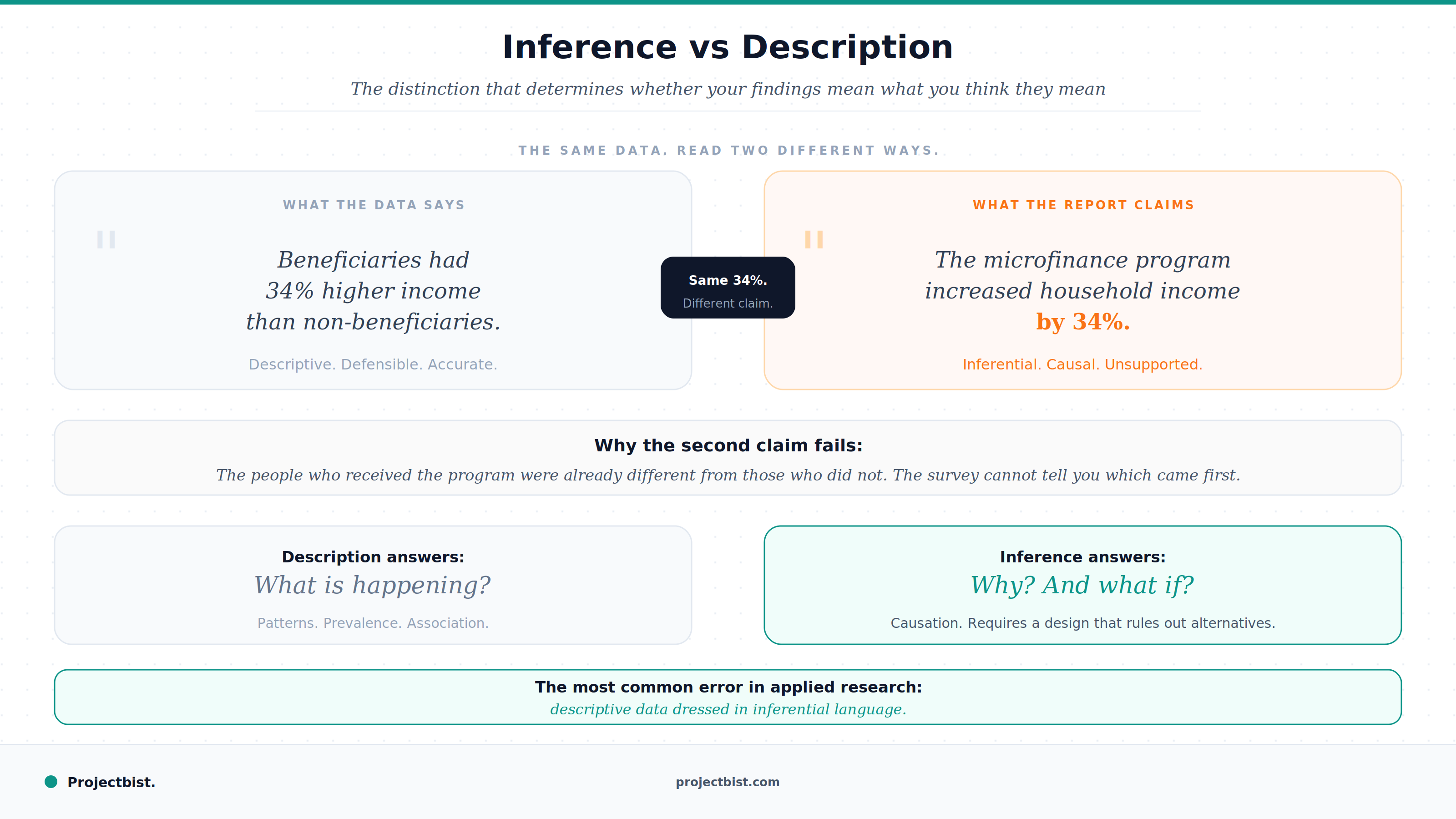
Inference vs Description: The Distinction That Quietly Determines Whether Your Research Findings Mean What You Think They Mean

Time Use Surveys: The Research Method That Makes Invisible Work Visible