P
Loading blog...
Loading blog...
Field research no longer always means being in the field. Here is what that shift means for how studies are designed, resourced, and executed.
Kwame Mensah
Apr 02, 2026•4 min read
When research teams were forced to abandon in-person fieldwork in 2020, most treated it as a temporary inconvenience. They adapted, moved interviews to video, shifted face-to-face surveys to phone or online, and waited to go back to what they knew.
Most did not go back. Not entirely.
Remote data collection is now a deliberate methodology choice for many research teams, not a fallback. And the researchers who understand its design requirements, its limits, and its genuine strengths are the ones delivering the most reliable findings.
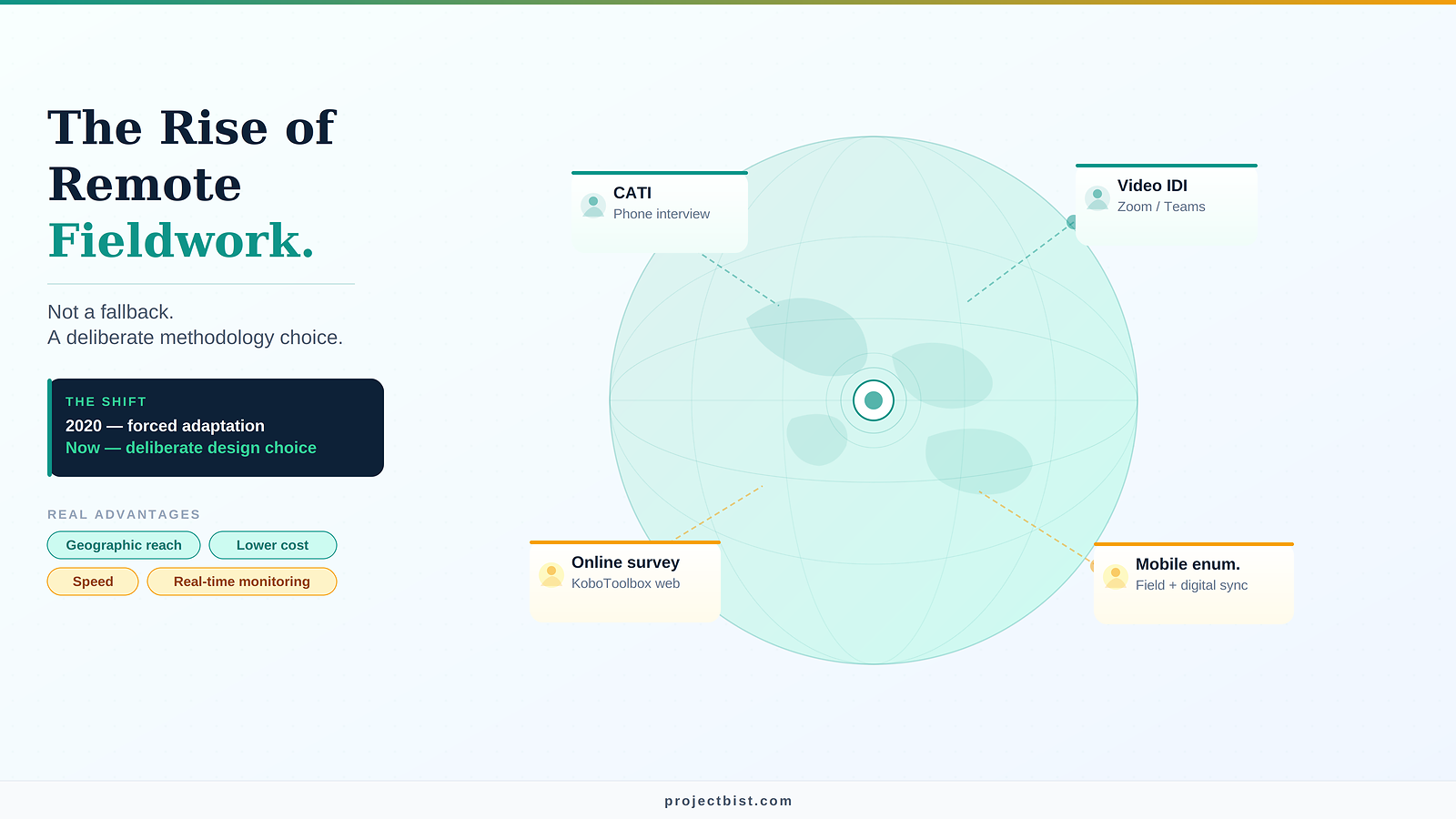
Remote fieldwork is not a single method. It covers a range of approaches depending on the research question, the population, and the type of data being collected:
This last one is important and often overlooked. Much of what is called 'remote fieldwork' in development and social research still involves human enumerators. The 'remote' refers to how the data flows back to the research team, not whether there is a person in the community.
The question is no longer whether remote research can produce reliable data. It is whether the design and the method are matched to the question.
Remote methods are not universally better. They have genuine limitations that responsible researchers need to design around.
The researchers producing reliable findings from remote methods are treating it as a design discipline, not just a logistics decision. That means:
Remote fieldwork is here to stay. The researchers who treat it as a legitimate design discipline rather than a cheaper substitute for 'real' fieldwork are the ones producing findings that hold up.
ProjectBist profiles show methodology specialization so you can hire with confidence.
Search Researcher Profilesarrow_forwardNewsletter
Personalize your updates! Subscribe to ProjectBist's Newsletter and choose from the following categories.
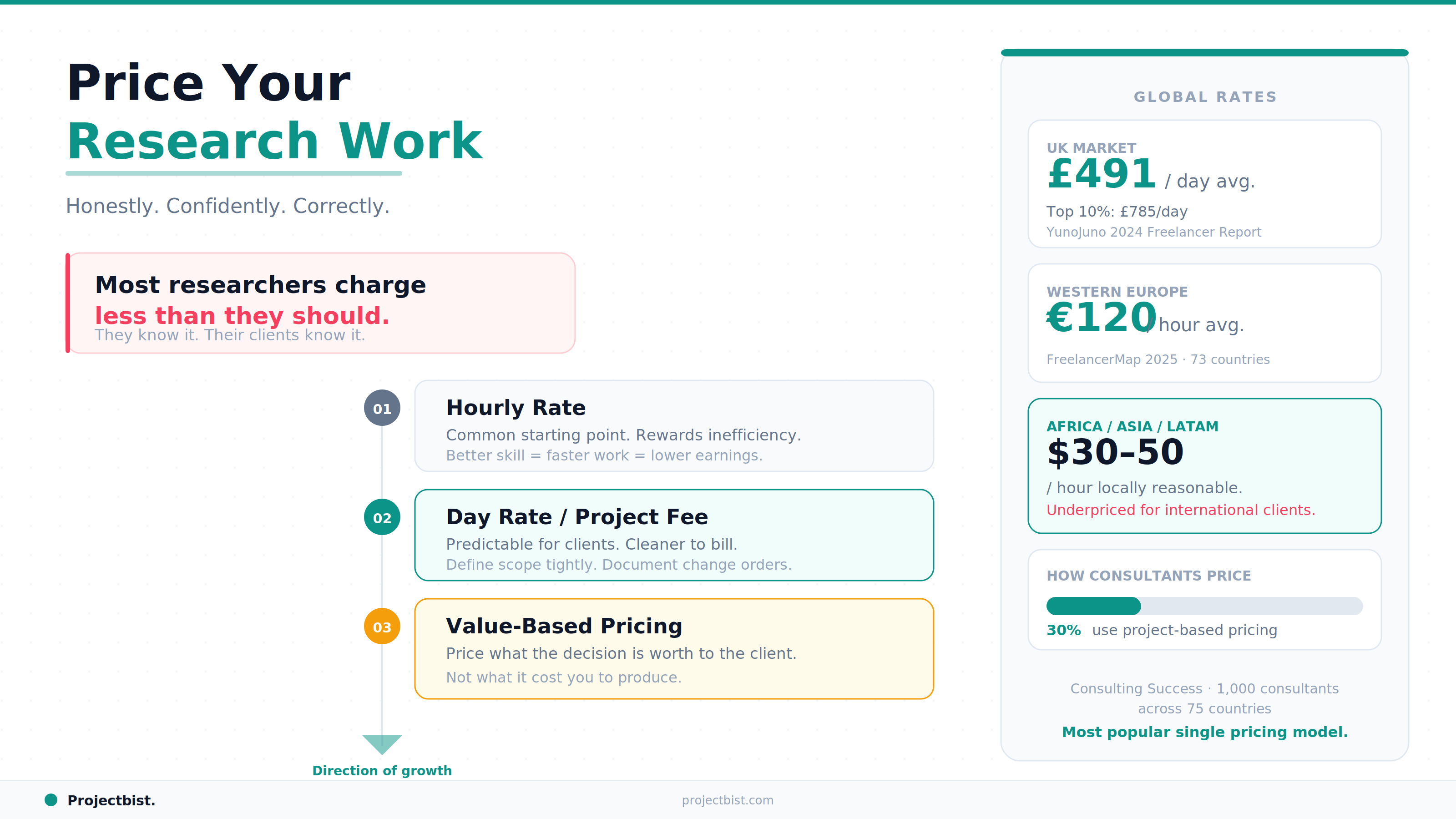
How to Price Your Research Consulting Services: The Honest Guide for Independent Researchers Globally
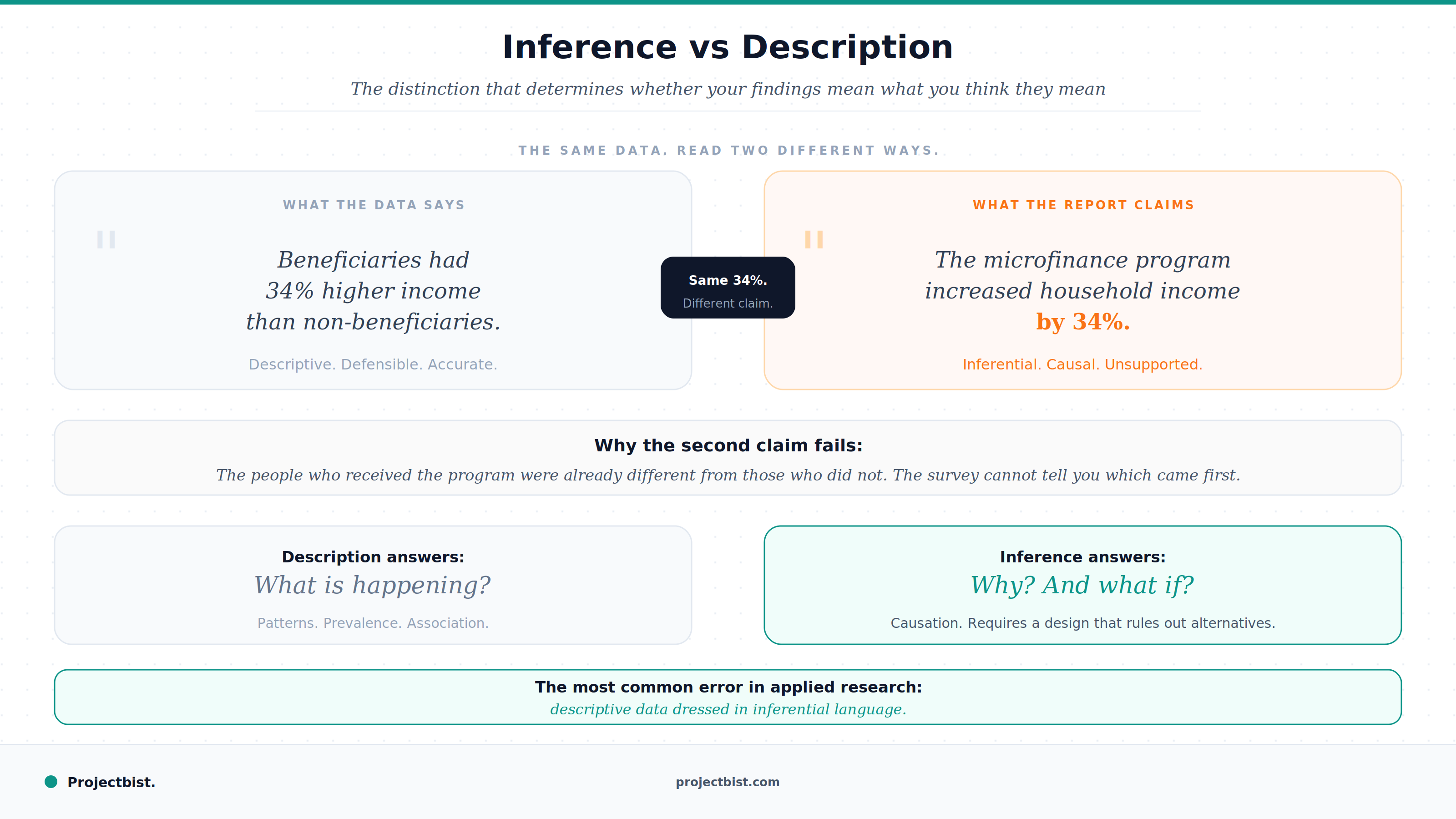
Inference vs Description: The Distinction That Quietly Determines Whether Your Research Findings Mean What You Think They Mean

Time Use Surveys: The Research Method That Makes Invisible Work Visible