P
Loading blog...
Loading blog...
Financial services clients have specific constraints that shape how research is designed, who can do it, and what it can say.
Kwame Mensah
Apr 05, 2026•3 min read
A researcher who is excellent at consumer FMCG studies does not automatically transfer those skills to financial services research. The methods may look similar on the surface: surveys, interviews, behavioral data analysis. But the constraints are fundamentally different, and researchers who do not understand them produce work that either crosses regulatory lines or misses the most important questions entirely.
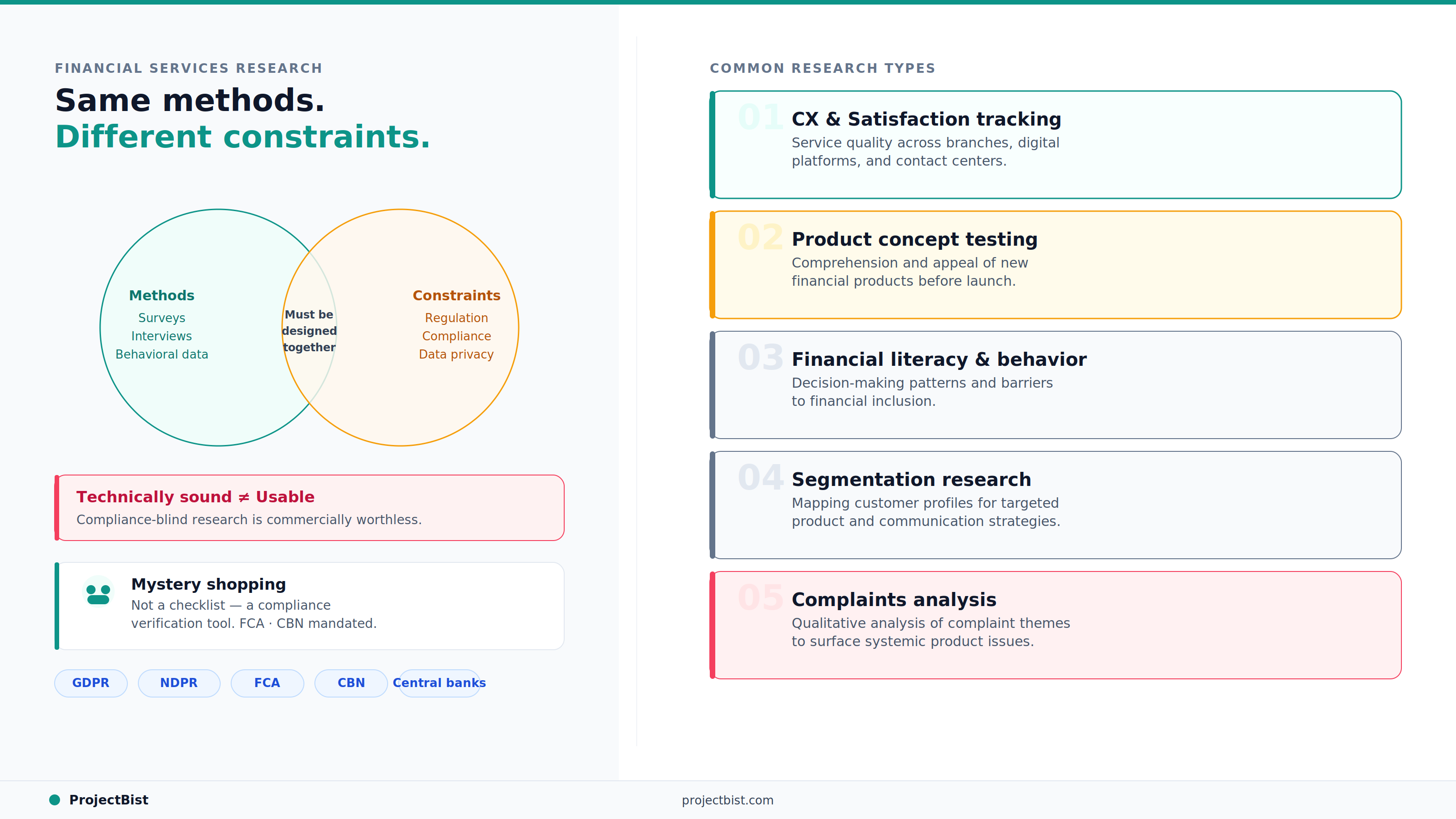
Financial data is among the most sensitive personal data a researcher can work with. Regulatory frameworks including GDPR in Europe, NDPR in Nigeria, and sector-specific regulations from central banks and financial authorities govern what data can be collected, how it must be stored, who can access it, and what conditions must be met for consent.
Researchers working in financial services need to understand these frameworks, not just as background context, but as active design constraints. A survey that collects account balance information, credit history, or transaction behavior without appropriate consent and data handling protocols is not just ethically problematic. It is potentially unlawful.
Financial services firms operate in one of the most heavily regulated industries globally. Research that touches on product design, pricing, marketing claims, or sales practices often has compliance implications that a researcher without sector experience will not anticipate.
For example, a study exploring how customers understand and respond to a new loan product description is not just market research. It has direct implications for how that product is marketed and regulated. The compliance team at the client organization will review findings before they influence any product decisions, and findings that were generated without compliance awareness may be unusable.
In financial services, research that is technically sound but compliance-blind is often commercially useless. The two have to be designed together.
Mystery shopping is particularly common in financial services research. Central banks in several countries, including the UK's FCA and Nigeria's CBN, have commissioned or sanctioned mystery shopping programs to assess whether banks' actual sales practices match their stated policies. The focus is typically on: whether staff disclose fees and charges accurately, whether products are recommended appropriately, and whether vulnerable customers are treated according to regulatory requirements.
Researchers conducting mystery shopping in financial services need to understand these regulatory purposes and design their assessment criteria accordingly. The evaluation instrument is not just a customer experience checklist. It is a compliance verification tool.
Financial services clients need researchers who combine methodological rigor with genuine sector knowledge. They need someone who understands what the compliance team will ask about the findings. Someone who has handled sensitive data in a regulated environment before. Someone whose confidentiality and data management practices can withstand internal audit review.
When searching for researchers with this combination, ProjectBist's search filters allow clients to filter by industry specialization, which surfaces researchers who have specifically documented financial services or banking sector experience in their profiles.
Does the compliance team at a financial services firm need to be involved in the research design stage?
Yes, for any study that touches on product design, pricing, marketing claims, or sales practices. Involving compliance at the design stage, rather than the findings stage, prevents you from building a methodology that produces findings the compliance team cannot use or that raises regulatory concerns after data has already been collected. It also ensures that consent language and data handling protocols are reviewed before fieldwork begins.
Can a researcher from outside financial services work on a banking project if they have strong general methodology skills?
It depends on the project. For basic customer satisfaction tracking or straightforward consumer perception research, a strong generalist researcher can deliver good work with adequate briefing on the sector context. For studies that touch on product compliance, regulatory purposes, or sensitive financial data, sector experience is not optional. The risks of compliance missteps are too material to manage through briefing alone. Clients commissioning this type of work should look for researchers who have documented financial services experience.
What data protection requirements apply to financial research, and how do they vary by country?
Financial research sits at the intersection of general data protection law and sector-specific financial regulation, and both vary by country. Regardless of jurisdiction, any research that collects account information, transaction data, credit history, or income data requires explicit informed consent, defined data retention limits, and secure storage protocols. Researchers need to identify which framework governs their specific study, document their data handling procedures in the project agreement, and confirm compliance before fieldwork begins.
Newsletter
Personalize your updates! Subscribe to ProjectBist's Newsletter and choose from the following categories.
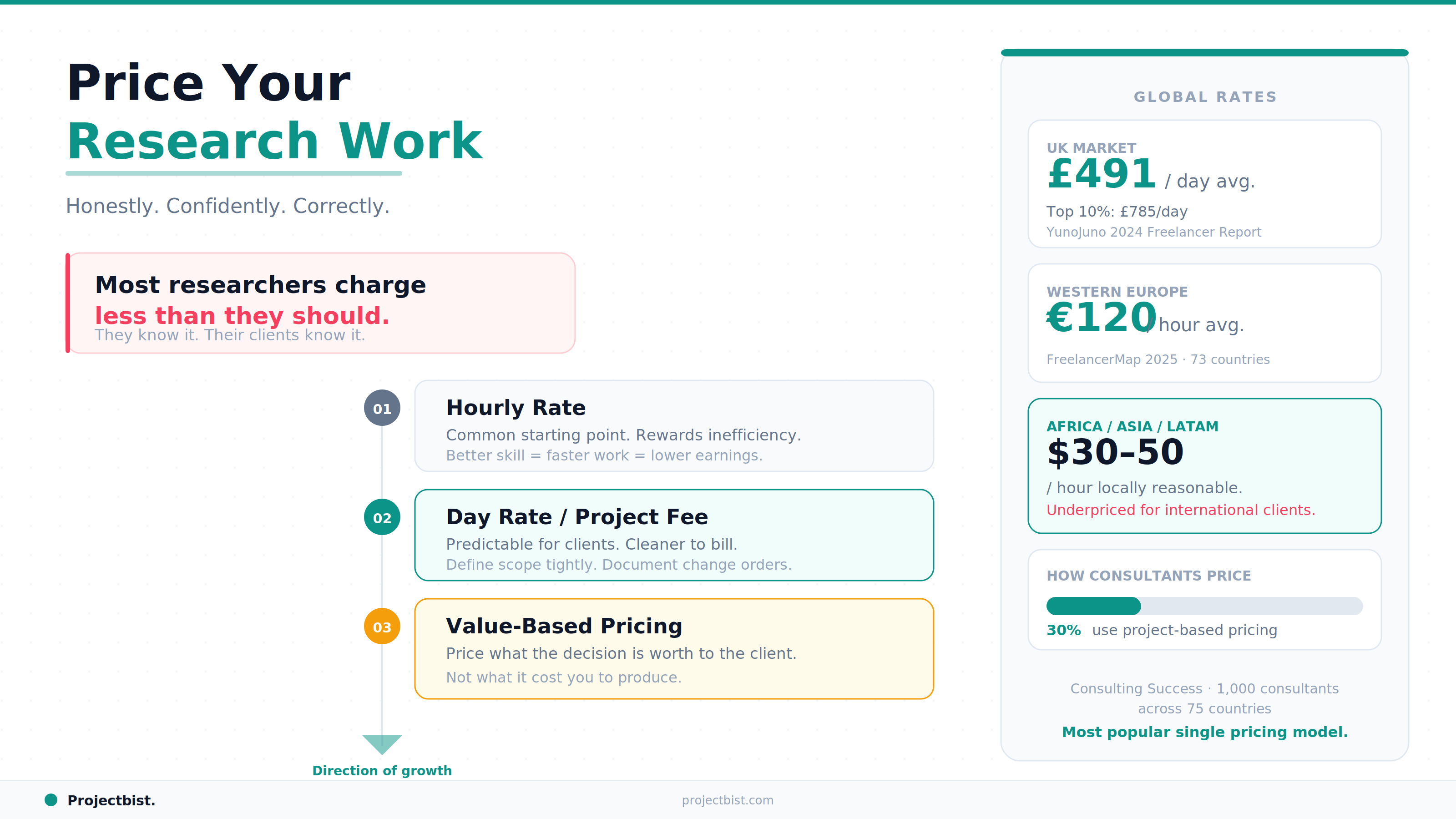
How to Price Your Research Consulting Services: The Honest Guide for Independent Researchers Globally
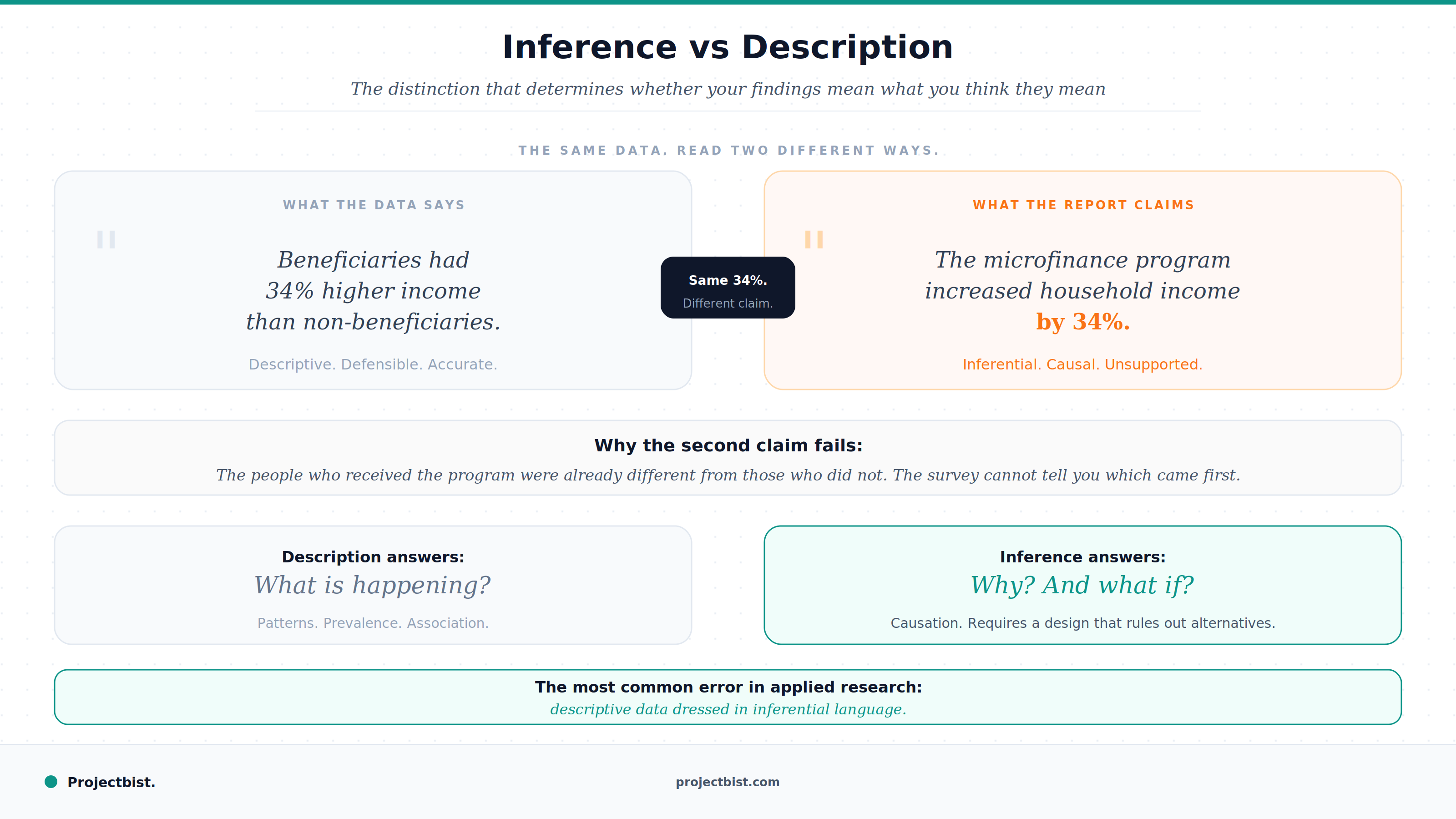
Inference vs Description: The Distinction That Quietly Determines Whether Your Research Findings Mean What You Think They Mean

Time Use Surveys: The Research Method That Makes Invisible Work Visible