P
Loading blog...
Loading blog...
Skipping ethics steps does not just put participants at risk. It puts your entire project at risk.
Maya Chen
Mar 27, 2026•3 min read
Most researchers encounter ethics requirements for the first time as a form to fill in before a project can start. An IRB application. An informed consent template. A data management plan. The process can feel like administrative overhead, separate from the actual work of designing a study and collecting data.
That framing is a mistake, and it is a costly one.
Research ethics is not a checklist that protects the institution from liability. It is a set of principles that protect the people you are researching. Getting it wrong does not just create a compliance problem. It creates findings that cannot be published, data that cannot be used, and sometimes real harm to the people who trusted you with their time and their information.
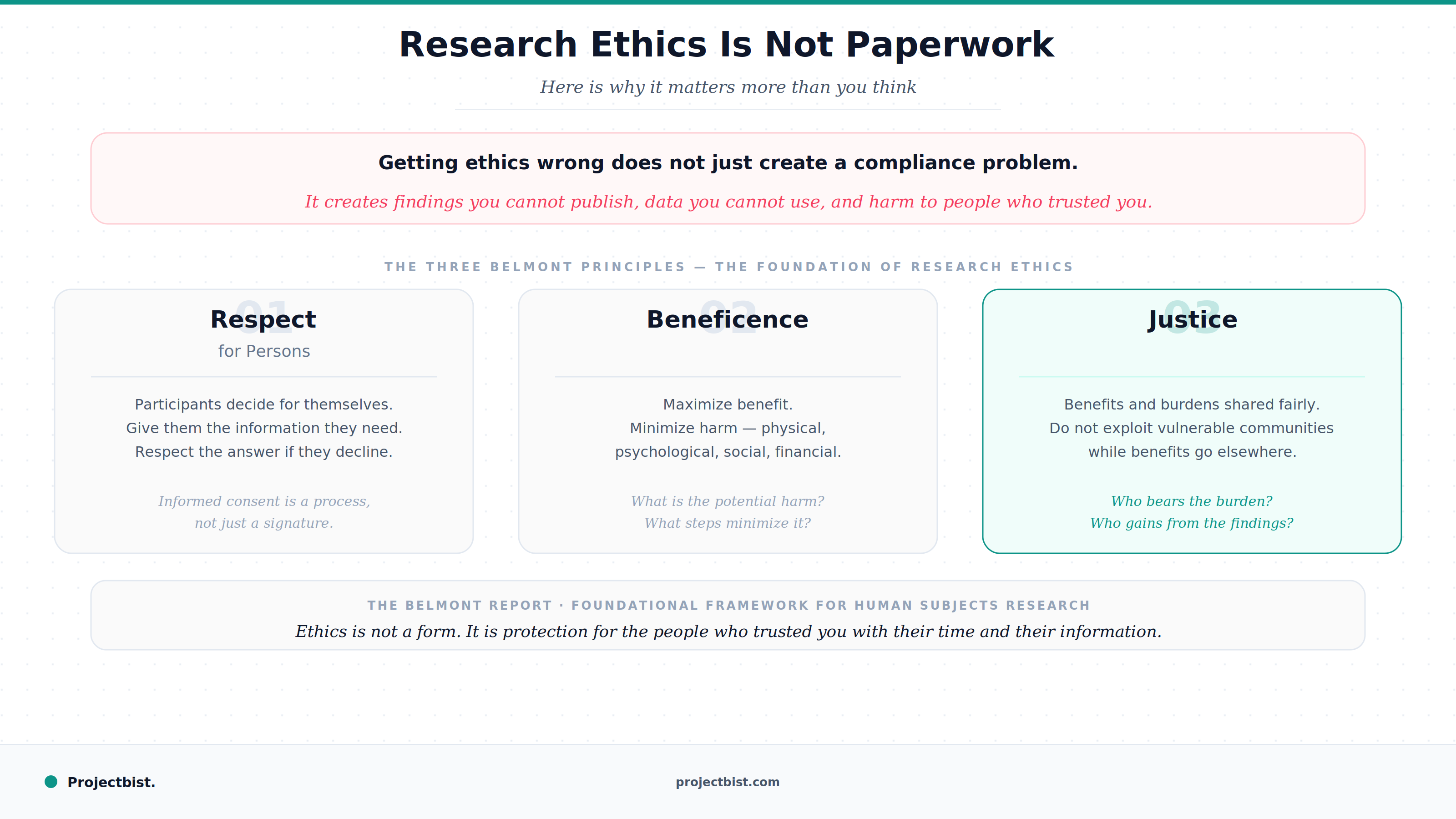
The foundation of modern research ethics comes from the Belmont Report, which outlined three principles that all ethical research with human subjects must follow:
Participants are autonomous human beings capable of making their own decisions. This means you must give them the information they need to decide whether to participate, you must respect their decision if they decline, and you must provide additional protections for those with limited autonomy, such as minors or people in dependent relationships with the researcher.
Research should maximize potential benefits and minimize risks of harm. This applies to physical, psychological, social, and financial harm. Before any data collection begins, a researcher should be able to clearly answer: what is the potential harm to participants, and what steps have been taken to minimize it?
The benefits and burdens of research should be distributed fairly. This means not exploiting vulnerable communities by using them as research subjects while the benefits of the research go elsewhere.
According to the ICMJE Recommendations, informed consent is not just a signature. It is a process. Participants must be told:
Consent must be genuinely voluntary. A participant who feels pressure, who fears consequences for declining, or who does not fully understand what they are agreeing to has not given informed consent, even if they signed a form.
Once you have collected data, your ethical obligations continue. The UC Davis Research Data Management guidelines recommend de-identifying participant data before sharing or storing it, collecting only what you actually need, and using appropriate security measures for sensitive information.
In practical terms: do not keep identifiable survey responses in an unprotected spreadsheet. Do not share interview recordings without participant permission. Do not use data for purposes participants did not consent to.
Ethical research is not just about protecting participants. It is about producing findings that can be trusted.
The researchers who take ethics seriously are the ones whose work holds up. Findings from ethically conducted studies can be published, shared with policymakers, cited by other researchers, and built upon. Findings from studies with ethical gaps, even excellent technical findings, are always at risk of being challenged or discarded entirely.
Ethics is not separate from good research. It is part of what makes research good.
ProjectBist connects researchers with clients who value quality and credibility.
Explore Open Projectsarrow_forwardNewsletter
Personalize your updates! Subscribe to ProjectBist's Newsletter and choose from the following categories.
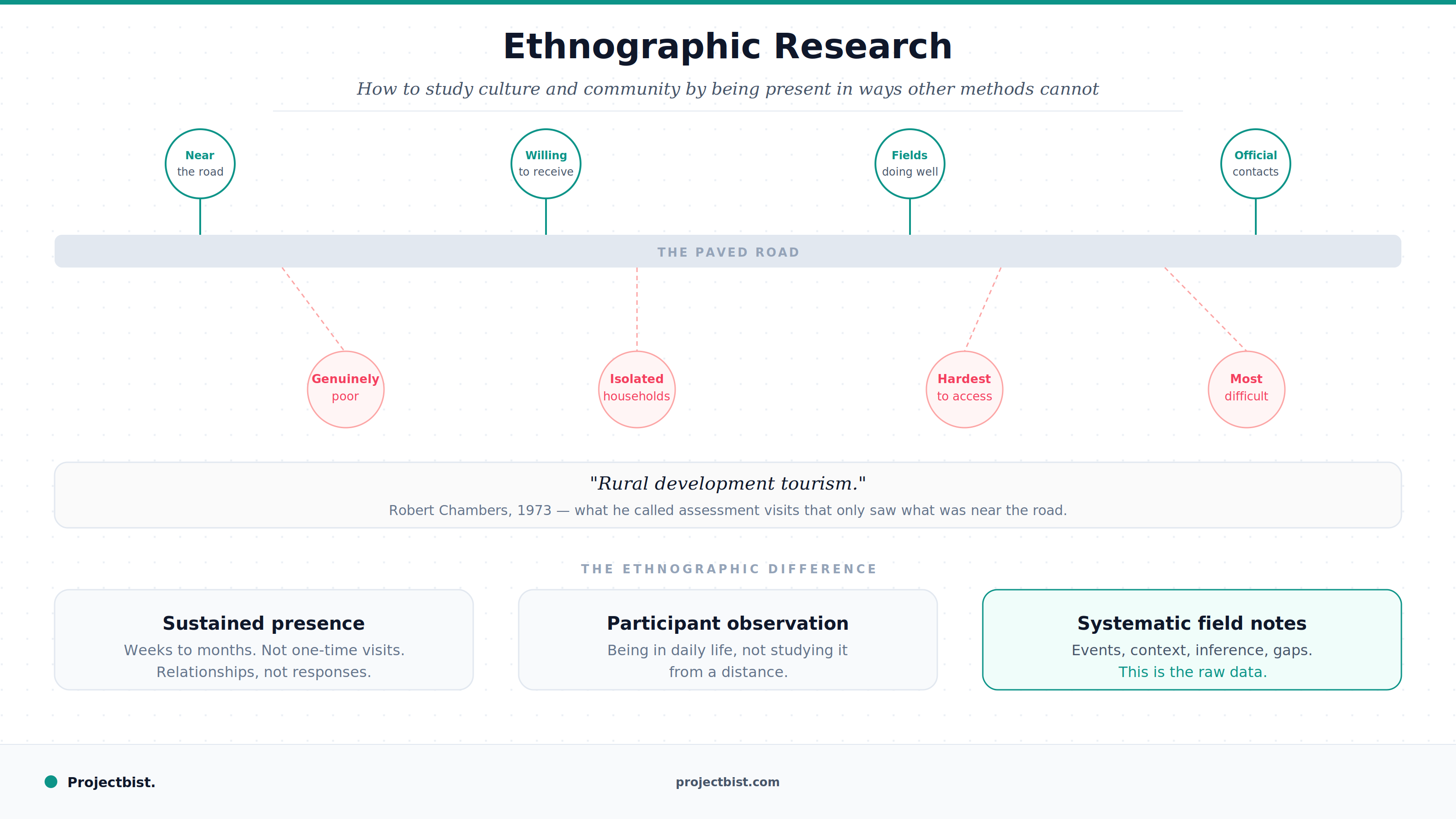
Ethnographic Research: How to Study Culture and Community by Being Present in Ways Other Methods Cannot
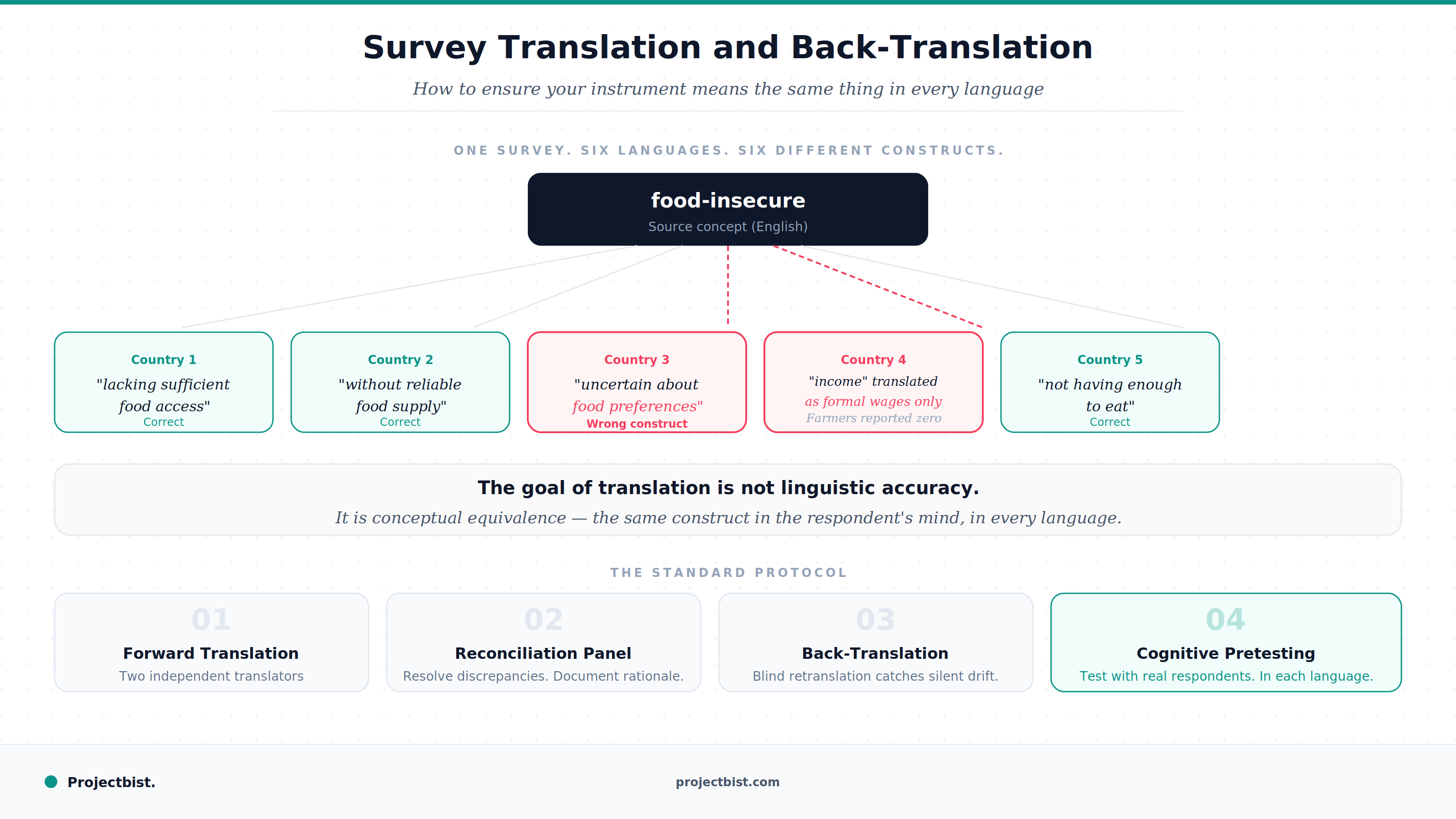
Survey Translation and Back-Translation: How to Ensure Your Instrument Means the Same Thing in Every Language
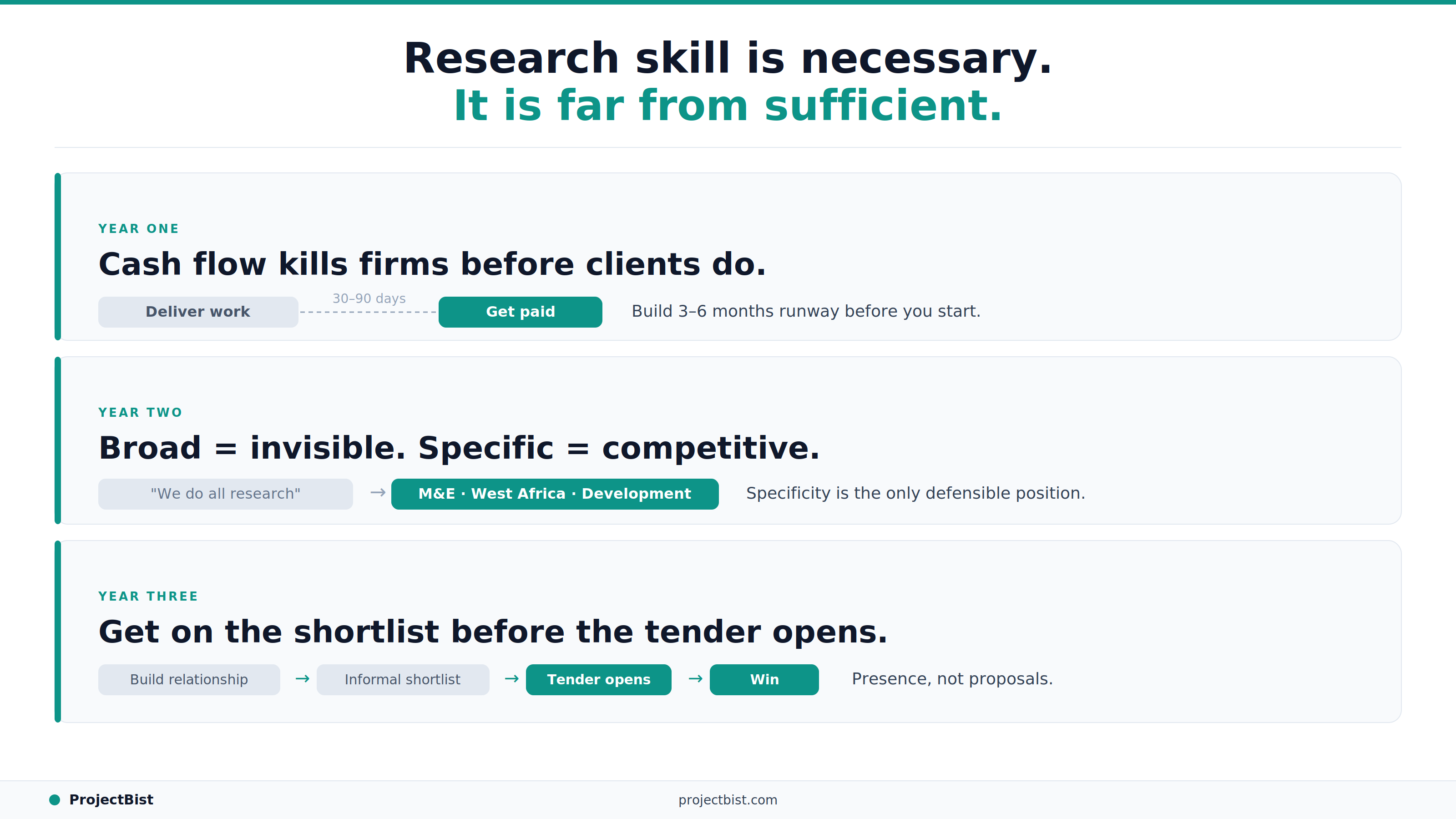
How to Build a Research Firm From Scratch: What the First Three Years Actually Require