P
Loading blog...
Loading blog...
Multi-country research amplifies every coordination challenge that single-country research already has. Here is how to anticipate and manage what goes wrong.
Ravi Menon
Jun 04, 2026•4 min read
The invitation to lead a five-country household survey across three continents feels like a milestone. And it is. It is also the moment where everything you assumed about what 'standard research practice' means gets tested against the reality that there is no single standard, different countries have very different ones, and your job is to produce data that is comparable across all five.
Multi-country research is not single-country research done more times. It introduces a specific set of management challenges that require explicit architectural decisions at the design stage, sustained coordination systems throughout implementation, and analytical frameworks that are prepared from the start to handle variation rather than suppress it.
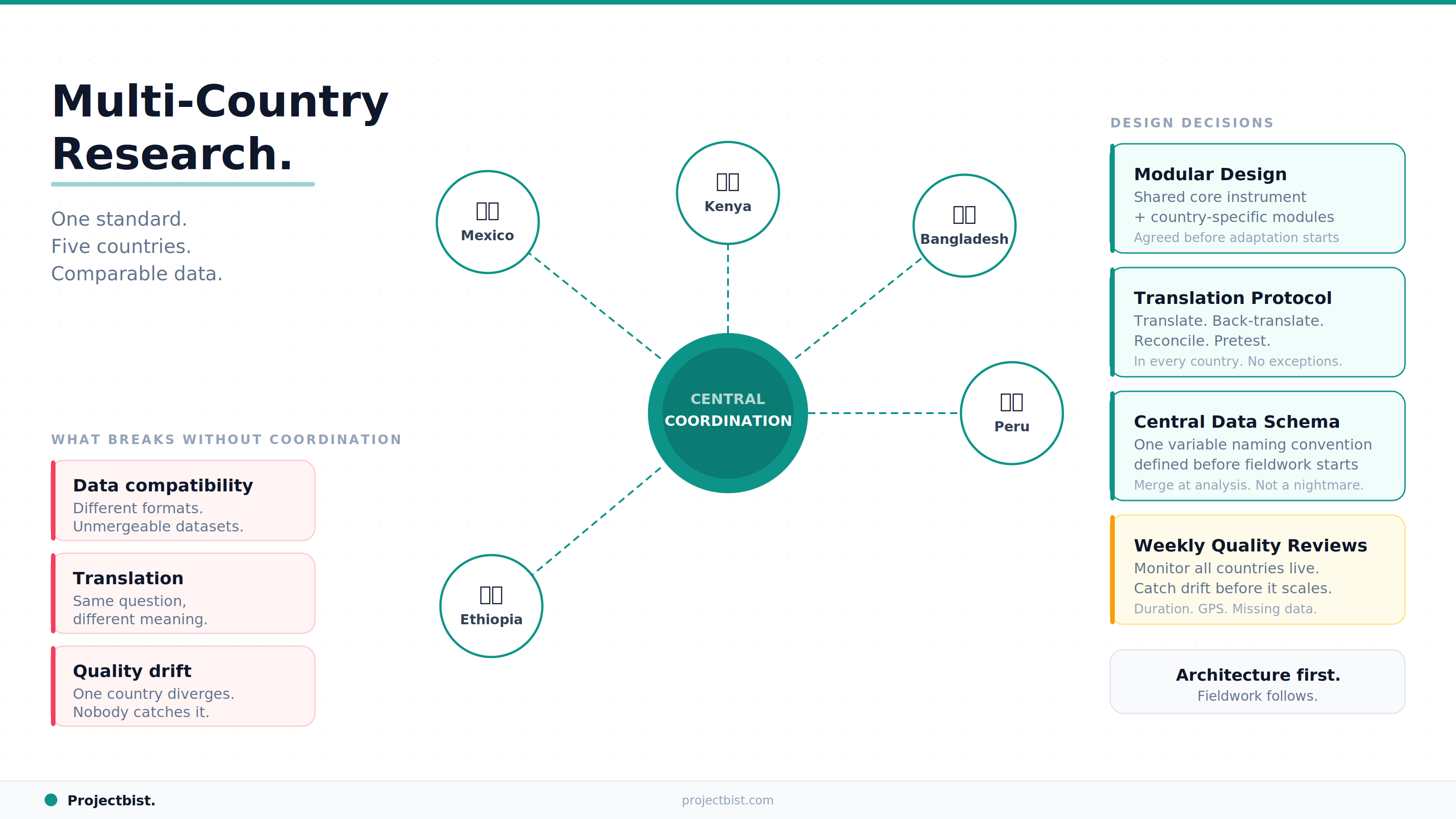
The first decision is how much to standardize across countries versus allowing country-specific adaptations. Full standardization, using identical instruments in identical formats, produces the cleanest comparability but may produce instruments that do not make cultural sense in all contexts. Full adaptation, tailoring every instrument to each country context, produces locally valid data but makes cross-country comparison analytically difficult.
The practical answer for most multi-country studies is a modular design: a standardized core that is identical across all countries, capturing the constructs essential for comparison, plus country-specific modules that capture locally relevant variation. The core must be agreed on before any country begins adaptation, not retrofitted after individual country instruments are already developed.
Instruments translated independently in each country, without coordination, will have different nuances even when they are nominally in the same language. A unified translation protocol requiring: (1) professional translation by a native speaker with research experience, (2) independent back-translation into the source language by a different translator, (3) comparison and reconciliation of discrepancies by a bilingual researcher, and (4) cognitive pretesting of the final instrument with target respondents in each language. This process is resource-intensive but prevents the alternative: discovering at the analysis stage that the same question was interpreted differently in different countries.
If each country team manages its own data in its own format, merging for analysis is an analytical nightmare. Define the master dataset structure before fieldwork begins: variable names, value labels, missing value codes, and ID structures that are consistent across all countries. All country teams should submit data in this format, not in whatever format their CAPI platform defaults to.
The most expensive data problem in multi-country research is the one discovered at analysis. Every hour spent on harmonization before fieldwork saves ten hours of data reconciliation after it.
Weekly cross-country data quality reviews during fieldwork allow the central team to identify when one country's data is diverging from expected patterns before the deviation becomes a large-scale problem. Monitor interview duration distributions (too fast or too slow), GPS location compliance, missing data rates by enumerator, and response distribution anomalies. These patterns often reveal problems with specific enumerators or specific field sites before they contaminate the full dataset.
When problems arise in the field, how they are handled should be consistent across countries. Document the decision-making hierarchy: what the enumerator decides, what the field supervisor decides, what requires escalation to country coordinators, and what requires escalation to the central team. If one country resolves an ambiguity one way and another country resolves it differently, the data is no longer comparable on that dimension.
Multi-country research requires trust between people who often work across language barriers, time zone differences, and significant power asymmetries between international and local research partners. The project architecture that works best treats country teams as genuine partners with agency over their context-specific decisions, not as data collection subcontractors executing a design they had no role in creating.
Research firms and lead researchers who build relationships with local partner organizations before a project rather than searching for them when a contract is awarded consistently produce better data and more sustainable partnerships.
Newsletter
Personalize your updates! Subscribe to ProjectBist's Newsletter and choose from the following categories.
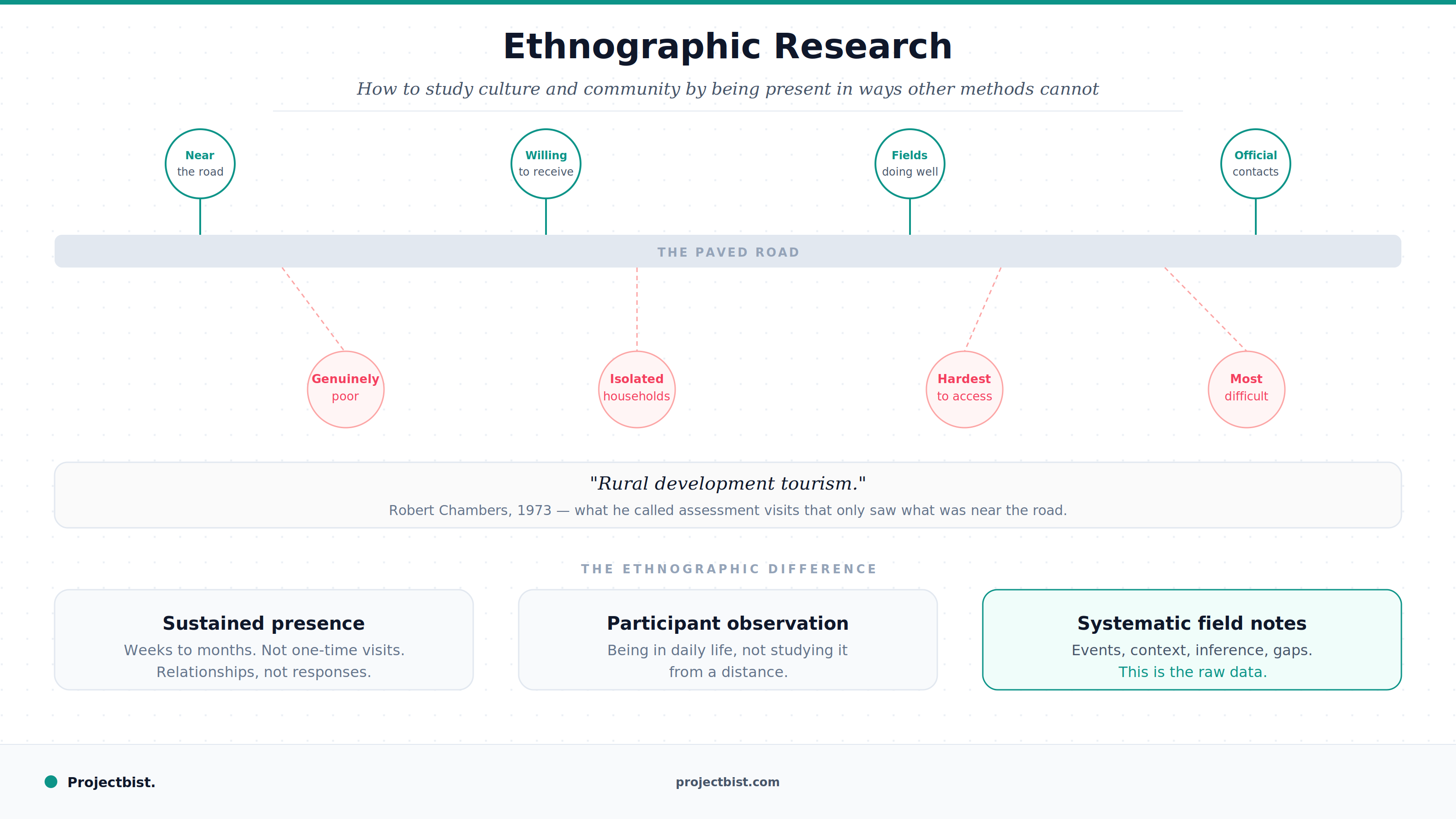
Ethnographic Research: How to Study Culture and Community by Being Present in Ways Other Methods Cannot
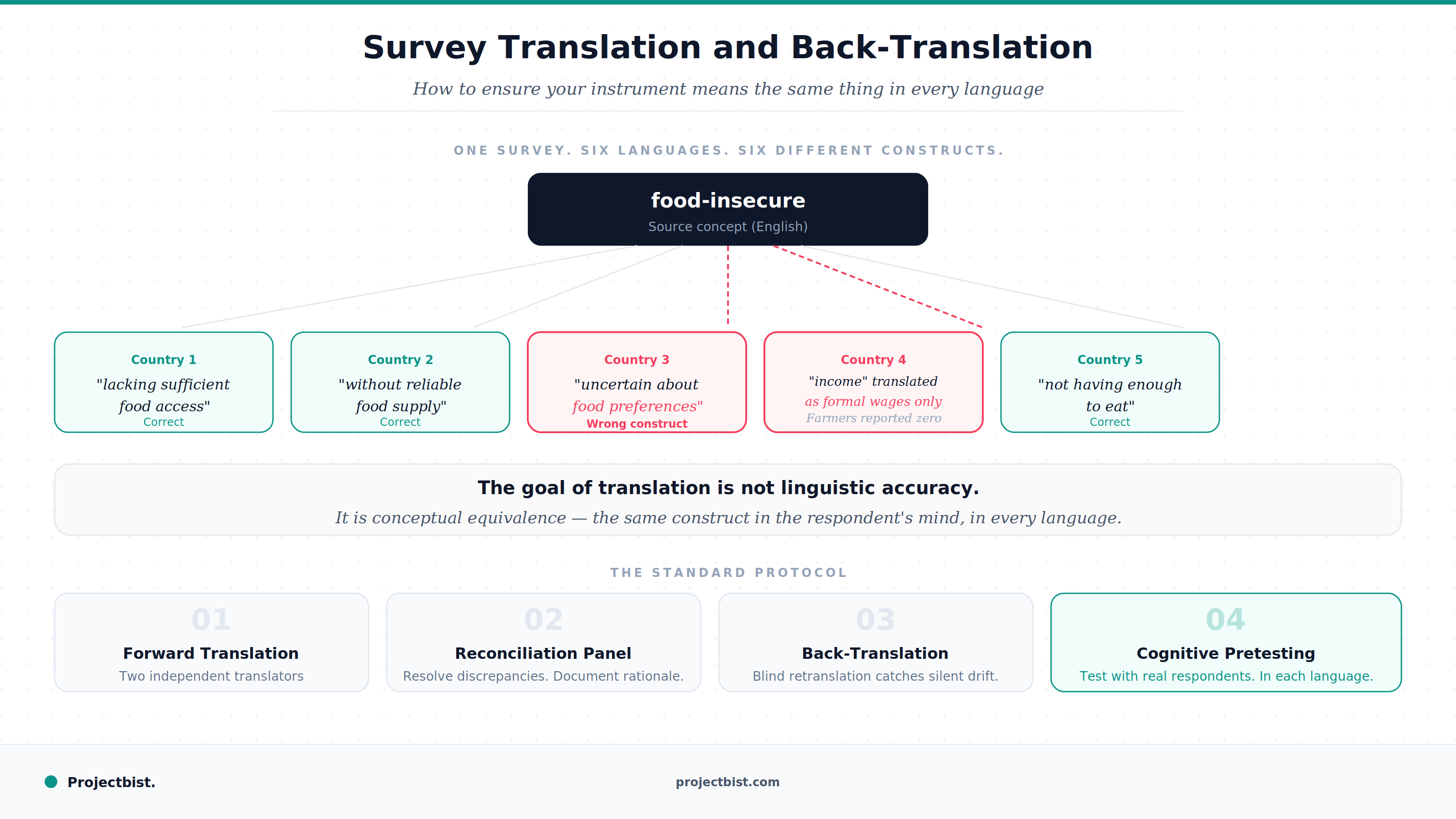
Survey Translation and Back-Translation: How to Ensure Your Instrument Means the Same Thing in Every Language
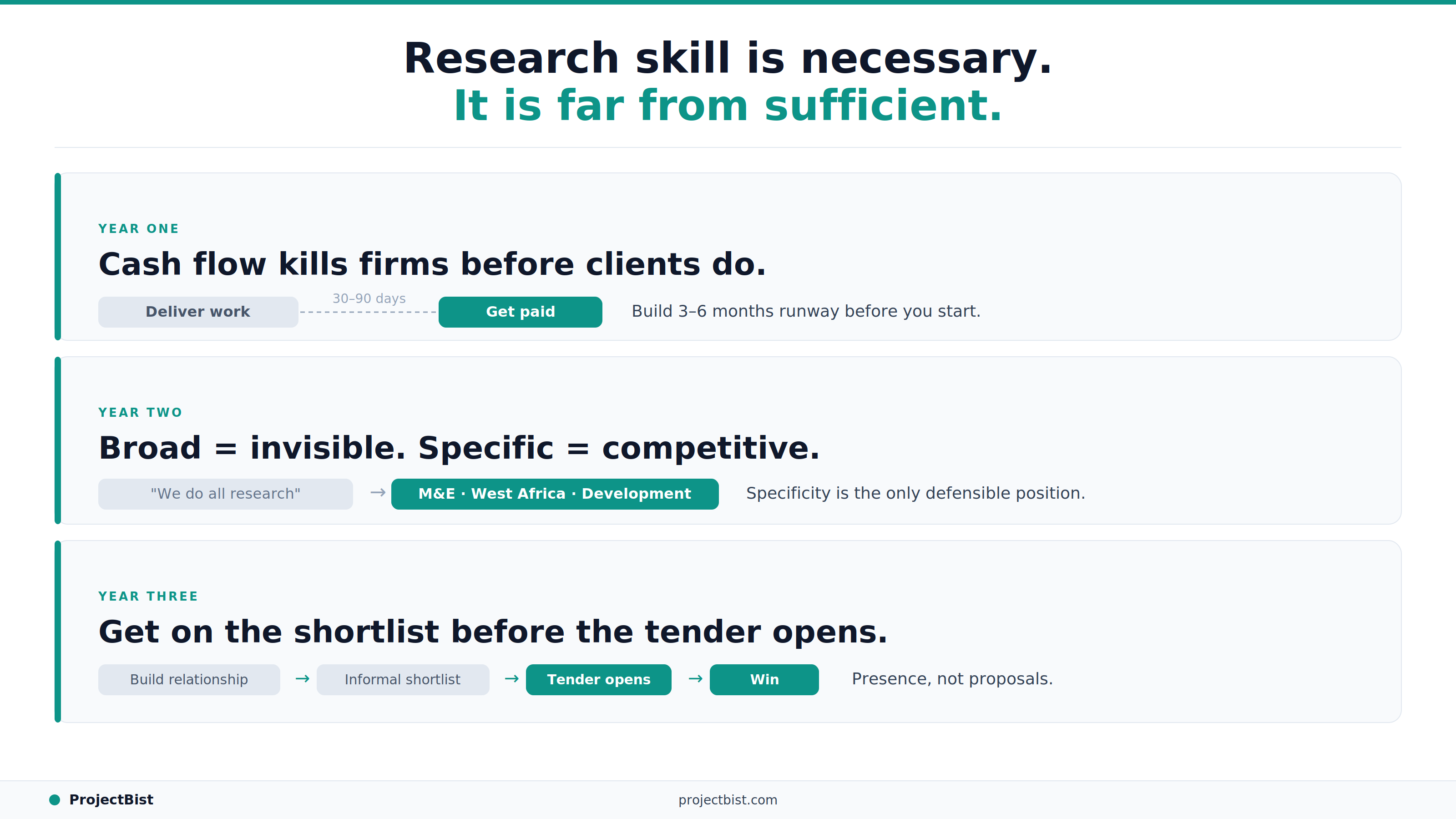
How to Build a Research Firm From Scratch: What the First Three Years Actually Require