P
Loading blog...
Loading blog...
Most research reports are written for archives, not audiences. Here is how to write one built for the people who need to act on it.
Chloe Dubois
Apr 06, 2026•4 min read
There is a particular kind of research report that most experienced researchers have written at some point and most clients have received. It is thorough. It documents methodology in careful detail. It presents findings by theme. It runs to 80 pages.
And it is never read in full by anyone.
The problem is not the length. Long reports can be excellent. The problem is that the report was written as documentation, not as communication. It records what the researcher found without consistently answering the question the client is actually asking: so what do I do with this?
Research reports are often written for three different audiences simultaneously: the commissioning client, the operational team who will implement recommendations, and possibly an external funder or regulator who needs to verify methodology and findings. These three audiences have fundamentally different needs.
The commissioning client needs the key findings and their strategic implications, fast. The operational team needs specific, actionable recommendations with enough context to implement them. The external funder needs methodology rigor and transparency of limitations.
The best reports address all three without making any one group wade through content written for the others. That means a tight executive summary at the front, a main body written for the operational reader, and technical appendices for the methodologically focused reader. Each section should be self-contained enough that the right audience can read what they need without being forced through the rest.
Most clients will read the executive summary and then scan the rest. Design accordingly.
A good executive summary for a research report contains: the research question and why it was asked, the methodology in one brief paragraph, three to five key findings stated as specific conclusions (not just topics), and the two or three most important recommendations that follow. It should not exceed two pages.
The executive summary is not a table of contents for the report. It is a standalone summary of the most important things the report contains.
If your executive summary requires the reader to have read the rest of the report to understand it, rewrite the executive summary.
This is the most important structural decision in writing a research report.
Data is what you collected. Sixty-four percent of respondents said they would consider switching providers if prices increased by more than 15 percent.
A finding is what that data means. Most current customers are at risk of switching on price, and the threshold is lower than the client's current pricing strategy assumes.
Many research reports present data. The best ones present findings. The difference is whether the researcher has done the analytical work to say what the data means, not just what it shows.
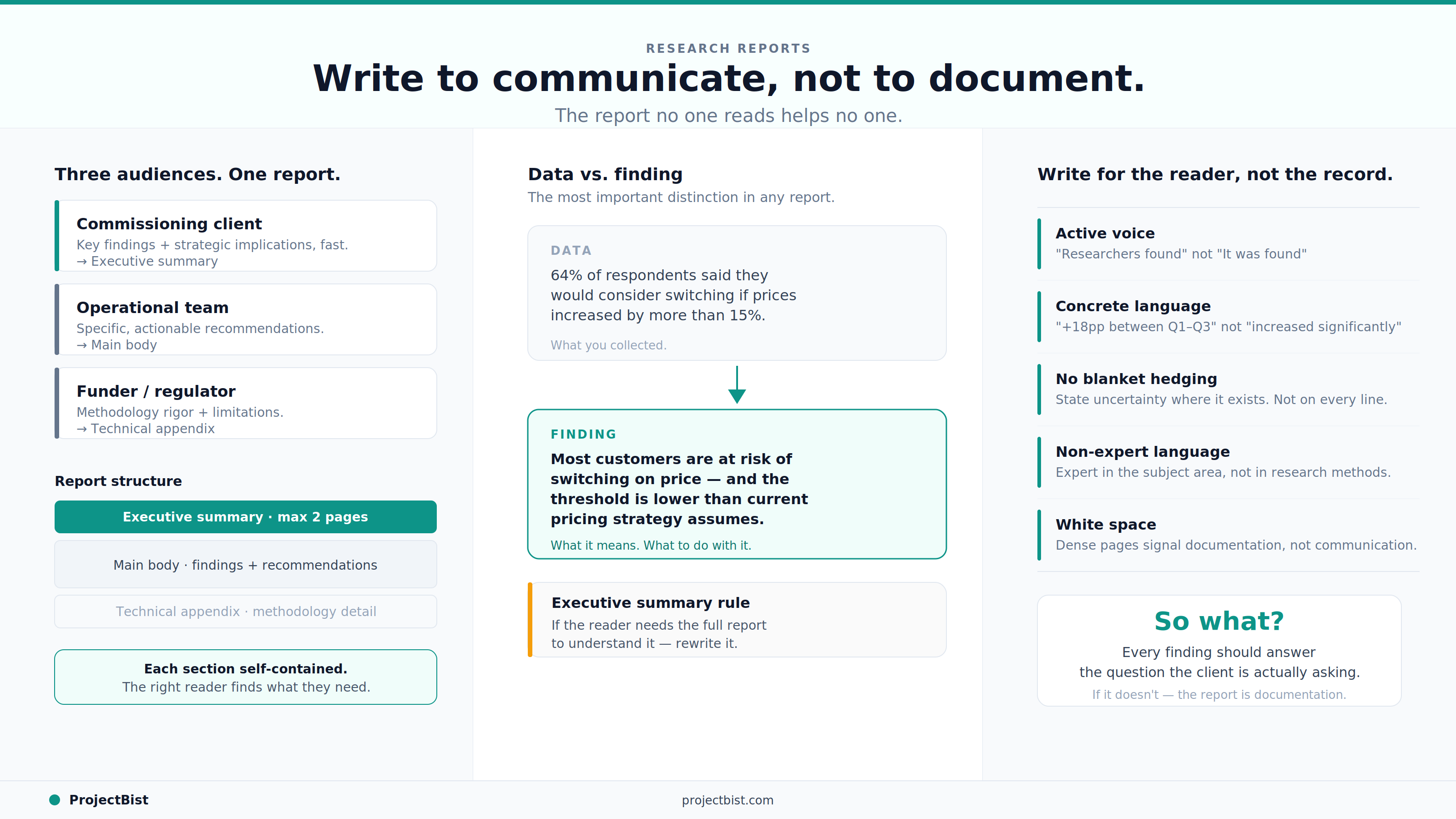
Unless the report is explicitly a technical methodology document, write for someone who is expert in the client's subject area but not in research methods. Do not use jargon like 'statistically significant at the 5 percent level' without explaining what it means for this finding in this context.
Specific practices that help:
White space is not wasted space. Dense pages of unbroken text in a research report are a signal that the report was written for documentation rather than reading.
Use visual hierarchy: clear heading levels, consistent data visualization, and callout boxes for key findings. Charts should be labeled clearly enough that they can be understood without reading the surrounding text. Tables should include column headers that tell you not just what the data is, but what you should notice about it.
Most research reports end with a conclusions section that summarizes what was found. Better reports end with implications and recommendations: given what this research shows, here are the specific decisions or actions we recommend considering.
Not every research project warrants prescriptive recommendations: descriptive studies, exploratory studies, and studies commissioned for regulatory purposes may specifically not include recommendations. But for applied research, the most valuable thing you can do at the end of a report is help the client understand what they should do differently because of what you found.
Newsletter
Personalize your updates! Subscribe to ProjectBist's Newsletter and choose from the following categories.
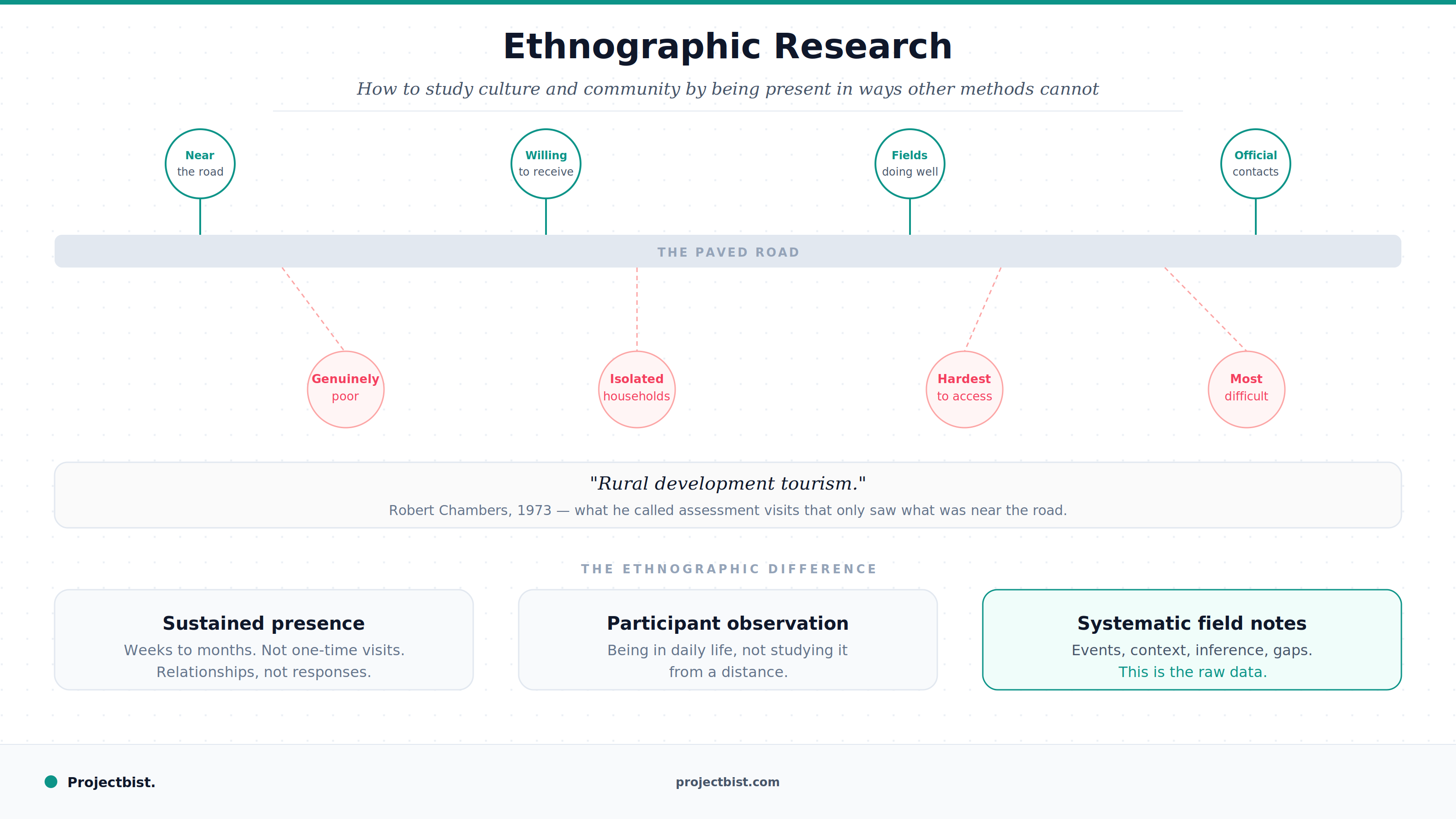
Ethnographic Research: How to Study Culture and Community by Being Present in Ways Other Methods Cannot
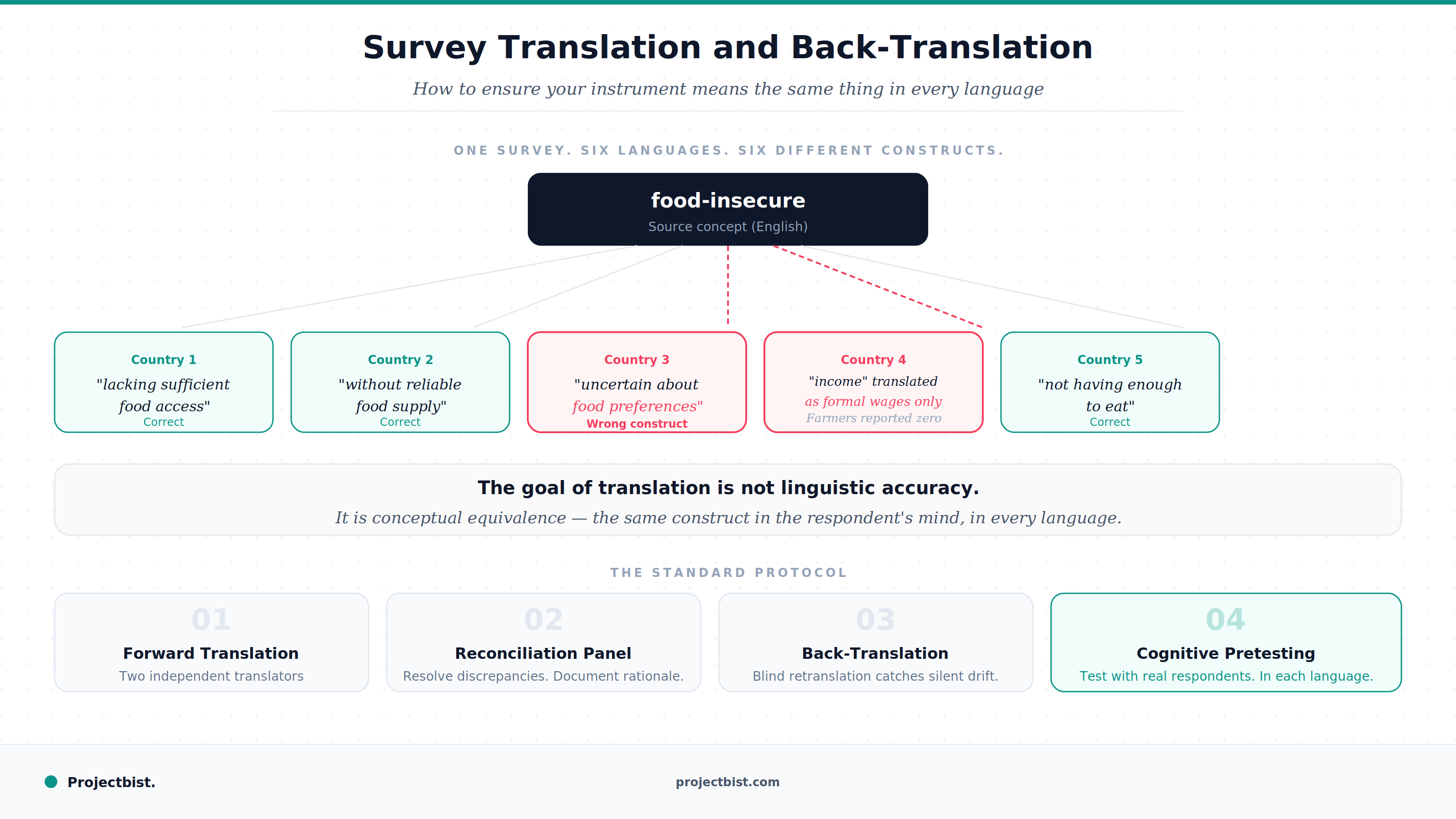
Survey Translation and Back-Translation: How to Ensure Your Instrument Means the Same Thing in Every Language
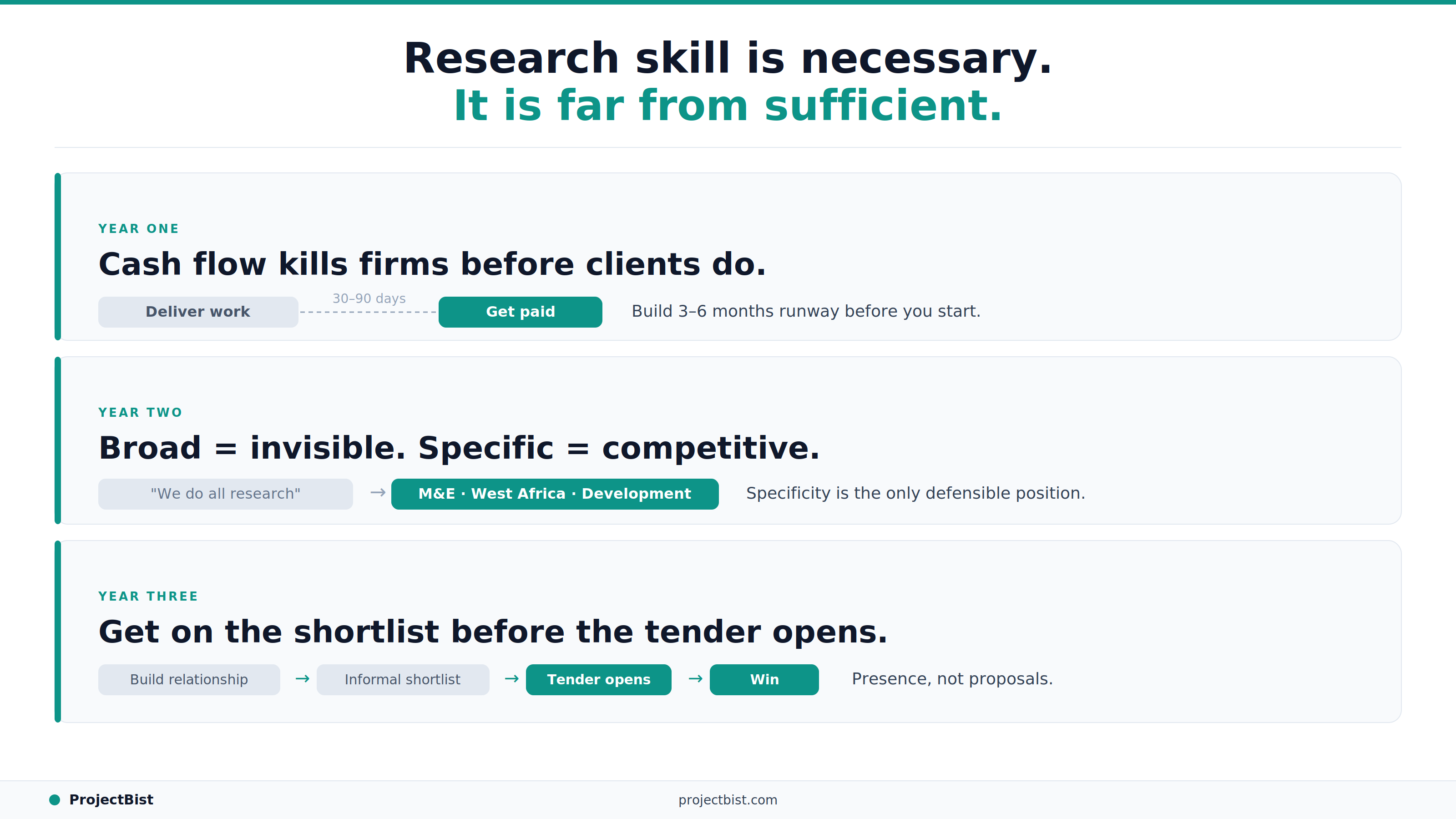
How to Build a Research Firm From Scratch: What the First Three Years Actually Require