P
Loading blog...
Loading blog...
The world's most candid conversations about brands, health, money, and politics are happening online. Digital ethnography is the systematic method for making sense of them.
Sofia Alvarez
May 20, 2026•4 min read
In a Facebook group for parents navigating a specific childhood chronic illness, strangers share medication side effects they have not told their doctors, hospital experiences their family does not know about, and product recommendations based on lived trial and error that no clinical study has captured.
That conversation is happening right now. In thousands of communities, across dozens of platforms, in hundreds of languages. Traditional research methods were designed for a world where the conversations you needed to study had to be created by the researcher: arranged, facilitated, recorded. Digital ethnography is the method built for a world where those conversations are already happening.
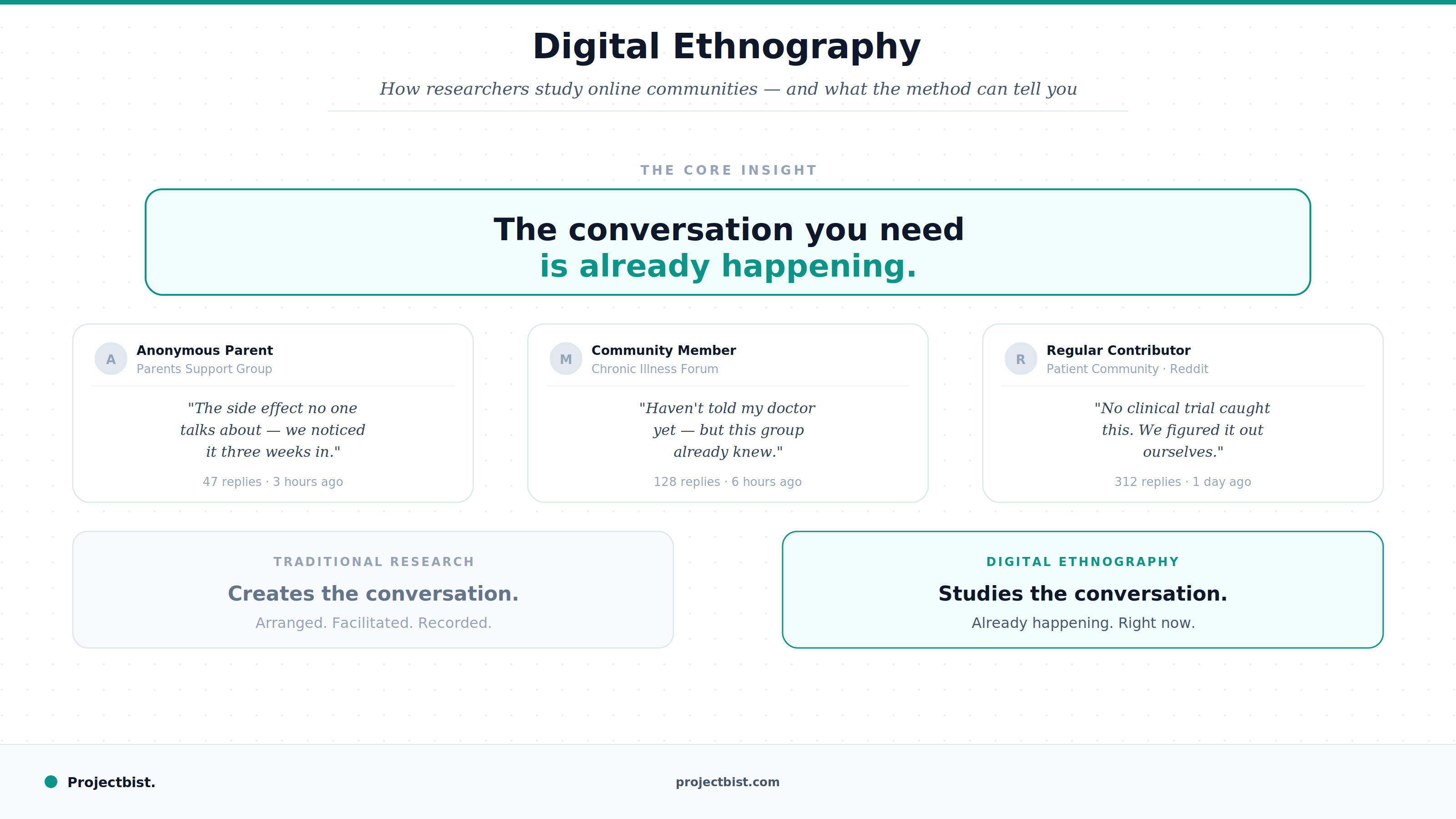
Digital ethnography, also called netnography, is the systematic study of online communities, forums, social media spaces, and digital cultures using methods adapted from traditional ethnography. The term netnography was coined by consumer researcher Robert Kozinets in 1997 and has since developed into a rigorous methodological framework with its own standards, ethical guidelines, and analytical approaches (see Kozinets' Netnography: The Essential Guide, 4th edition, Sage Publications 2020).
It is different from social listening, which systematically monitors mentions and tracks sentiment at scale. Digital ethnography involves the researcher immersing themselves in specific online communities over time, developing an understanding of their norms, language, hierarchies, and shared meanings, and producing an interpretive account of how that community works.
The researcher reads, follows, and records community conversations over a sustained period without participating. This is analogous to sitting in a community and watching how people interact before conducting interviews. The goal is developing familiarity with the community's language, dynamics, and recurring concerns.
Systematically collecting and analyzing historical posts, threads, and discussions that are relevant to the research question. Communities like Reddit, Quora, and niche forums have searchable archives that allow researchers to trace how discussions on a topic have evolved over months or years.
In some netnographic research, the researcher participates actively in the community, asking questions and contributing to discussions, with the community's knowledge that research is being conducted. This is ethically more complex but produces richer data about community dynamics and norms.
Social listening operates at scale across many platforms and tracks patterns in public conversation. Digital ethnography operates at depth within specific communities and develops interpretive understanding of meaning, context, and culture. The difference is between knowing that a community is worried about something and understanding why that worry takes the specific form it does.
For research questions requiring breadth and trend detection, social listening is the right tool. For questions requiring depth and cultural understanding, digital ethnography is more appropriate.
Social listening tells you that people in online parenting groups discuss sleep training. Digital ethnography tells you what the concept means to those parents, why it is emotionally loaded, how the community polices the conversation, and what that reveals about their values as a group.
Digital ethnography involves people who may not know they are being studied, even if their conversations are technically public. The ESOMAR guidelines and the Association of Internet Researchers (AoIR) ethical framework both require researchers to consider: the level of privacy expectation in the community (a closed Facebook group has a higher privacy expectation than a public subreddit), the sensitivity of the topic being discussed, and the potential harm to community members from being identified in research.
Best practice: analyze at the theme and pattern level rather than reproducing individual posts verbatim, even when posts are technically public. Report community norms and collective meanings rather than identifying individual community members.
What platforms are most commonly studied in digital ethnography?
Reddit, Facebook groups, WhatsApp communities, specialized health forums (like PatientsLikeMe and HealthUnlocked), parenting communities, professional forums, and Discord servers are among the most commonly studied. Platform choice should be driven by where the target community actually has its conversations.
How long does a digital ethnography take?
Meaningful immersion in a community typically requires a minimum of two to four weeks of observation before analytical conclusions are drawn. For complex communities or longitudinal research questions, three to six months is more appropriate. Unlike survey research, the timeline is driven by the pace of community activity rather than a fieldwork schedule.
Do I need special software for digital ethnography?
Basic digital ethnography can be conducted with systematic screenshot capture and standard qualitative analysis software like NVivo or ATLAS.ti. For larger-scale archival analysis, purpose-built tools like Brandwatch, Brandmapp, or academic scraping tools may be needed, along with appropriate ethics review for data collection at scale.
Newsletter
Personalize your updates! Subscribe to ProjectBist's Newsletter and choose from the following categories.
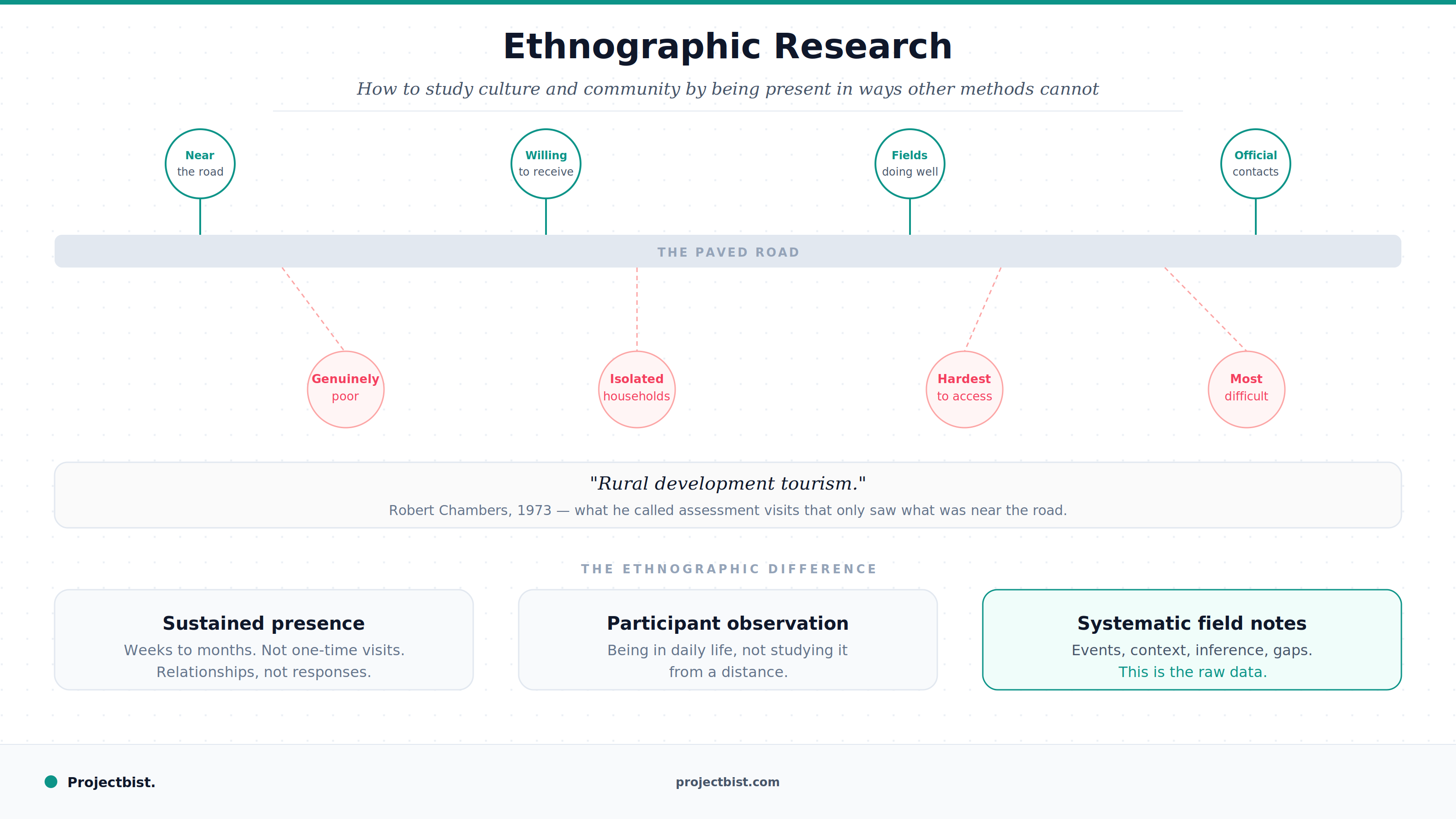
Ethnographic Research: How to Study Culture and Community by Being Present in Ways Other Methods Cannot
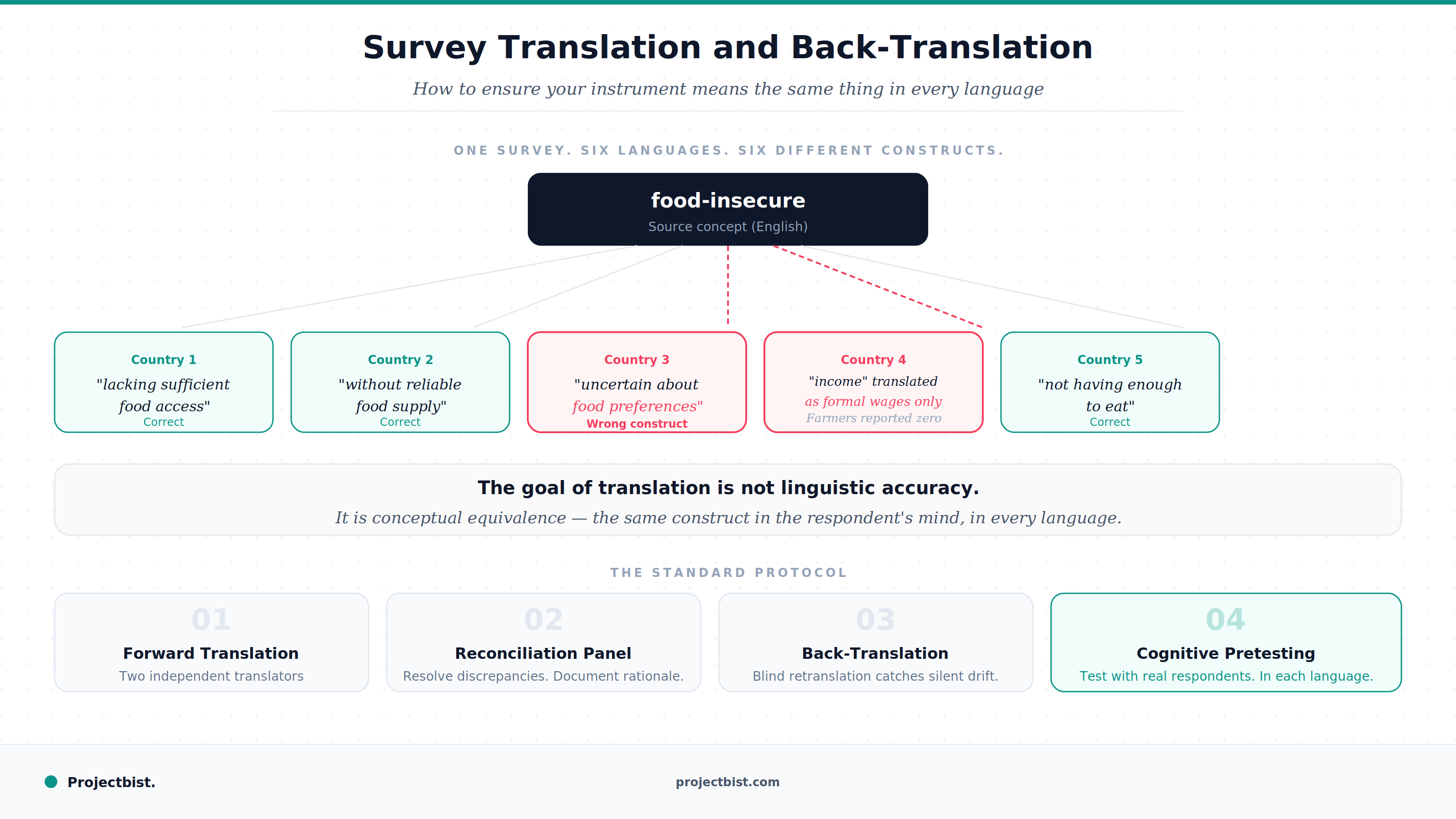
Survey Translation and Back-Translation: How to Ensure Your Instrument Means the Same Thing in Every Language
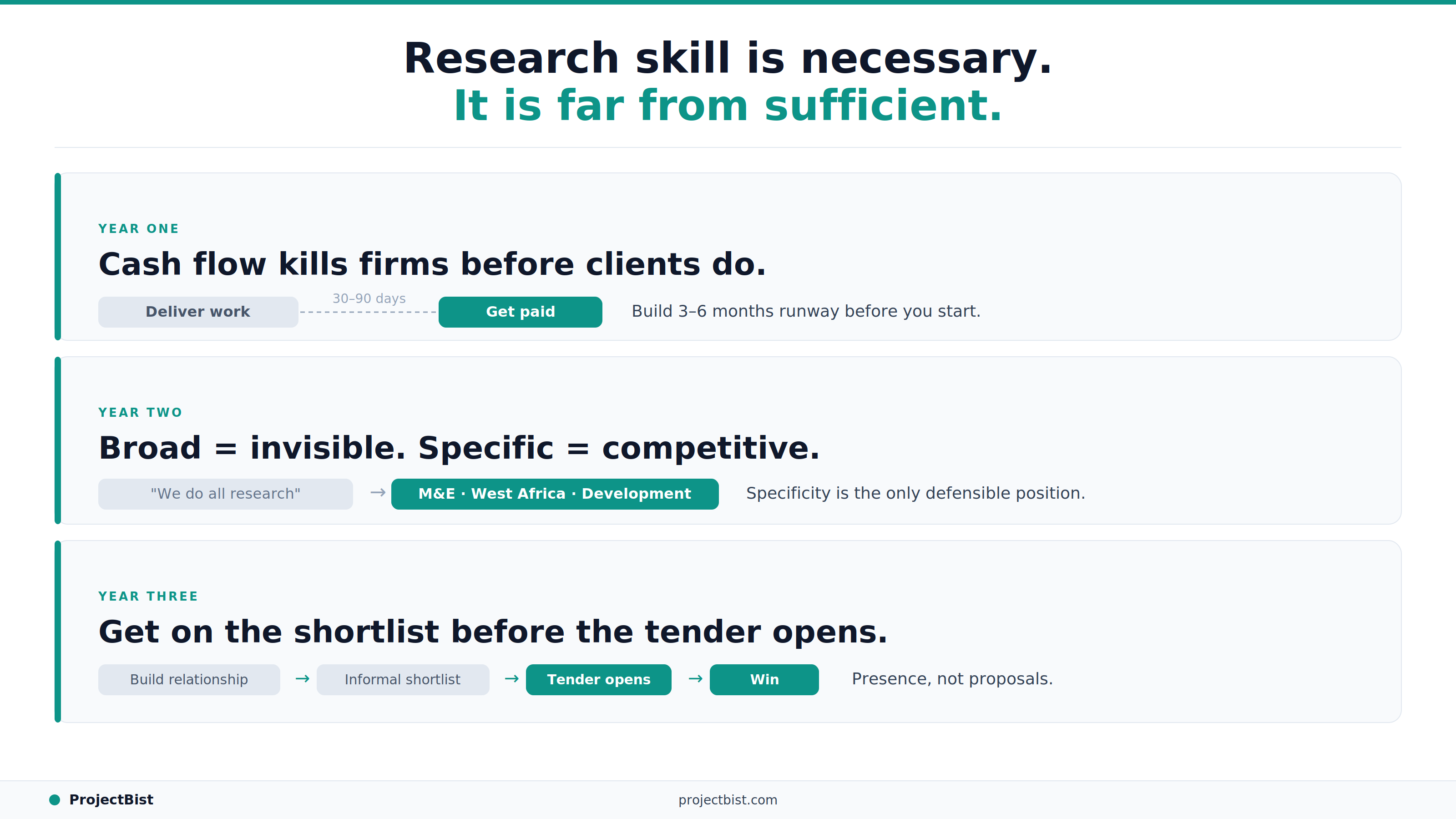
How to Build a Research Firm From Scratch: What the First Three Years Actually Require