P
Loading blog...
Loading blog...
Most surveys are designed to collect responses. The best ones are designed to collect truth.
Maya Chen
Apr 01, 2026•4 min read
Here is something that does not get said enough in research training: a badly designed survey does not just give you low-quality data. It gives you confidently wrong data. Responses that look clean, complete, and analyzable, but that do not reflect what respondents actually think or do.
Survey design is where that problem either starts or gets prevented. And unlike data cleaning or statistical analysis, good survey design costs nothing extra. It just requires intentional thinking before you deploy.
The most common survey design mistake is building questions before establishing what a usable answer actually looks like. Before you write a single question, you should be able to state: what decision or finding will this question inform? If a question does not have a clear answer to that, it should not be in the survey.
A survey with 40 questions because the team could not agree on what to cut is not thorough. It is unfocused, and unfocused surveys produce abandonment and fatigue-driven response bias in the questions respondents do answer.
Every question in a survey should earn its place. If you cannot say what you will do with the answer, cut the question.
"Don't you think our product is better than alternatives?" is an obvious example. Less obvious: "How satisfied are you with the excellent service you received?" is just as leading. Both prime the respondent toward a particular answer before they have formed an independent view.
Rule: State the question in neutral terms. Avoid adjectives that imply a judgment before the respondent gives one.
"How would you rate the quality and price of the product?" is asking two things at once. The respondent may think the quality is good and the price is bad. Their single rating means nothing.
Rule: One question, one thing. If you want to measure two things, ask two questions.
"Agree / Somewhat Agree / Neutral / Somewhat Disagree / Disagree" looks clean but is problematic if "Neutral" means both "I have no opinion" and "I feel equally positive and negative." These are different states and should not share a response option.
Rule: Test your scale options with real respondents before deployment. Ask them to explain what they would choose and why.
"In the last six months, how often did you..." requires respondents to accurately recall behavior over a long period. Most people cannot do this reliably. Questions requiring long-period recall produce estimates, not data.
Rule: Limit recall windows. Ask about the last week or last month when possible. If longer periods are required, acknowledge the limitation in how you report findings.
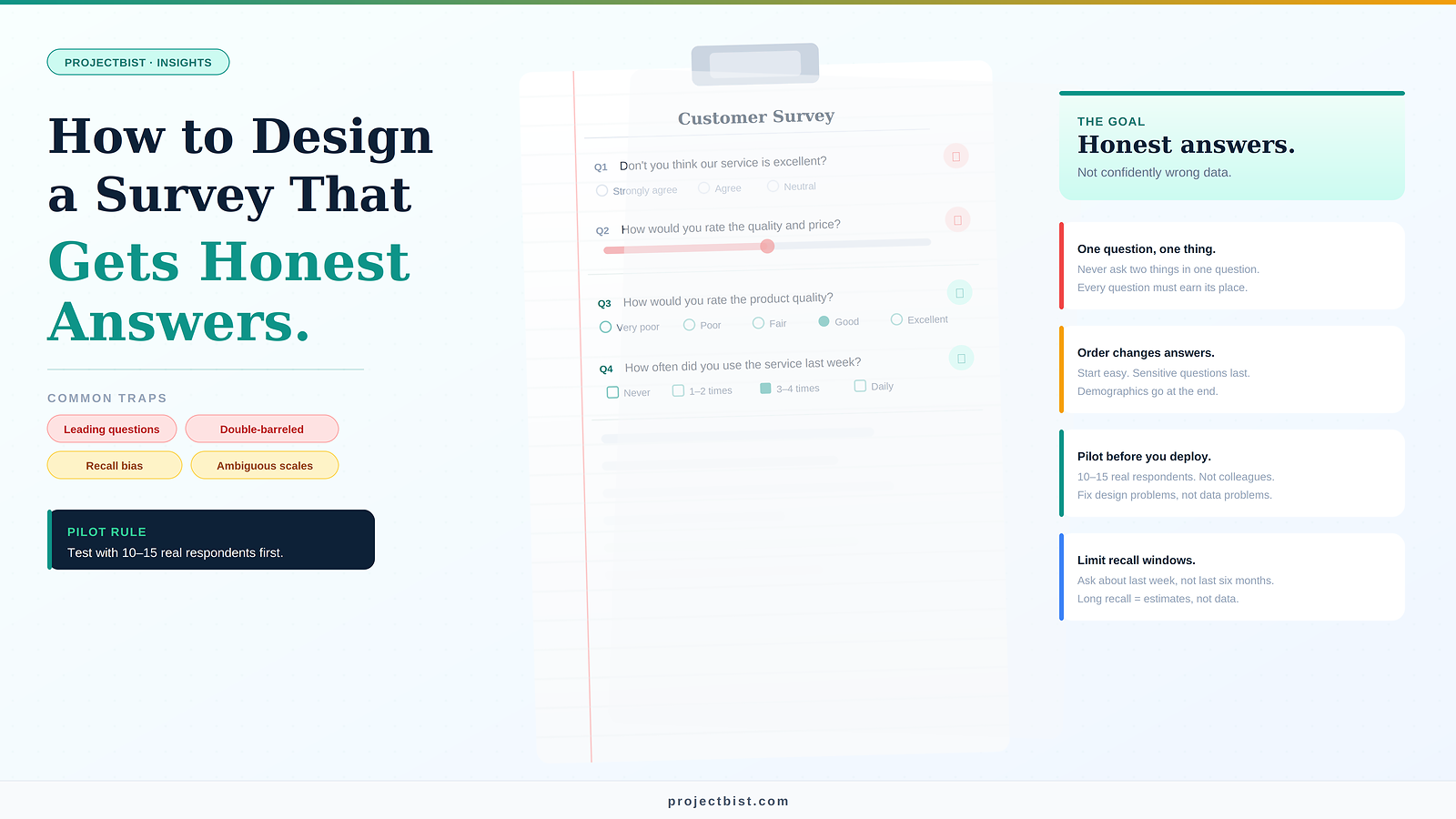
The order in which questions appear shapes how respondents interpret and answer later questions. A question about job satisfaction placed after questions about workplace conflicts will produce lower satisfaction scores than the same question placed at the start. This is called question order effect, and it is well-documented in survey methodology research.
A pilot test is the difference between discovering a problem in the design and discovering it in the data. Run the survey with 10 to 15 people who match your target population. Not colleagues. Not team members. Actual respondents from your population.
Watch where they pause. Watch what they ask for clarification on. Watch which questions they skip. Those are the design problems you need to fix before the full deployment.
A survey is a conversation with a structure. The better you design that structure, the more honest the conversation becomes. And honest conversations produce data you can actually build decisions on.
ProjectBist profiles show methodology experience and client review history.
Find Survey Specialistsarrow_forwardNewsletter
Personalize your updates! Subscribe to ProjectBist's Newsletter and choose from the following categories.
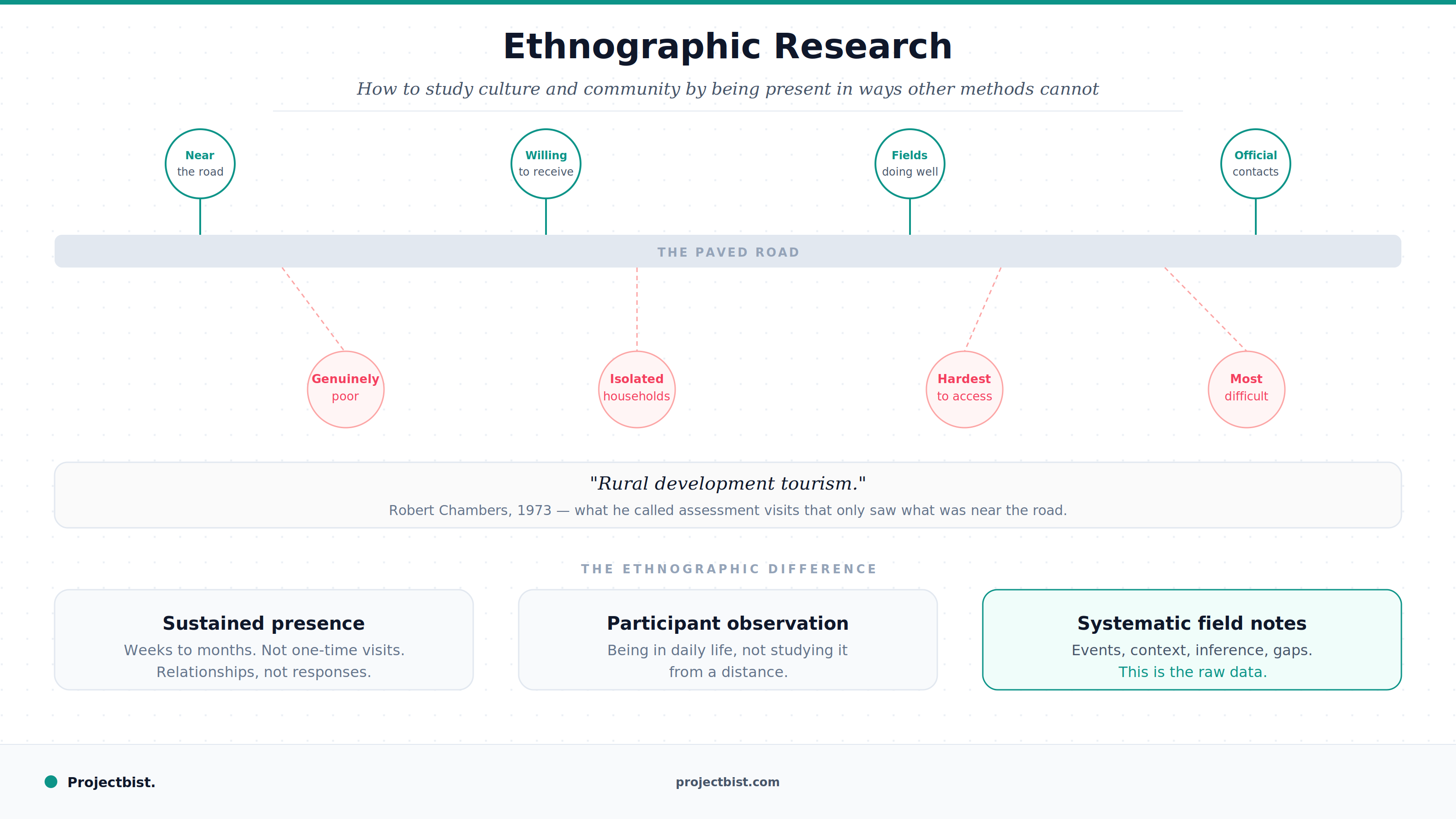
Ethnographic Research: How to Study Culture and Community by Being Present in Ways Other Methods Cannot
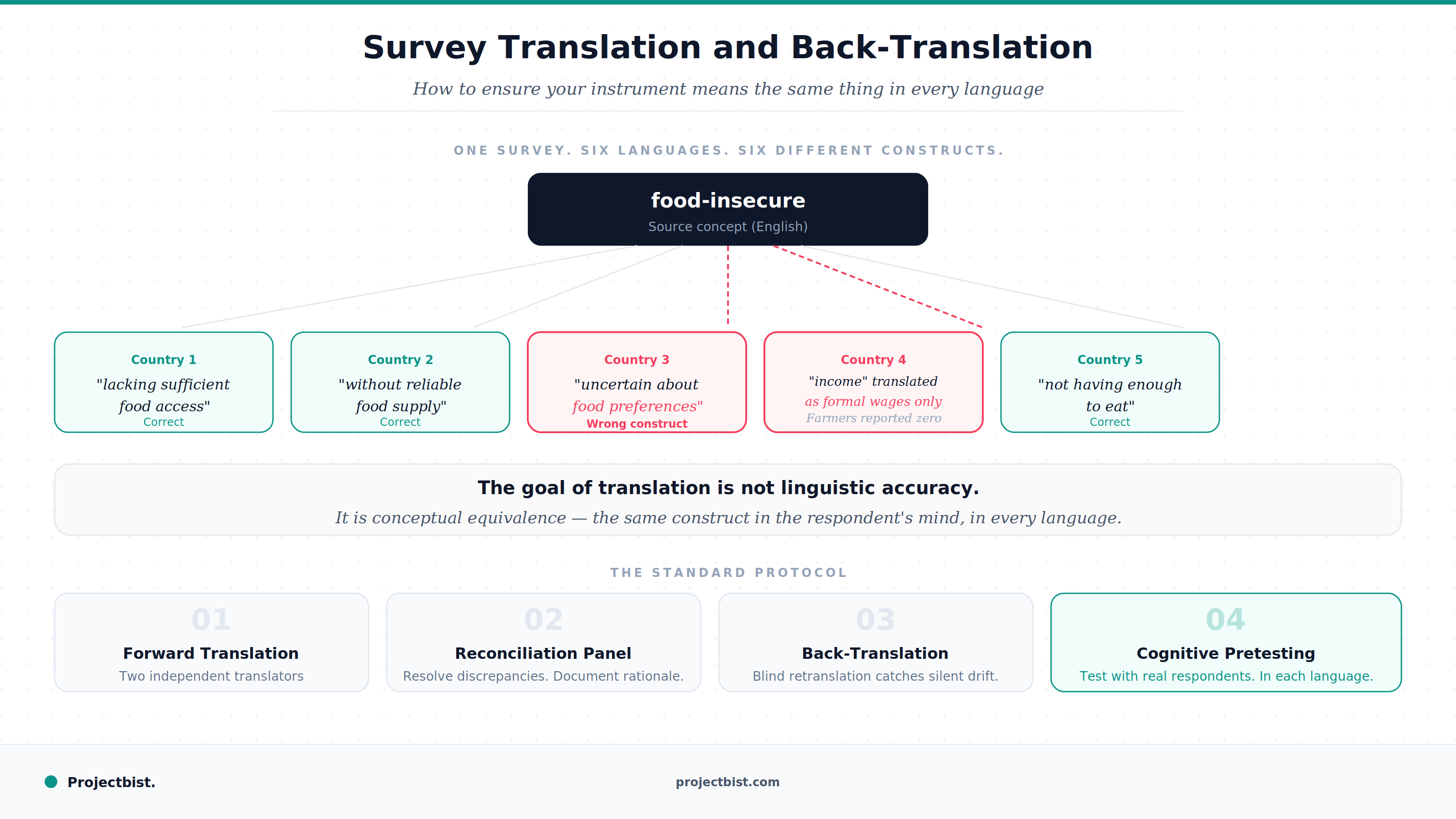
Survey Translation and Back-Translation: How to Ensure Your Instrument Means the Same Thing in Every Language
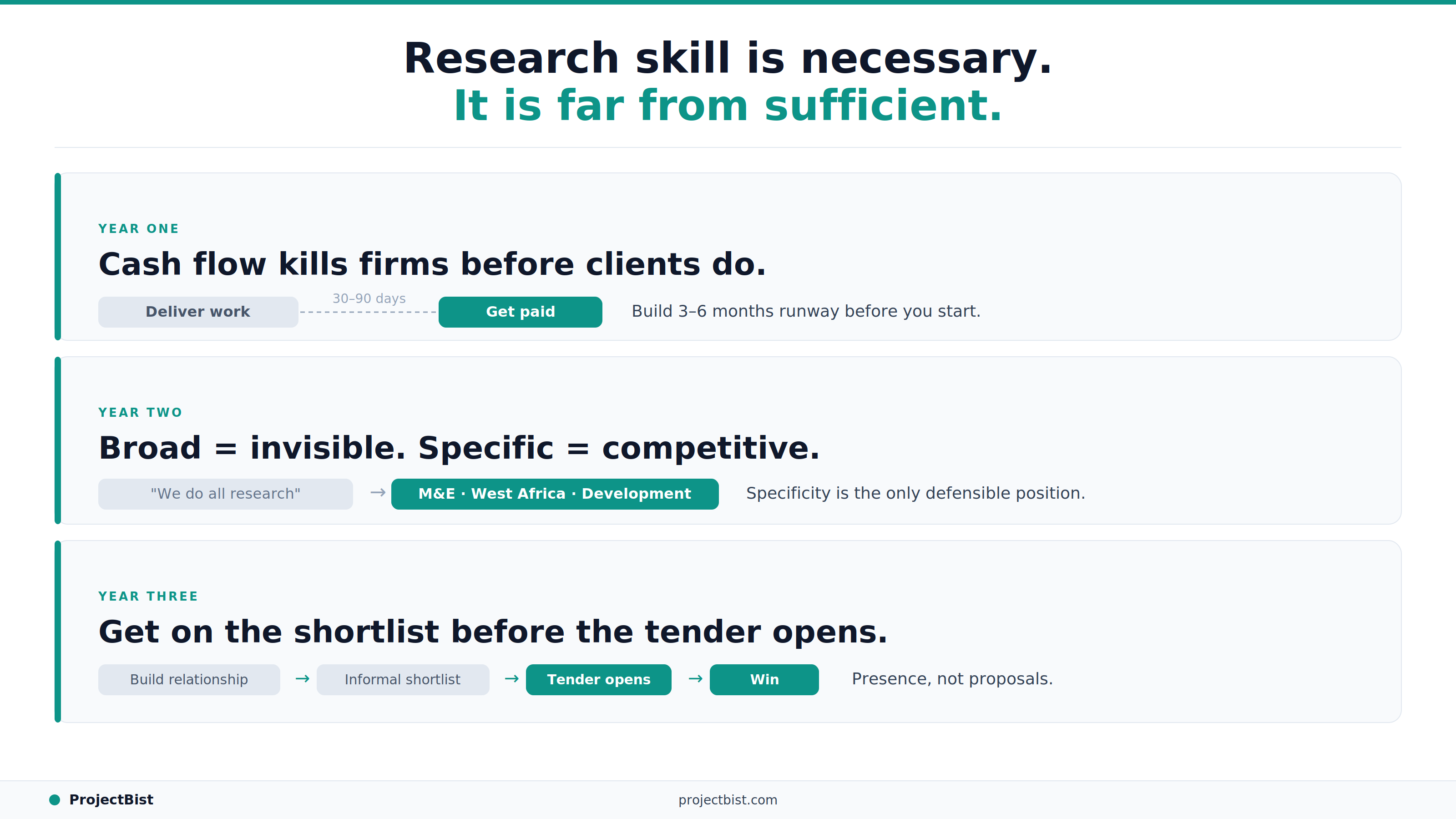
How to Build a Research Firm From Scratch: What the First Three Years Actually Require