P
Loading blog...
Loading blog...
The budget is usually not the problem. How it gets allocated is.
Jordan Blake
Apr 03, 2026•4 min read
Most clients who feel burned by a research project do not point to the data collection. They point to everything that happened before it.
The brief that was too vague. The proposal that looked right but was not pushed on. The scope that crept by three weeks in. The researcher who was technically capable but had never worked in this sector before.
Budget waste in research is rarely about the cost of the study itself. It is about the decisions made before a single question is fielded.
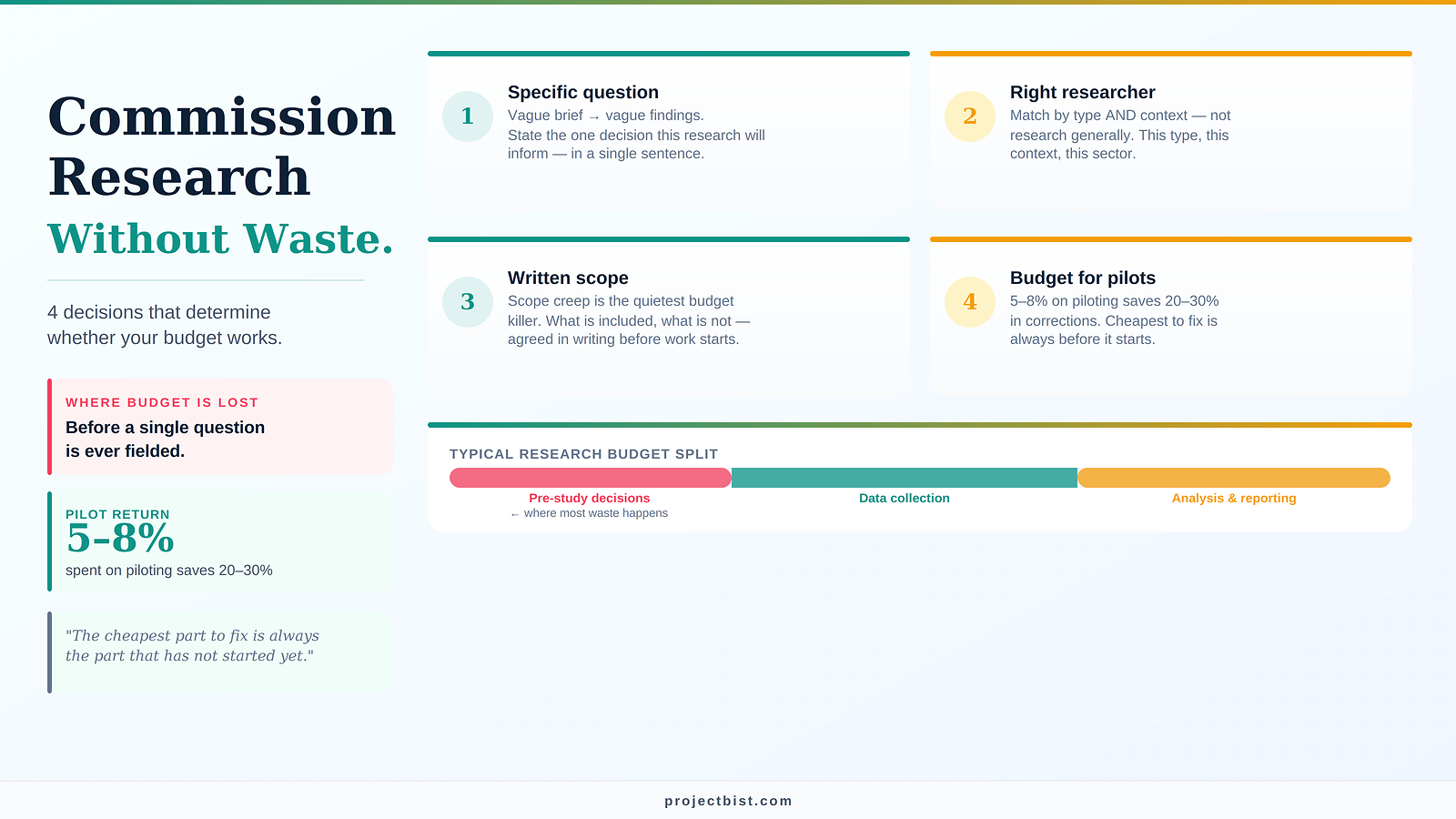
Every vague research brief produces a vague scope, which produces a vague proposal, which produces findings that cannot drive a specific decision. The more precisely you can state what you need to know and why, the more efficiently a researcher can design a study to answer it.
Before writing a brief, test your objective: can you write down the decision this research will inform, in one sentence? If you cannot, the objective is not clear enough yet. Tighten it before you send anything to a researcher.
The most common cause of wasted research budget is a mismatch between the researcher's strengths and the project's requirements. A researcher with strong quantitative experience applying qualitative methods to please a client. A firm with city-based experience fielding surveys in rural areas. The outputs look credible until you try to act on them.
Before commissioning, ask: has this researcher done this specific type of study in this type of context before? Not research generally. This type, in this context.
Scope creep is the quietest research budget killer. An extra focus group added halfway through. A second round of analysis that was implied but never priced. A report format that turned out to be more complex than the original brief described.
Every project should have a written scope statement that both parties sign off on before work begins. What is included, what is not, what additional work will be quoted separately if requested. This is not bureaucracy. It is the difference between a project that delivers on budget and one that does not.
The single highest-return investment in any research project is a pilot test before full deployment. A survey with a logic error, a focus group guide that misses the key question, a field protocol with an ambiguity in respondent eligibility: all of these are cheap to fix at the pilot stage and expensive to discover after 400 interviews have been completed.
Budget for it from the start. A pilot that uses 5 to 8 percent of your total budget routinely saves 20 to 30 percent of the cost of post-collection corrections.
The cheapest part of a research project to fix is always the part that has not started yet.
If a project is midway through and producing signals that the approach may not answer the research question, call it early. The sunk cost of what has already been spent is less important than what additional spending will produce if the direction is wrong.
The best research clients are the ones who engage throughout the project, not just at the brief and final report stages. Regular check-ins during fieldwork, review of preliminary findings before full analysis, and honest feedback on interim deliverables all protect the investment and improve the final output.
How specific does a research brief need to be before I send it to a researcher?
Specific enough that you can write the decision the research will inform in a single clear sentence. If you cannot do that yet, the brief is not ready. A researcher who receives a vague brief will produce a vague scope, and a vague scope will produce findings you cannot act on. Write the one decision first, then build the brief around it.
What counts as a pilot test in a research project, and do small projects need one?
A pilot is a small-scale test of your data collection instrument or field protocol before full deployment. For a survey, it means running the questionnaire with 10 to 15 respondents and reviewing responses for errors, ambiguity, or logic problems. For qualitative work, it means running one interview or group before the full fieldwork schedule. Small projects benefit from pilots just as much as large ones. The cost of fixing a problem before collection is always lower than fixing it after.
How do I handle scope creep once a project has already started?
Stop and document the new request before doing any additional work. Compare it against the original written scope. If it falls outside that scope, it should be quoted and agreed separately before it is added. Most scope creep happens because additions are verbally agreed in the moment and never priced. The written scope you agreed at the start is your reference point for every addition request throughout the project.
Is it reasonable to push back on a researcher's proposed methodology if I do not have a research background?
Yes. You do not need a research background to ask why a particular method was chosen over alternatives, whether the approach has been used in similar contexts before, or what the limitations of the proposed design are. A good researcher will welcome those questions. If a researcher becomes defensive when asked to explain their methodology choices, that is itself useful information.
On ProjectBist, clients can review researcher ratings and read detailed profiles of past project types before making a commitment. That is the kind of upfront information that prevents the most common and most expensive research budget mistakes. Browse verified researchers here.
Newsletter
Personalize your updates! Subscribe to ProjectBist's Newsletter and choose from the following categories.
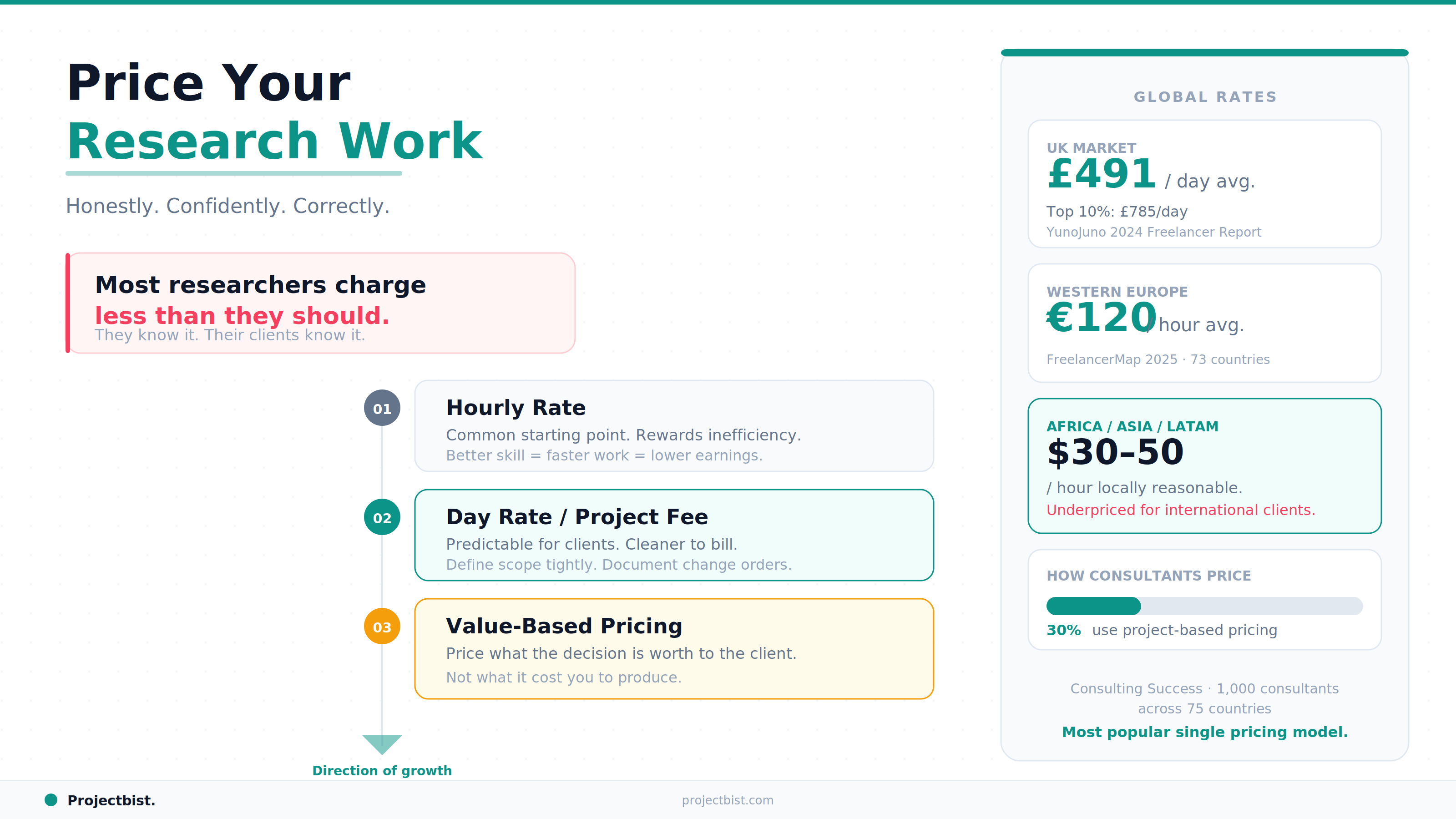
How to Price Your Research Consulting Services: The Honest Guide for Independent Researchers Globally
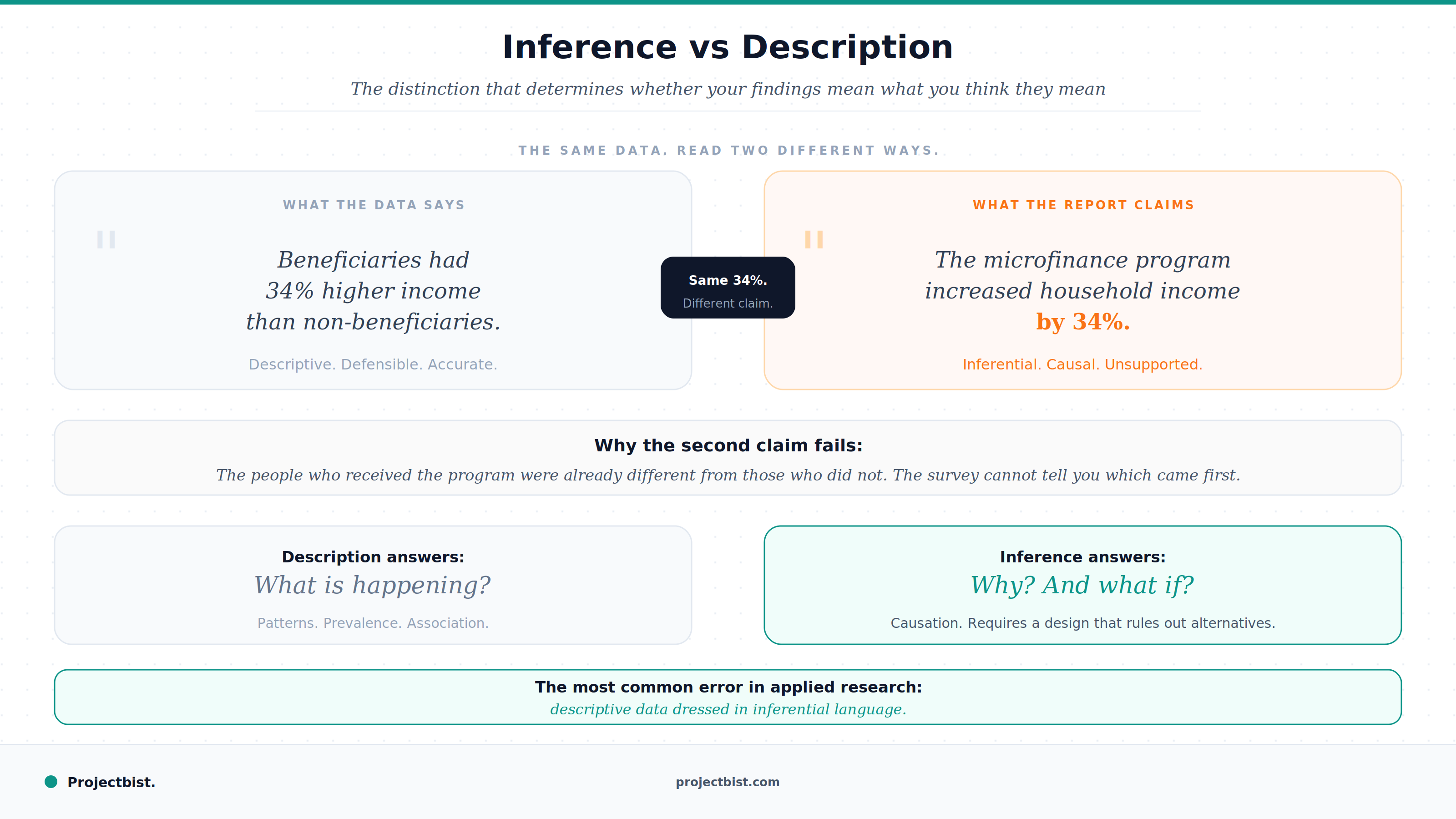
Inference vs Description: The Distinction That Quietly Determines Whether Your Research Findings Mean What You Think They Mean

Time Use Surveys: The Research Method That Makes Invisible Work Visible