P
Loading blog...
Loading blog...
Every food and beverage product launch begins with a consumer test. Designing that test correctly is what separates a confident launch decision from an expensive guess.
Luis Ortega
Apr 22, 2026•4 min read
Over 30,000 food and beverage products launch globally every year. Roughly 90 percent of them fail within two years. The ones that succeed are almost never the result of lucky intuition. They are the result of consumer testing that identified what consumers actually prefer, not what the product development team thought they would prefer.
Product testing in food and beverage is a research discipline with its own methods, standards, and design requirements. Here is what researchers and clients in this space need to know.
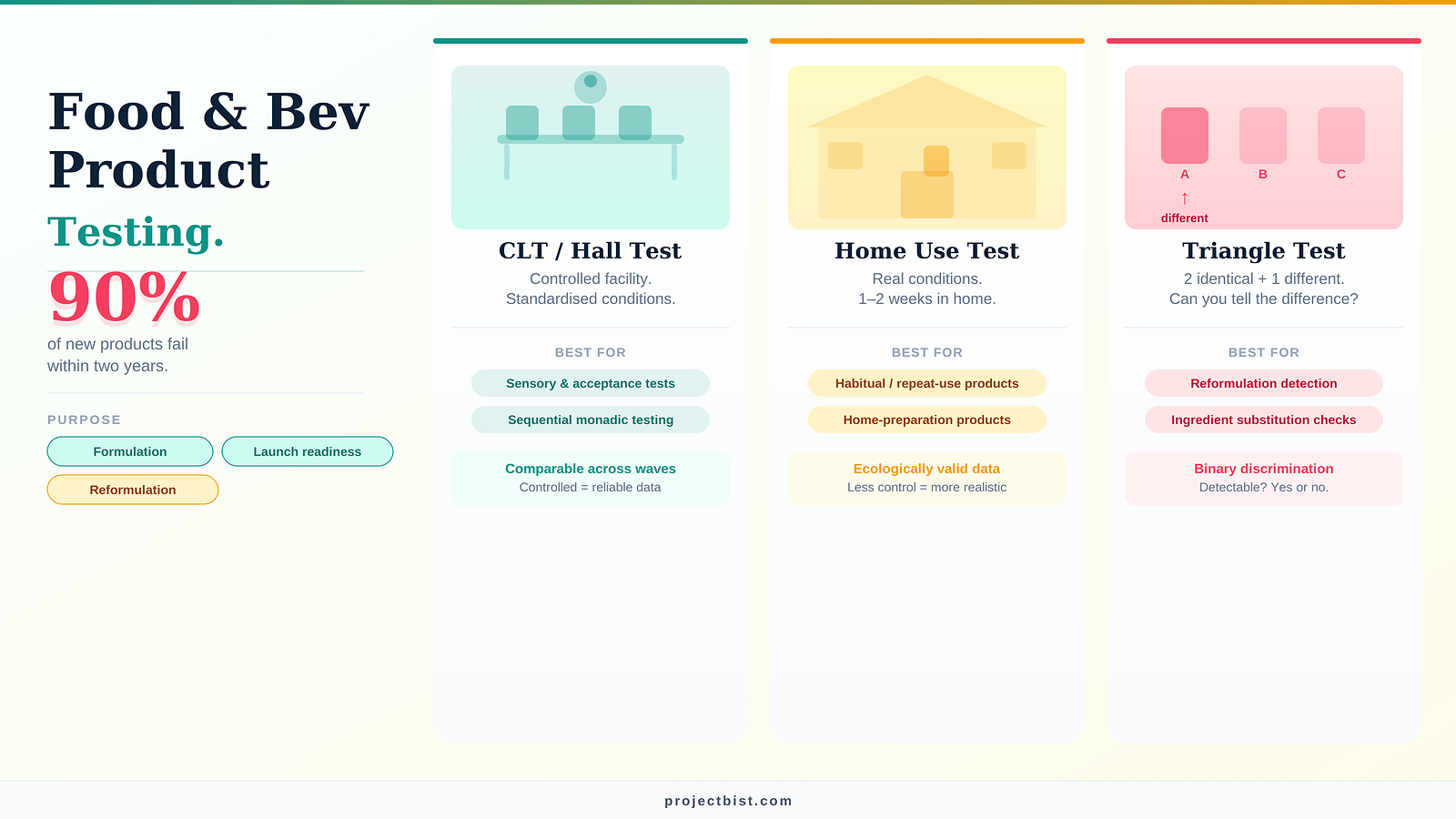
Respondents come to a controlled testing facility (a research center, a hired venue, or a retail location) to evaluate one or more products. This is the most widely used format for sensory and acceptance testing in food because the controlled environment standardizes tasting conditions: temperature, presentation, time between samples.
CLTs are where sequential monadic, paired comparison, and triangle tests are most commonly run. The controlled environment allows for the kind of standardization that produces data comparable across different testing waves.
Product samples are given to respondents to use in their own homes over a defined period (typically one to two weeks for food products). This produces more ecologically valid data: the product is being evaluated in the real conditions it will be used in, not in an artificial testing facility.
HUTs are particularly valuable for products where repeated use affects evaluation (sauces, condiments, cereals, beverages consumed habitually) and for products where home preparation is part of the consumer experience. The limitation is that you cannot control tasting conditions, and natural variation in how respondents prepare or serve the product introduces noise into the data.
A sensory discrimination test: respondents are given three samples, two of which are identical and one of which is different. They must identify which of the three is the odd one out. Triangle tests are used to answer a specific binary question: can consumers detect a difference between two product formulations? This is the standard test for reformulation work where a manufacturer is changing a formula (to reduce cost, improve sustainability, or adjust for ingredient availability) and needs to know whether the change is perceptible.
Sensory fatigue is the reduction in a consumer's ability to discriminate between products after repeated exposure to strong or complex flavors, aromas, or textures. It is one of the most important practical constraints in food product testing.
Design implications: the maximum number of products that can be evaluated in a single CLT session depends on the product category. Three or four products is typically the practical maximum for most food and beverage categories, with rest periods and palate cleansers between samples. For strongly flavored categories (spicy foods, strong cheeses, spirits), fewer samples per session are appropriate.
Sequential monadic testing, which is effective for packaging and concept research, should be used cautiously with food products because the cumulative effect of tasting multiple products can compromise later evaluations in the sequence.
A food product test that asks respondents to evaluate six samples in sequence will produce data where the last two or three evaluations are less reliable than the first. The sample count limit is a design requirement, not a preference.
The purpose of food product testing is not to produce a winner in isolation. It is to produce findings that are actionable for a product development, marketing, or launch decision. This means designing tests with a clear decision threshold in mind from the start: what purchase intent score, what preference rating, or what discrimination percentage would confirm that this product is ready to launch, requires further reformulation, or should be discontinued?
Tests designed without a decision threshold produce data that is technically valid but commercially ambiguous. The question 'is this product good enough?' needs a definition of good enough before the test begins.
Newsletter
Personalize your updates! Subscribe to ProjectBist's Newsletter and choose from the following categories.
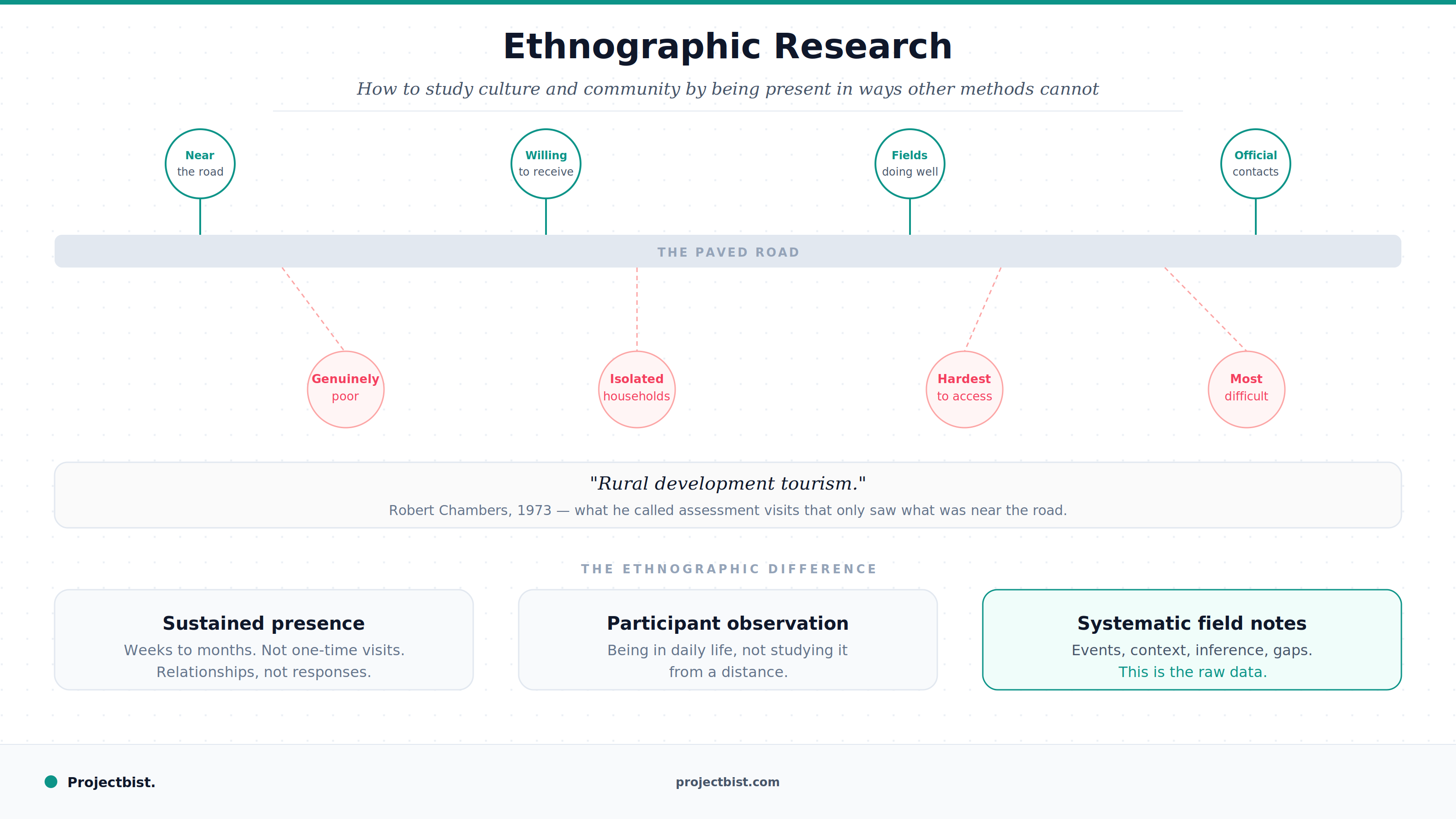
Ethnographic Research: How to Study Culture and Community by Being Present in Ways Other Methods Cannot
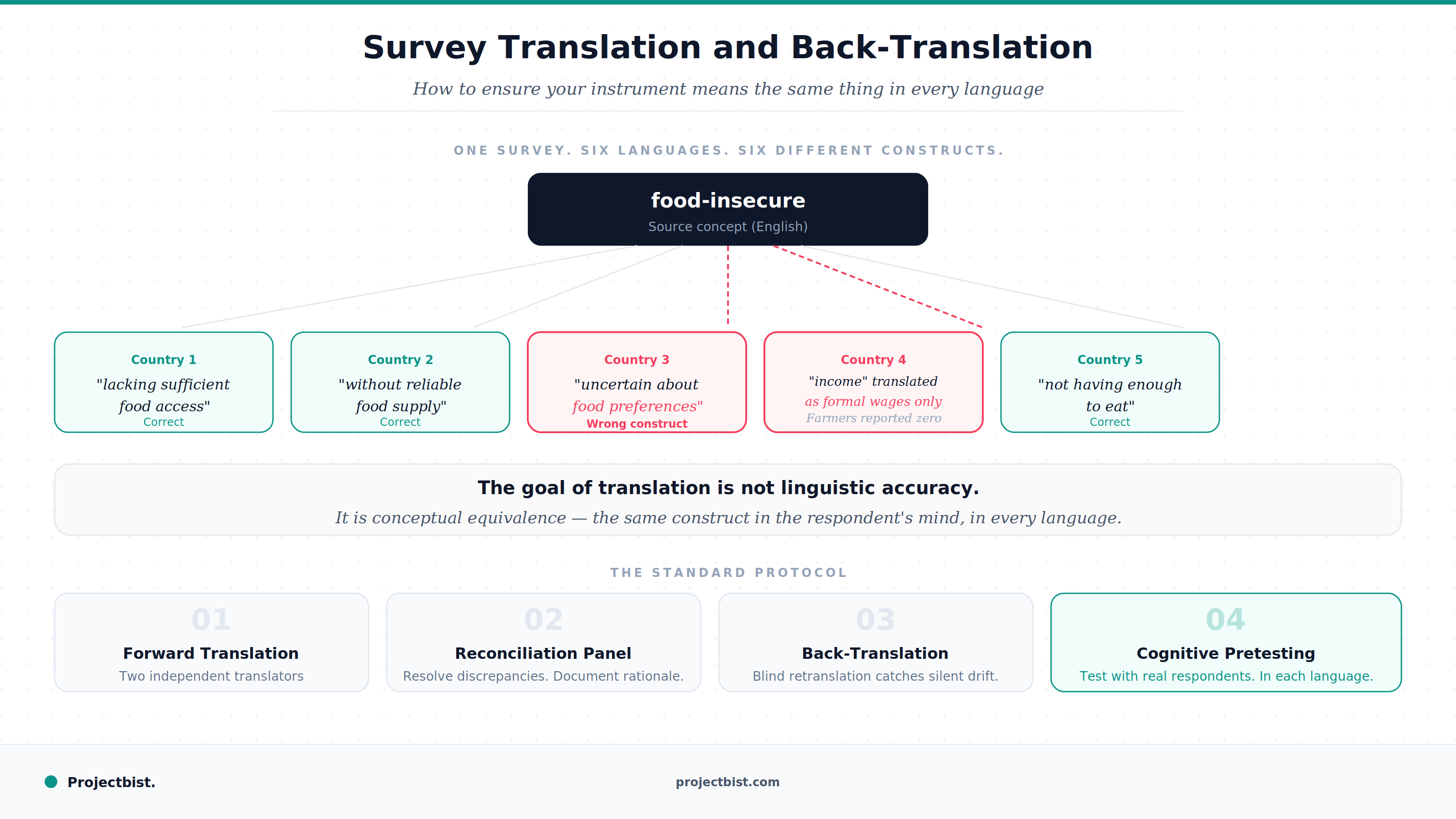
Survey Translation and Back-Translation: How to Ensure Your Instrument Means the Same Thing in Every Language
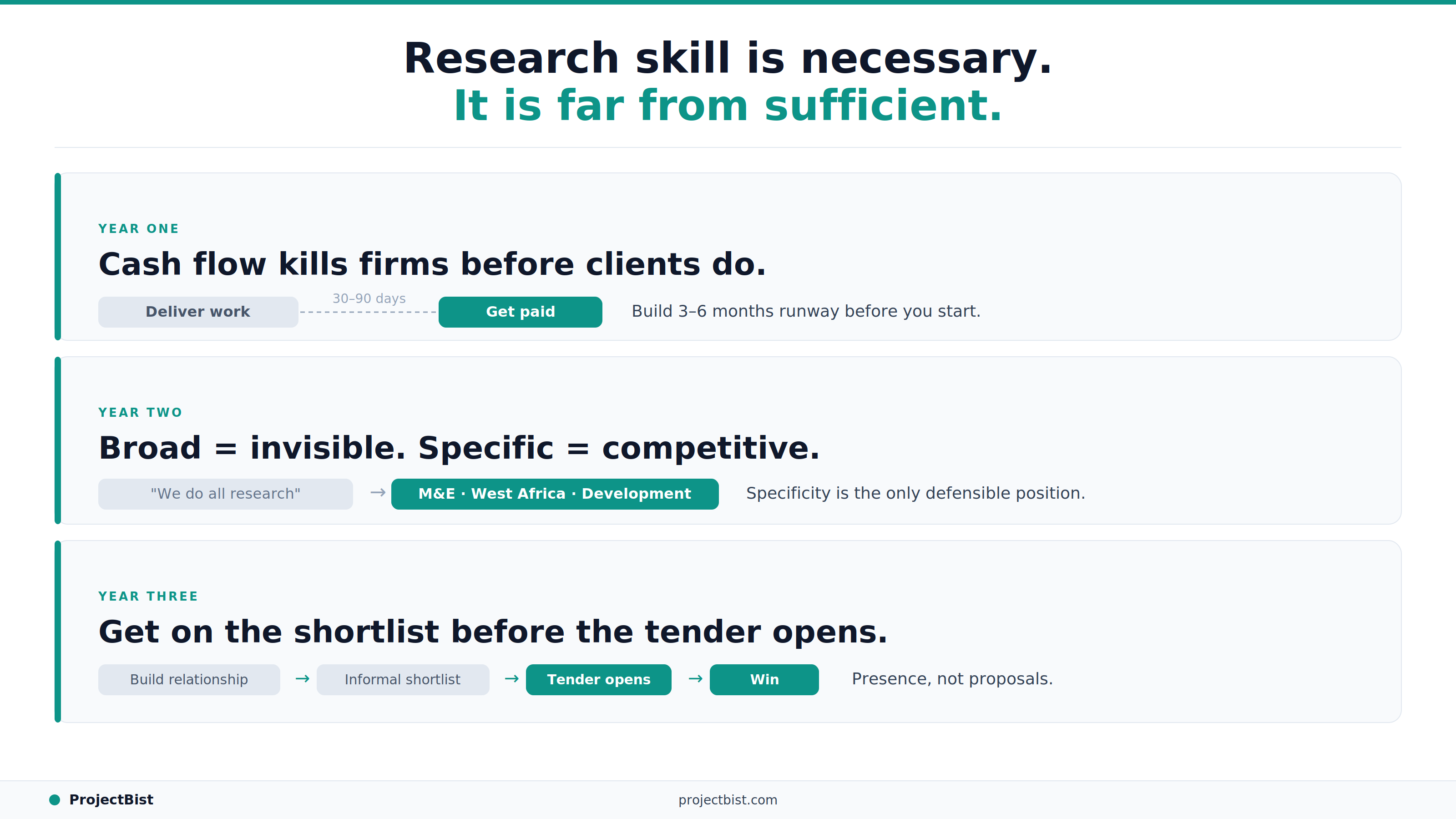
How to Build a Research Firm From Scratch: What the First Three Years Actually Require