P
Loading blog...
Loading blog...
A well-run focus group feels like a natural conversation. The data it produces is anything but accidental.
Sofia Alvarez
Apr 06, 2026•4 min read
A bad focus group looks like this: a moderator asks a question, one confident participant answers at length, everyone else nods or builds incrementally on what was said, and 90 minutes later the group has produced a consensus that reflects the views of one person and the social pressure of not disagreeing with them in a room full of strangers.
A good focus group looks like this: multiple distinct perspectives surface, participants challenge each other's assumptions respectfully, unexpected views emerge that the research team did not anticipate, and the moderator contributes almost nothing to the actual content while shaping almost everything about the dynamic.
The difference between those two outcomes is almost entirely moderation.
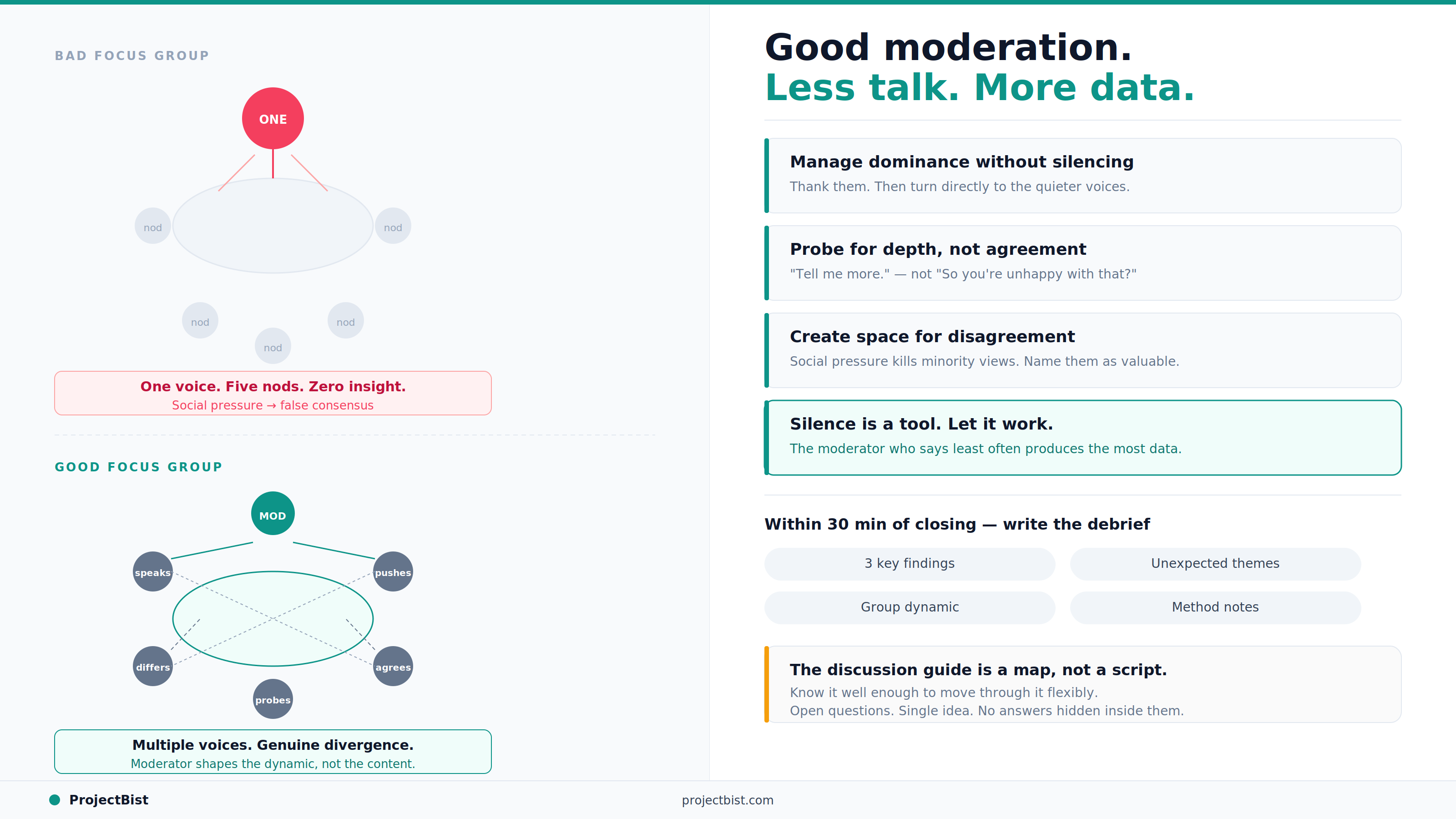
The discussion guide is not a script. It is a map. You should know it well enough to move through it flexibly: spending more time on questions that produce rich discussion, moving quickly past those that are exhausted early, and returning to topics organically rather than mechanically ticking through a list.
The questions should be written for conversation, not comprehension. Open-ended, single-idea questions that invite elaboration. Not compound questions. Not yes/no questions. Not questions that contain the answer you are hoping to hear.
Knowing who your participants are before they arrive changes how you facilitate. If the group includes participants with significantly different levels of education or social status, the less powerful participants are at greater risk of deferring to the more powerful ones. If the group is homogeneous in ways that might create an in-group dynamic, you need strategies for disrupting that dynamic when it produces conformist rather than genuine responses.
Every focus group has at least one participant who is more vocal, more confident, or more certain than the others. The moderator's job is to ensure their voice is one among several, not the one that shapes everyone else's.
Techniques: Thank the dominant participant explicitly and then turn directly to a quieter one. I appreciate that perspective. Let me hear from some of you who haven't spoken yet on this. What's your take? Use structured go-arounds for questions where you need individual responses: Let's go around the table and hear one thought from each of you on this.
The most valuable thing a moderator can do after an interesting response is not move to the next question. It is probe: can you tell me more about that? What did you mean when you said...? Has that always been the case, or has something changed?
Probing is how surface-level responses become insight. But probing must be neutral. Probes that indicate a desired direction, like so would you say you are quite unhappy with that? lead participants rather than exploring their actual views.
Social pressure in groups pushes toward consensus. Good moderation counteracts this actively.
Techniques: I'm hearing that many of you feel [X]. Does anyone have a different view, or a nuance that we haven't captured yet? Frame minority positions as valuable: That's a perspective we haven't heard yet. It's really useful to have that in the room.
The moderator who says the least often produces the most data. Silence is a facilitation tool: let it work.
Within 30 minutes of the group ending, the moderator should write a debrief note: the three most important findings from this group, any unexpected themes that emerged, the dynamic of the group (who was dominant, who was quiet, whether the group reached genuine consensus or social conformity), and any methodological observations that should inform subsequent groups.
This debrief, written while the session is fresh, is often more analytically valuable than the transcript alone. It captures the moderator's in-room observations: body language, moments of hesitation, exchanges that the transcript records as words but the moderator experienced as something more complex.
How many participants should be in a focus group?
Six to eight participants is the standard range for most focus groups. Fewer than five makes it difficult to generate the range of perspectives that makes group discussion valuable. More than ten makes it harder to ensure every participant has meaningful speaking time and creates dynamics where quieter participants disengage. For groups covering sensitive topics, smaller groups of five to six participants tend to produce more open discussion. For groups where you want to capture a broad range of views, eight participants is usually the right target.
Should the moderator know the client's hypothesis before running the group?
The moderator should understand the research question fully but should approach the hypothesis with deliberate caution. Knowing what the client hopes to find is useful context for designing probe questions. But a moderator who is strongly anchored to the client's hypothesis will unconsciously steer the discussion toward confirming it. The moderator's job is to surface what participants actually think, not to test whether they agree with the client's position. If you are both the researcher and the moderator, this discipline is especially important.
What is the difference between a focus group and an in-depth interview, and when should you choose one over the other?
Focus groups use group discussion to generate data, which means the interactions between participants are part of what you are studying. They work well for exploring shared norms, reactions to concepts or materials, and topics where hearing others speak influences what people are willing to share. In-depth interviews are one-on-one and work better for sensitive topics, complex individual decision-making processes, or research where you want each participant's uninfluenced perspective. When social dynamics are the point, use a group. When individual depth is the point, use interviews.
How do you handle a participant who completely dominates the group despite redirection?
Address it structurally rather than personally. Use go-around formats that require every participant to respond individually before open discussion begins. Direct questions explicitly to quieter participants. If the dominant participant interrupts others, a neutral 'let them finish and then we will come back to you' is both appropriate and effective. In extreme cases, you can use a brief break to speak with the participant privately and frame the redirection positively: your views have been really clear, I want to make sure the others have the same chance to contribute. Very few participants resist this framing.
ProjectBist profiles show methodology specialization. Search for qualitative research specialists.
Browse Qualitative Researchersarrow_forwardNewsletter
Personalize your updates! Subscribe to ProjectBist's Newsletter and choose from the following categories.
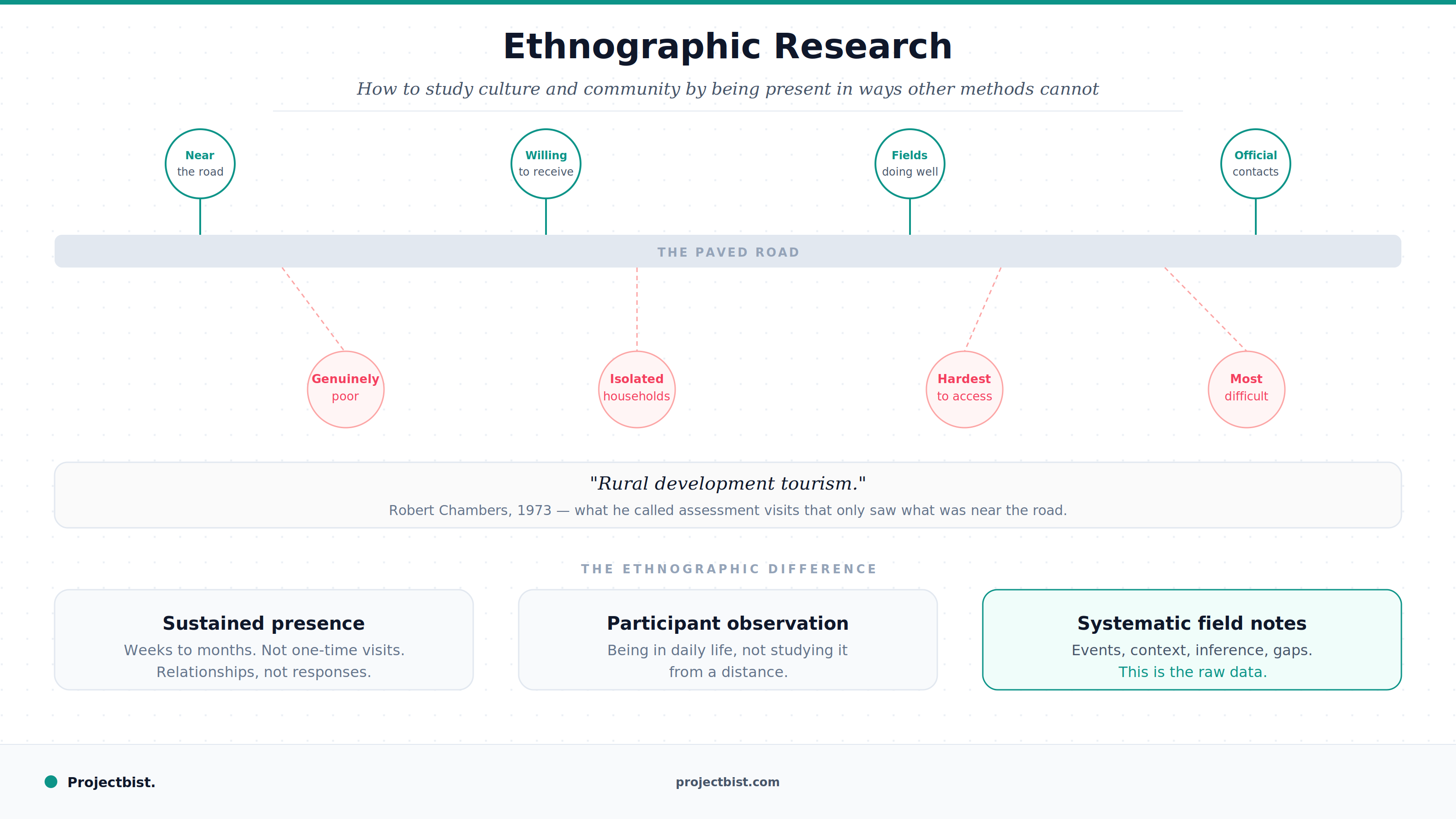
Ethnographic Research: How to Study Culture and Community by Being Present in Ways Other Methods Cannot
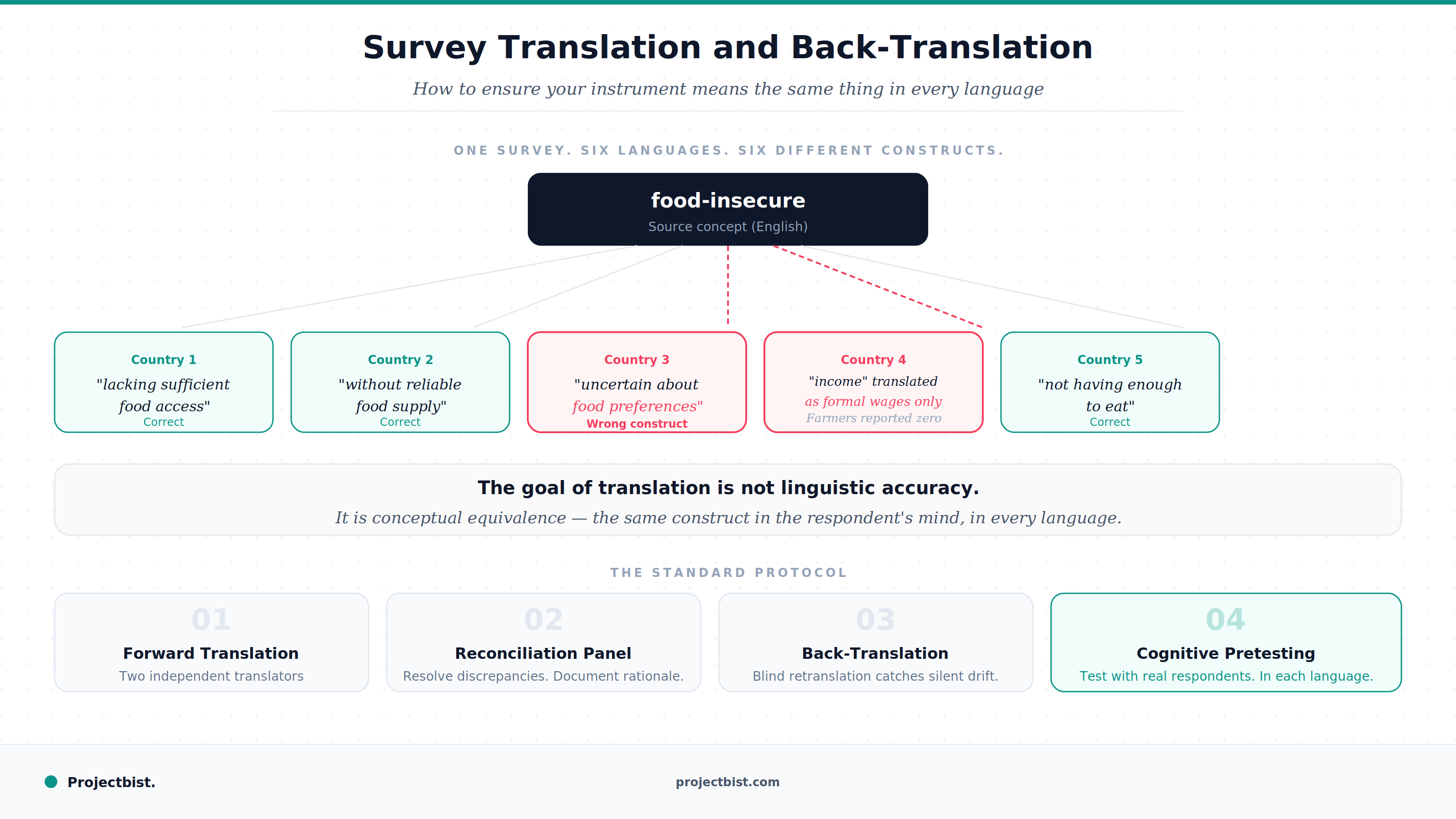
Survey Translation and Back-Translation: How to Ensure Your Instrument Means the Same Thing in Every Language
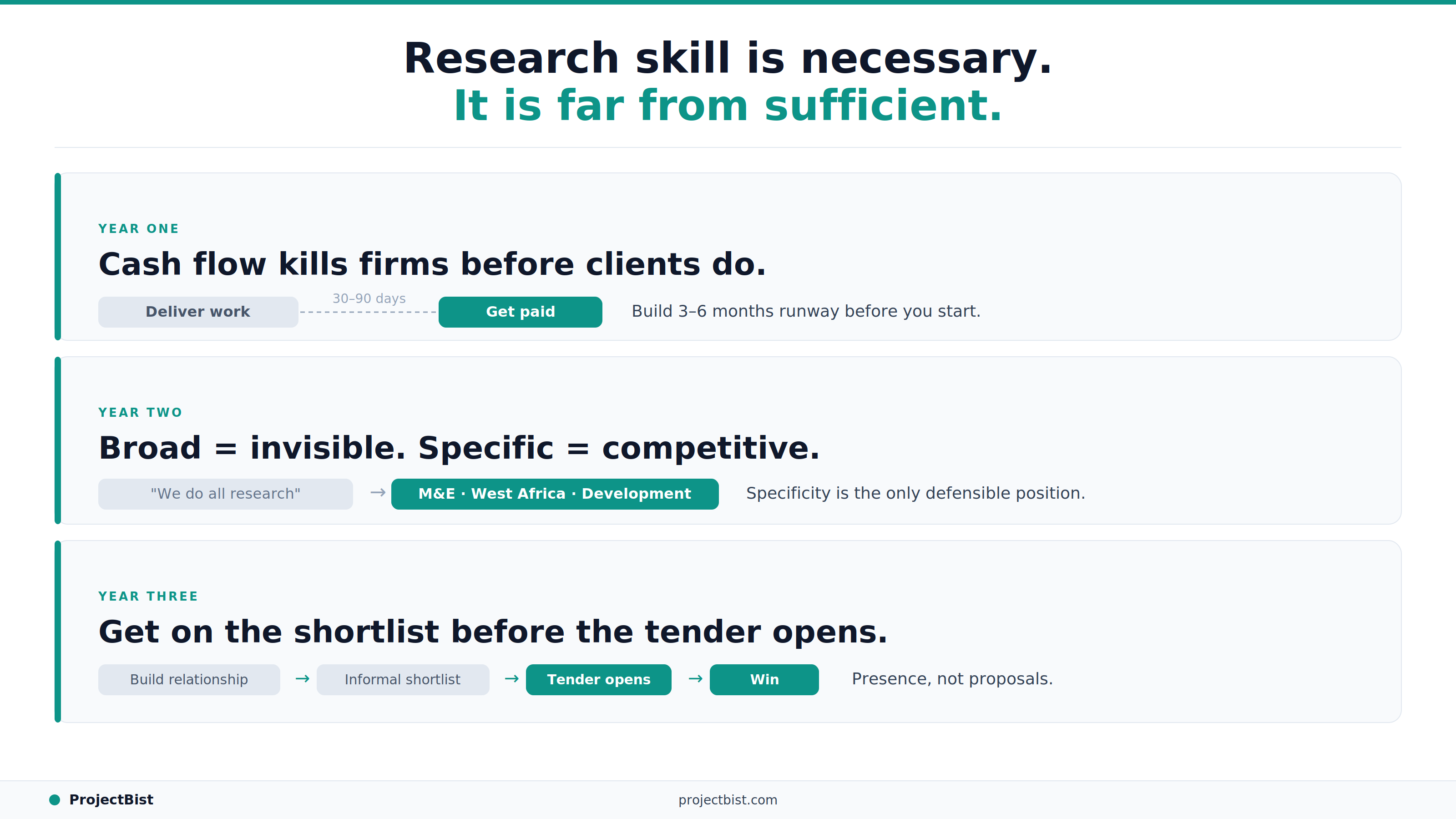
How to Build a Research Firm From Scratch: What the First Three Years Actually Require