P
Loading blog...
Loading blog...
FMCG brands live and die by what consumers think in the moment of purchase. Brand tracking tells you whether that moment is going your way.
Luis Ortega
Apr 05, 2026•4 min read
Sales figures tell you what happened. Brand tracking tells you why it is about to happen.
In fast-moving consumer goods, where purchase decisions are made in seconds on a supermarket shelf and brand loyalty can erode across a single quarter, knowing the current state of consumer perception is not a nice-to-have. It is operational intelligence. And the brands that track it consistently make better decisions faster than those that commission ad hoc studies after the problem is already visible in revenue.
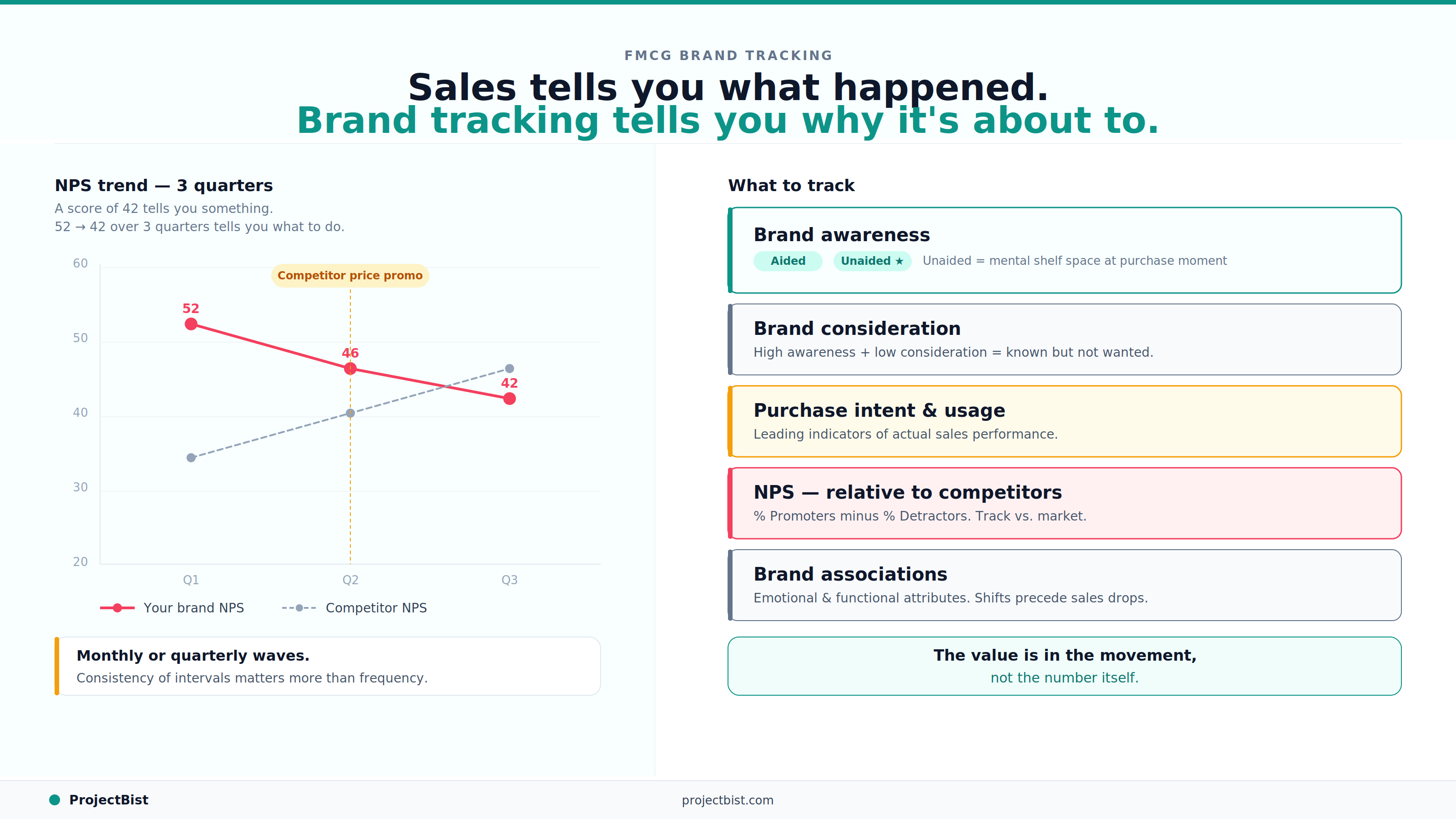
Brand tracking is a continuous or regular research program that monitors how consumers perceive, feel about, and engage with a brand over time. Unlike a one-off study, it is designed to detect change: shifts in awareness, perception, loyalty, and competitive positioning that would otherwise only become visible in lagged financial data.
According to Quantilope's Brand Tracking Guide, the most valuable aspect of a tracking program is not any individual data point but the longitudinal trend. A single NPS score of 42 tells you something. That NPS score moving from 52 to 42 over three quarters, correlated with a competitor's price promotion, tells you something actionable.
Measured as both aided awareness (does the consumer recognize the brand when prompted?) and unaided awareness (does the consumer mention the brand spontaneously when asked about the category?). Unaided awareness is the more strategically significant metric because it reflects whether the brand occupies mental space in the purchase decision moment.
Would the consumer consider this brand the next time they purchase in this category? High awareness with low consideration is a warning signal: the brand is known but not wanted.
How likely is the consumer to purchase the brand in the next survey period? What is the current usage rate among respondents? These metrics connect perception to behavior and are the most direct leading indicators of sales performance.
NPS measures consumer loyalty by asking how likely a respondent is to recommend the brand to a friend or colleague, on a scale of 0 to 10. Respondents scoring 9-10 are Promoters, 7-8 are Passives, and 0-6 are Detractors. NPS = % Promoters minus % Detractors. For FMCG, NPS is tracked both in absolute terms and versus competitors, where relative NPS reveals whether the brand is gaining or losing advocacy relative to the market.
What attributes do consumers associate with the brand? These are the emotional and functional descriptors that sit between awareness and purchase: premium, trustworthy, for people like me, good value. Shifts in these associations often precede shifts in consideration and purchase intent.
The value of brand tracking is not in the numbers. It is in the movement of the numbers, and what correlates with that movement.
Tracking frequency should match the pace of change in the category. For FMCG, where consumer preferences and competitive promotions shift frequently, Quantilope recommends monthly or quarterly waves as the standard, with the caveat that consistency of intervals is more important than frequency alone. A study run in January, April, July, and October for three consecutive years is more analytically valuable than one run more frequently but at irregular intervals.
Increase tracking frequency around major events: product launches, campaign activations, competitive price changes, or brand crises. These periods produce the most actionable variance in your tracking metrics.
How many tracking waves do you need before the data becomes genuinely useful for decision-making?
You need at least three waves at a consistent interval before trend analysis becomes reliable. A single data point tells you where you are. Two points tell you direction but not stability. Three or more points let you distinguish a genuine trend from natural sample variation. For most FMCG brands running quarterly tracking, that means approximately nine months before the data is analytically mature enough to support major strategic decisions. This is why starting a tracking program as early as possible in a brand's life is so important.
Can a smaller FMCG brand with a limited research budget run a meaningful brand tracking program?
Yes, with the right design choices. The key is reducing frequency and sample size rather than cutting the consistency of intervals. A biannual tracker with a leaner sample can still detect meaningful shifts in awareness and consideration if the methodology stays consistent. A well-designed small tracker that runs reliably twice a year is more useful than a larger program that gets paused or redesigned whenever budgets tighten. Consistency of design and interval matters more than the size of any individual wave.
Which brand tracking metric matters most for FMCG brands specifically?
Unaided brand awareness is the single most important leading indicator for FMCG because purchase decisions in this category are made quickly and often at the shelf. If consumers do not spontaneously think of your brand when prompted about the category, all other metrics are at risk. After unaided awareness, brand consideration is the next most operationally important metric because it tells you whether awareness is translating into purchase intent. NPS is valuable as a loyalty and advocacy measure but is a lagging indicator compared to awareness and consideration.
The most common failure in brand tracking programs is the gap between data and action. A tracker that produces quarterly reports nobody reads is not a tracking program. It is an expensive data archive.
The best programs are designed with decision rights from the start: which metric triggers a review of the media strategy, which shift in consideration warrants a pricing analysis, which drop in NPS initiates a qualitative investigation into the cause. When those decision rules are embedded into the program design, the data actually drives action.
ProjectBist connects you with researchers who have documented FMCG research experience.
Browse FMCG Research Specialistsarrow_forwardSources: Quantilope Brand Tracking Guide 2026; Greenbook — Brand Tracking Tech 2024; Hanover Research Brand Tracker; Trend Opinion — Market Research for FMCG Brands; CustomerGauge NPS Benchmarks 2025
Newsletter
Personalize your updates! Subscribe to ProjectBist's Newsletter and choose from the following categories.
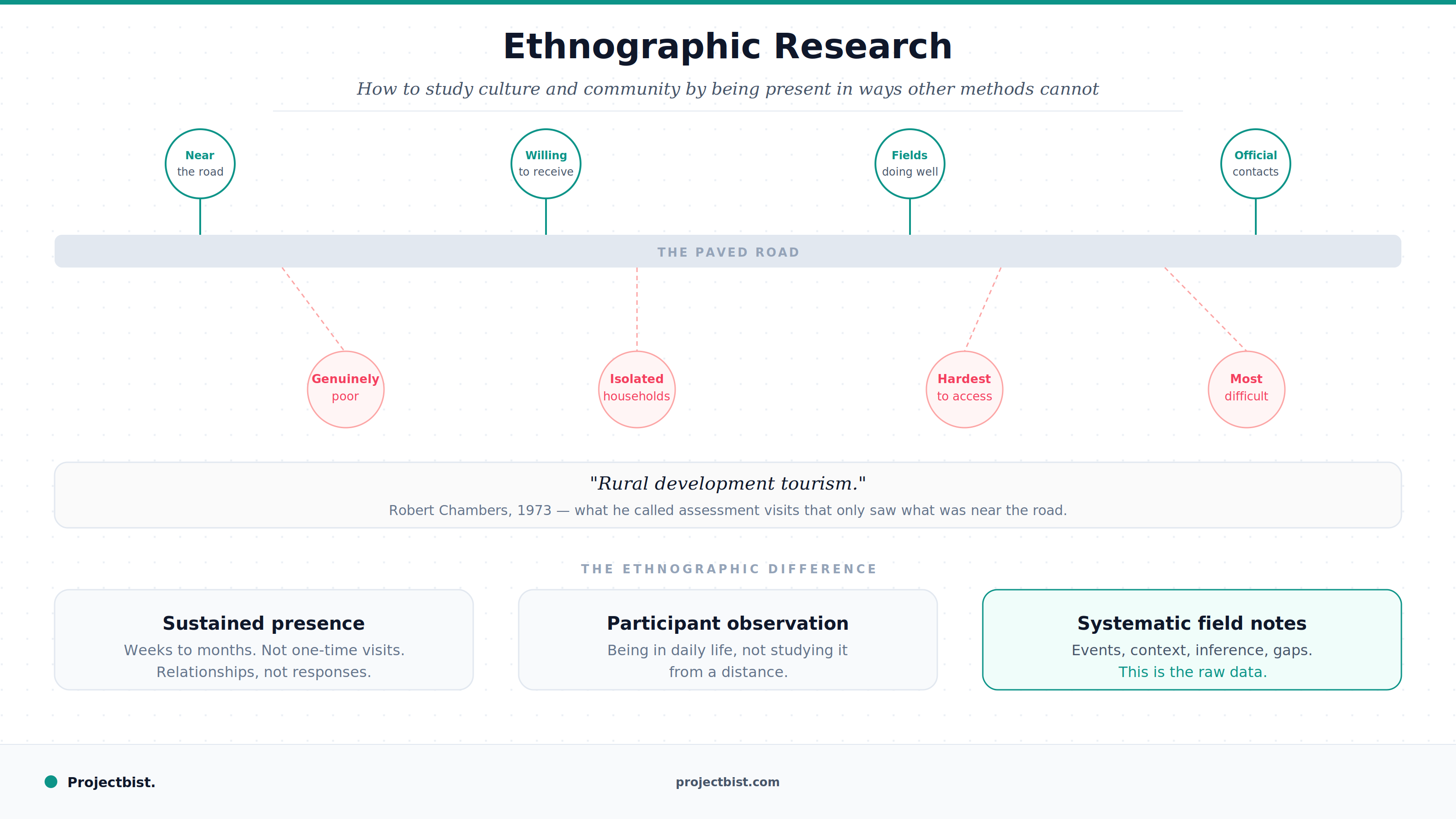
Ethnographic Research: How to Study Culture and Community by Being Present in Ways Other Methods Cannot
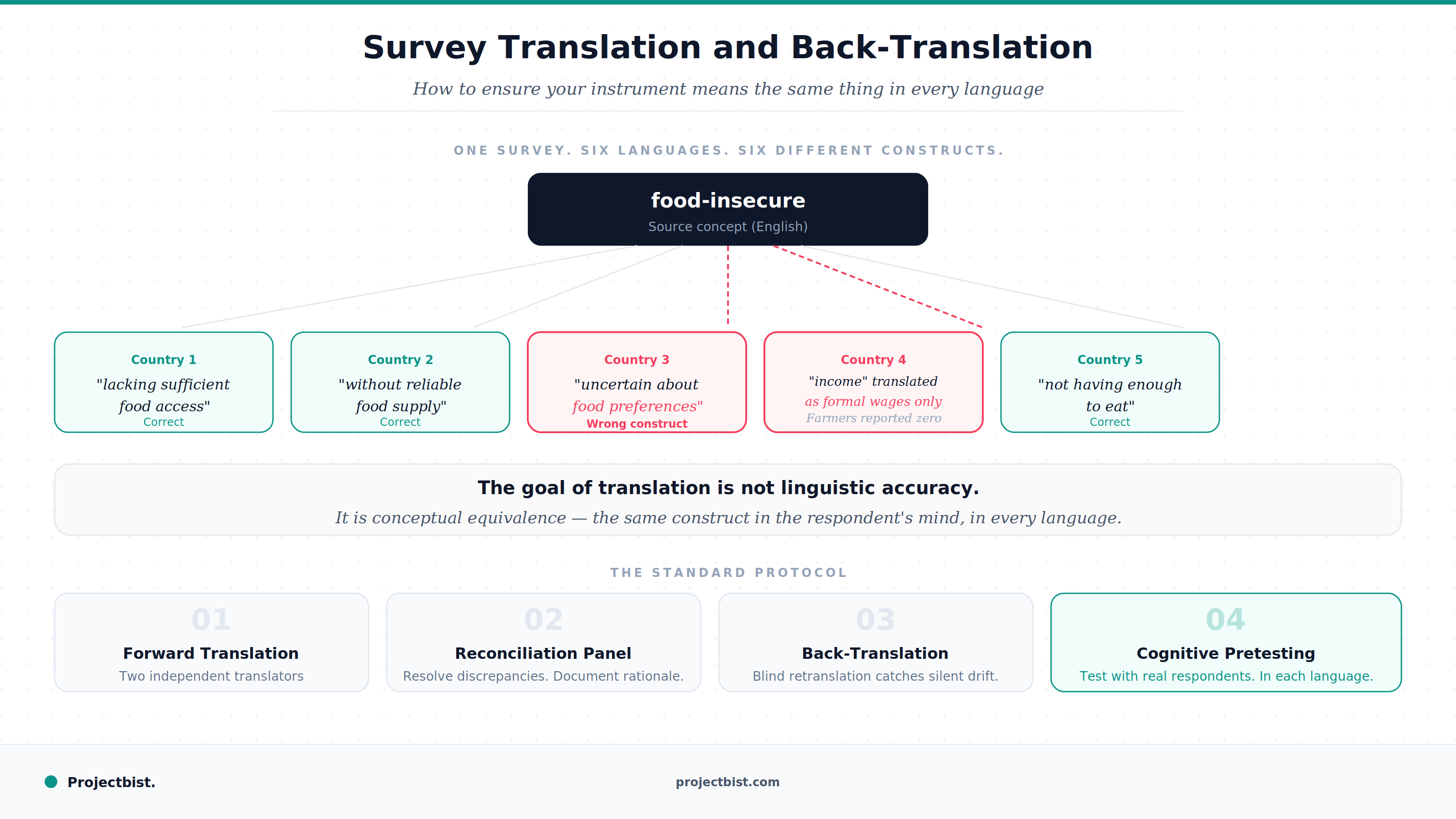
Survey Translation and Back-Translation: How to Ensure Your Instrument Means the Same Thing in Every Language
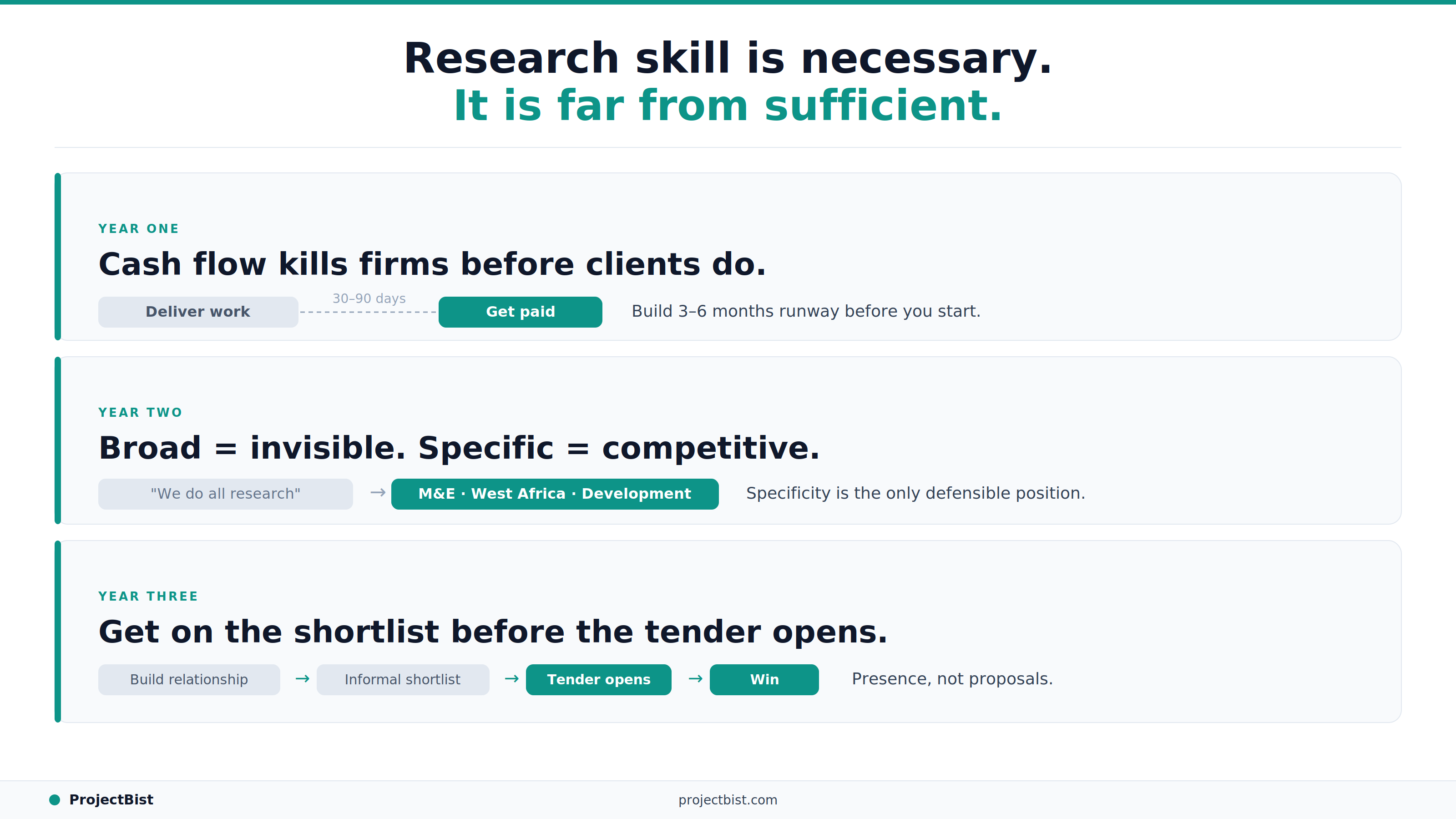
How to Build a Research Firm From Scratch: What the First Three Years Actually Require