P
Loading blog...
Loading blog...
The African research industry is not just growing. It is changing in ways that will reshape who gets hired, how studies are designed, and what clients expect.
Amina Idris
Apr 09, 2026•3 min read
African market research has always grown steadily. Demand from consumer goods companies, development organizations, governments, and financial services has provided a consistent base of work. But what is happening right now is not just growth. It is structural change. The way research is commissioned, conducted, and used is evolving, and the professionals who understand what is shifting are the ones who will benefit most from it.
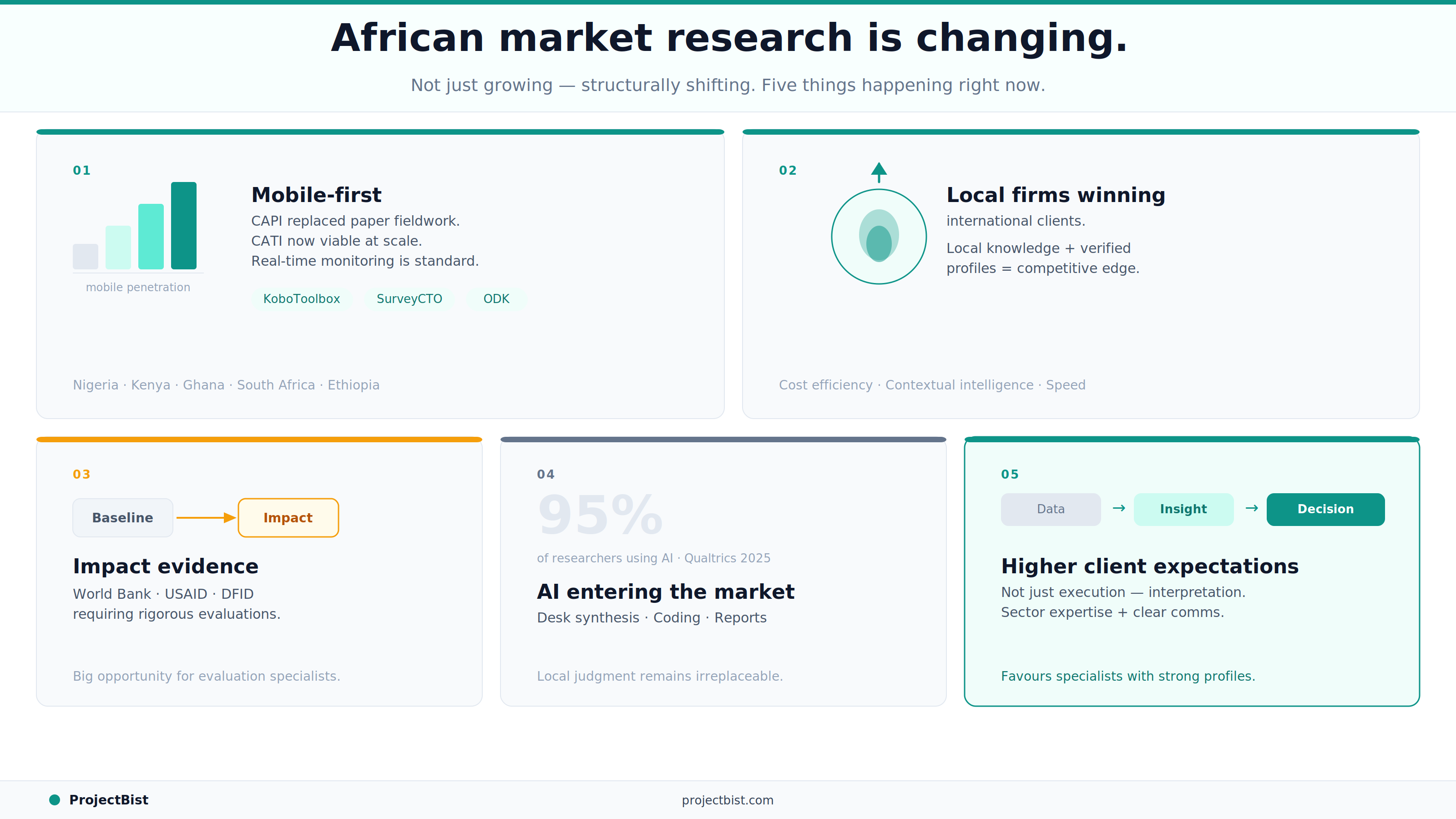
Sub-Saharan Africa's mobile phone penetration crossed 50 percent of the population and smartphone penetration is rising sharply in urban areas across Nigeria, Kenya, Ghana, South Africa, and Ethiopia. For researchers, this means that survey methods once considered impractical, such as web-based self-completion surveys and CATI at scale, are increasingly feasible in markets where they could not reach representative samples a decade ago.
CAPI surveys using tools like KoboToolbox, SurveyCTO, and ODK have essentially replaced paper-based fieldwork in professional research operations. The transition produced significant improvements in data quality, turnaround time, and the ability to monitor fieldwork in real time.
African research firms are winning work from international clients that, ten years ago, would have defaulted to a multinational agency with a regional office. The reasons are familiar: cost efficiency, local knowledge, contextual intelligence, and faster project execution. What has changed is the infrastructure to demonstrate these advantages: verified digital profiles, documented client ratings, and portfolio evidence that is accessible to international clients before they pick up the phone.
International development funders including the World Bank, USAID, DFID, and large foundations are increasingly requiring rigorous impact evidence alongside their program investments. This is expanding the market for experimental and quasi-experimental research designs, baseline and endline studies, and program evaluations that go beyond simple output measurement to assess actual behavioral change and outcome improvement.
For African researchers with evaluation methodology experience, this shift is a significant opportunity.
The adoption of AI in research is global, and Africa is not exempt. According to the Qualtrics 2025 Market Research Trends Report, 95 percent of researchers globally are now using or experimenting with AI tools. For African researchers, the key opportunities are in using AI to accelerate desk research synthesis, qualitative data coding, and report generation, freeing up time for the local knowledge and contextual judgment that AI cannot replicate.
The research-as-data-collection model is under pressure. Clients across African markets are increasingly expecting researchers to bring interpretive value, not just technical execution. They want researchers who can connect findings to business or policy decisions, who understand the sector they are working in, and who can communicate findings clearly to non-research audiences.
This is a shift that favors researchers who invest in sector specialization and client relationship skills alongside methodological competence.
For researchers who want to position themselves well for the next phase of African market research growth, building a visible, verified professional profile on a platform like ProjectBist is increasingly part of the answer. The clients looking for this combination of skills are searching for it online.
Newsletter
Personalize your updates! Subscribe to ProjectBist's Newsletter and choose from the following categories.
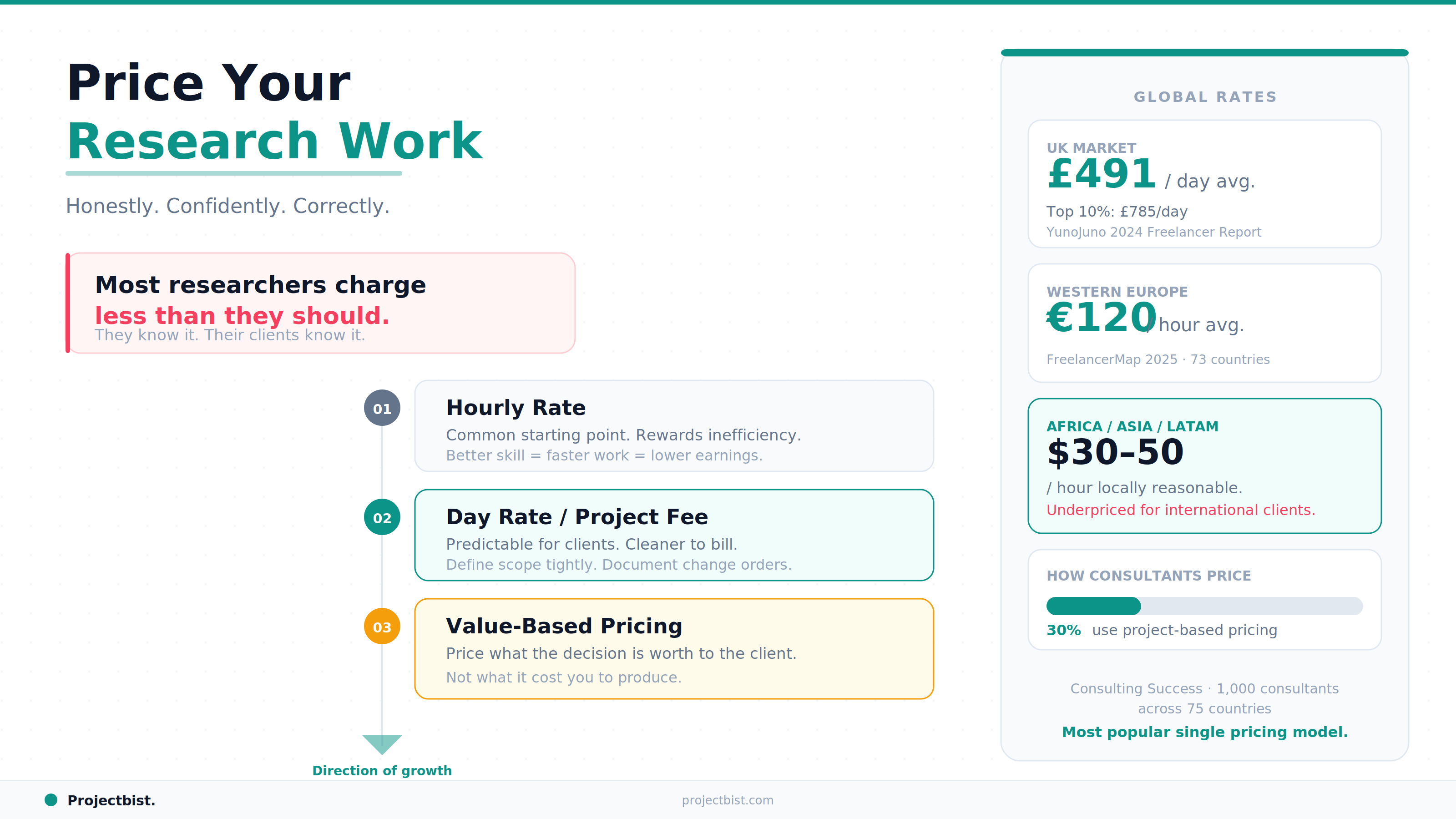
How to Price Your Research Consulting Services: The Honest Guide for Independent Researchers Globally
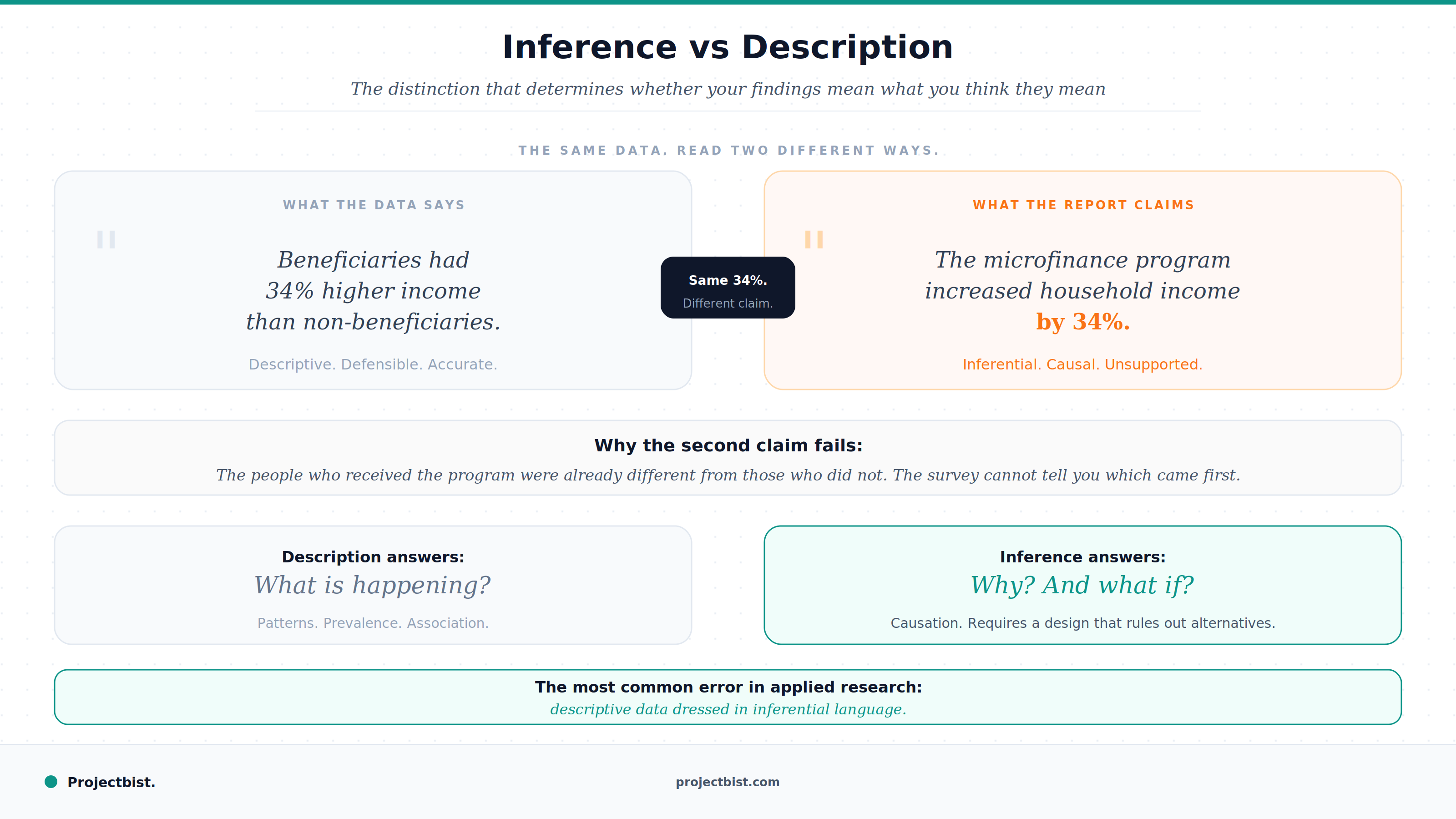
Inference vs Description: The Distinction That Quietly Determines Whether Your Research Findings Mean What You Think They Mean

Time Use Surveys: The Research Method That Makes Invisible Work Visible