P
Loading blog...
Loading blog...
The market is growing. The problem is not the opportunity. The problem is visibility.
Amina Idris
Mar 27, 2026•3 min read
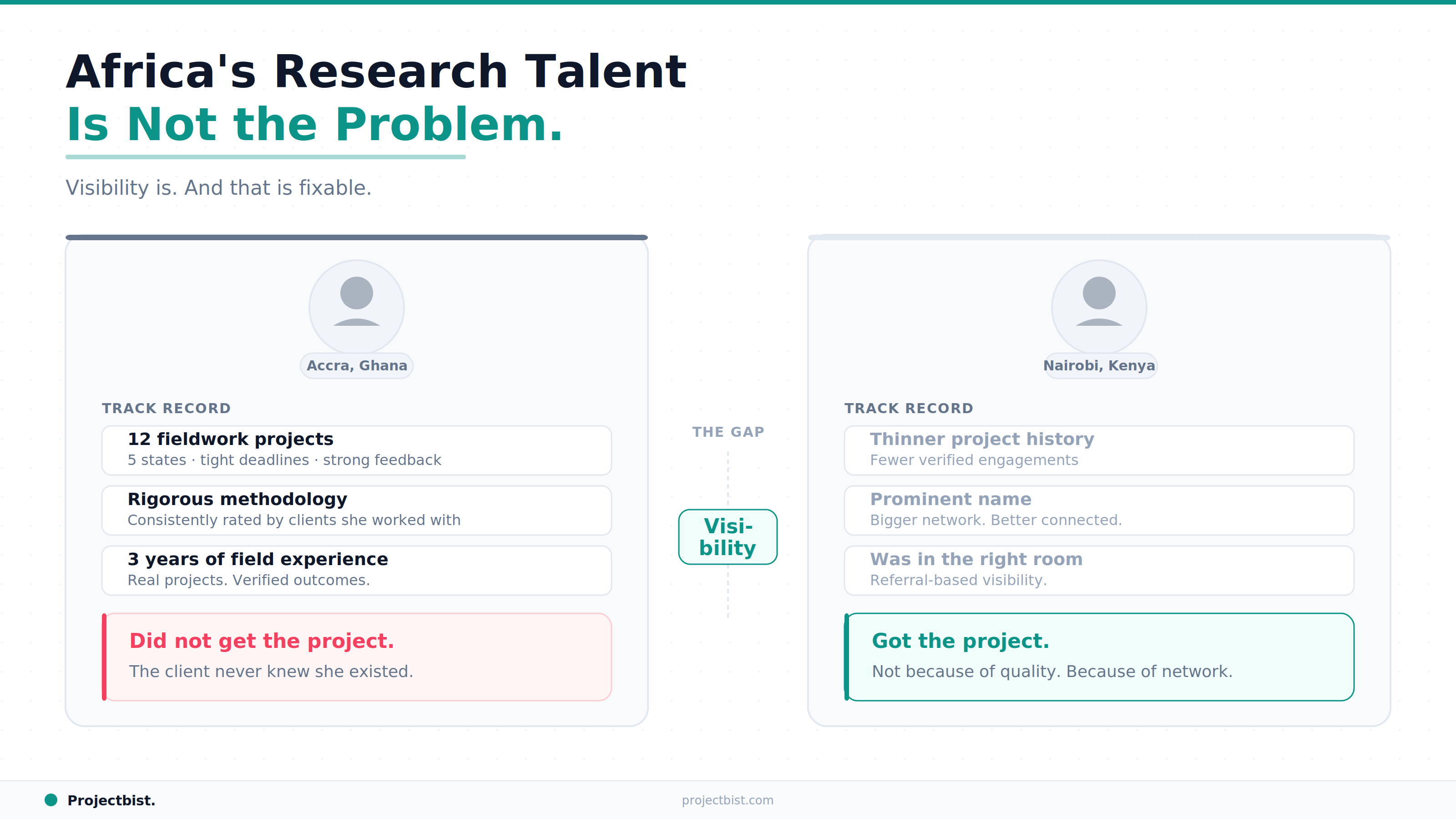
There is a researcher in Lagos who has conducted 12 fieldwork projects in the last three years. She has managed survey teams across five states, delivered quality data under tight deadlines, and consistently received strong feedback from the clients she has worked with directly.
She is not on the next big project. Someone else is. Someone with a bigger network and a more prominent name, despite having a thinner track record.
This story is not unusual. It is the default experience for a significant portion of Africa's research talent.
Africa's market research industry has been expanding at a compound annual rate of over 9% in recent years, driven by growing private sector investment, multilateral development projects, and the increasing appetite for consumer data across Nigeria, Ghana, Kenya, South Africa, and beyond. Major international clients, from development finance institutions to FMCG companies, are spending more on Africa-focused research than at any point in the past decade.
The research market in Africa is not the problem. The infrastructure for connecting capable researchers to the clients looking for them has been the missing piece.
In most professional services markets, visibility and quality are correlated over time. The best professionals get found, get hired, and build a track record that attracts more work. But in Africa's research sector, visibility has historically depended almost entirely on personal networks, referrals, and being in the right room.
That means a researcher in Abuja with exceptional fieldwork experience but a limited network loses a project to a firm in Lagos with better connections but a weaker methodology. Not because the client chose quality over relationships. Because the client never knew the Abuja researcher existed.
It is not always about being the best. The firms consistently winning work across Africa share a few common traits:
None of those are about pedigree or institutional affiliation. They are operational habits that any serious research firm or consultant can build.
The good news is that the infrastructure problem is being solved. Platforms like ProjectBist are built specifically to address the visibility gap, giving African researchers a structured place to show credentials, collect reviews, and be discovered by clients who are actively looking. This is the kind of infrastructure that has existed for freelancers in other professional services for years. Research is getting it now.
The firms and researchers who move early to build a verified, professional digital presence are the ones who will disproportionately benefit from Africa's growing research market. Those who wait will find the same networking problem they have always had, just with more competition.
Build a verified profile on ProjectBist and start getting discovered.
Join ProjectBist Freearrow_forwardNewsletter
Personalize your updates! Subscribe to ProjectBist's Newsletter and choose from the following categories.
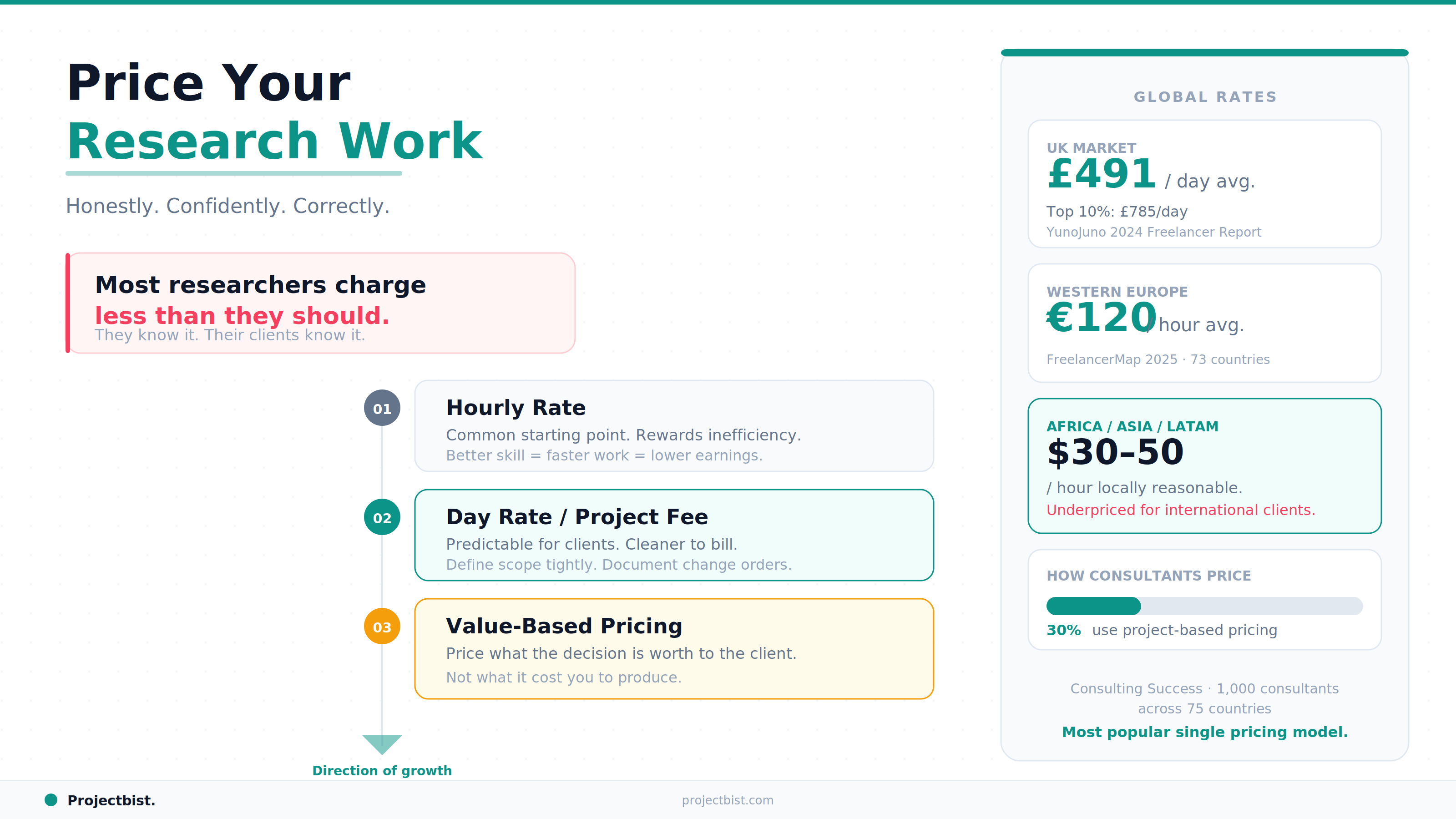
How to Price Your Research Consulting Services: The Honest Guide for Independent Researchers Globally
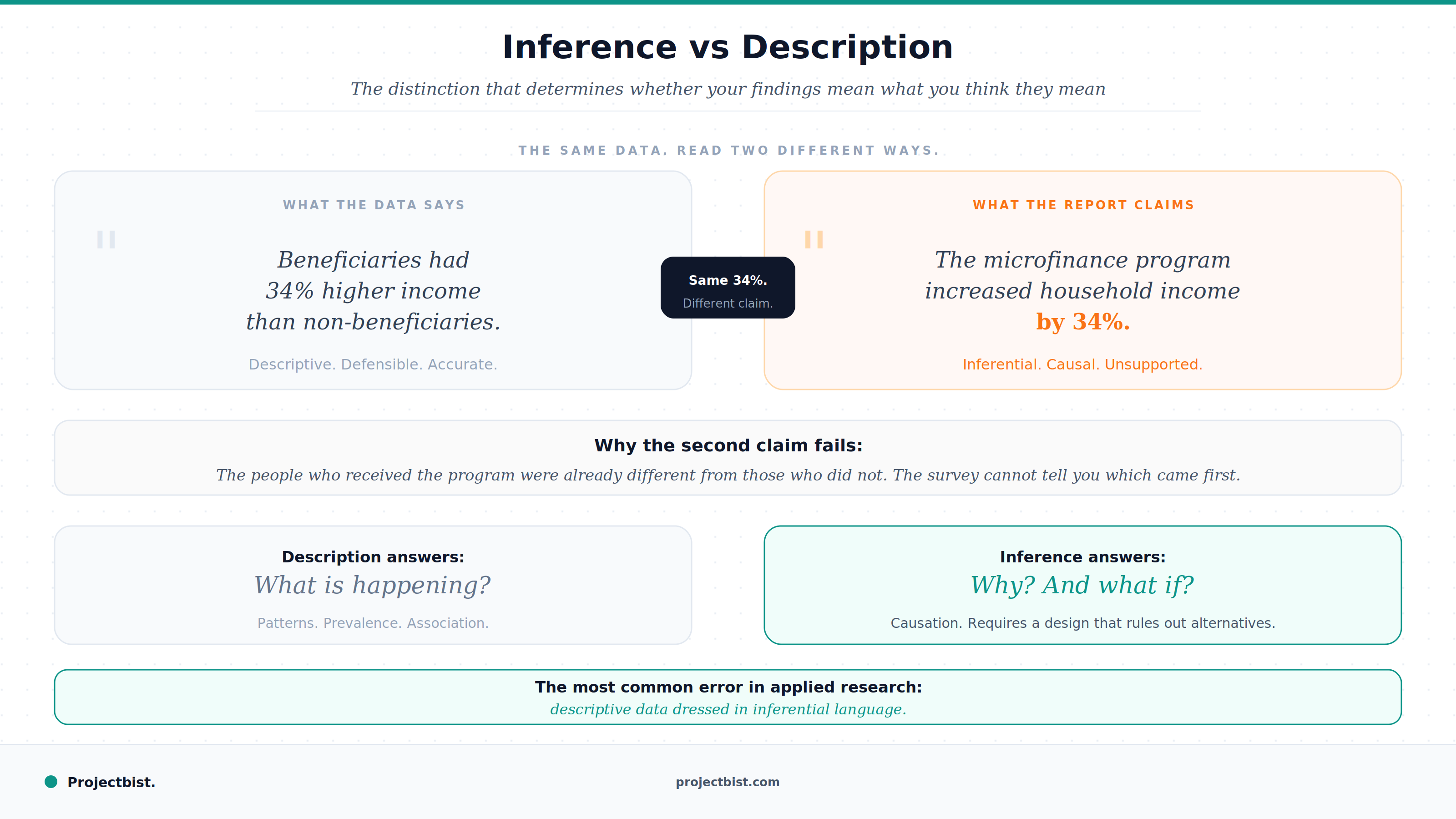
Inference vs Description: The Distinction That Quietly Determines Whether Your Research Findings Mean What You Think They Mean

Time Use Surveys: The Research Method That Makes Invisible Work Visible