P
Loading blog...
Loading blog...
Referrals work. They are also narrow, slow, and entirely dependent on who you happen to know. Here is how the two approaches compare for finding quality research professionals.
ProjectBist Editorial
May 21, 2026•4 min read
Every research professional knows the experience: a project arrives, you need a researcher, and you send a message to three colleagues asking if they know anyone. Within a few hours you have two or three names. You call one. They are available. You hire them.
That is a referral chain working as designed. It is fast. It reduces risk because the recommendation comes from someone whose judgment you trust. And it produces reasonable results most of the time.
But it is also narrow. It is limited to who your colleagues know, who is available at that moment, and who happens to have come up in conversation recently. It is not a search of the available talent. It is a search of a very small network.
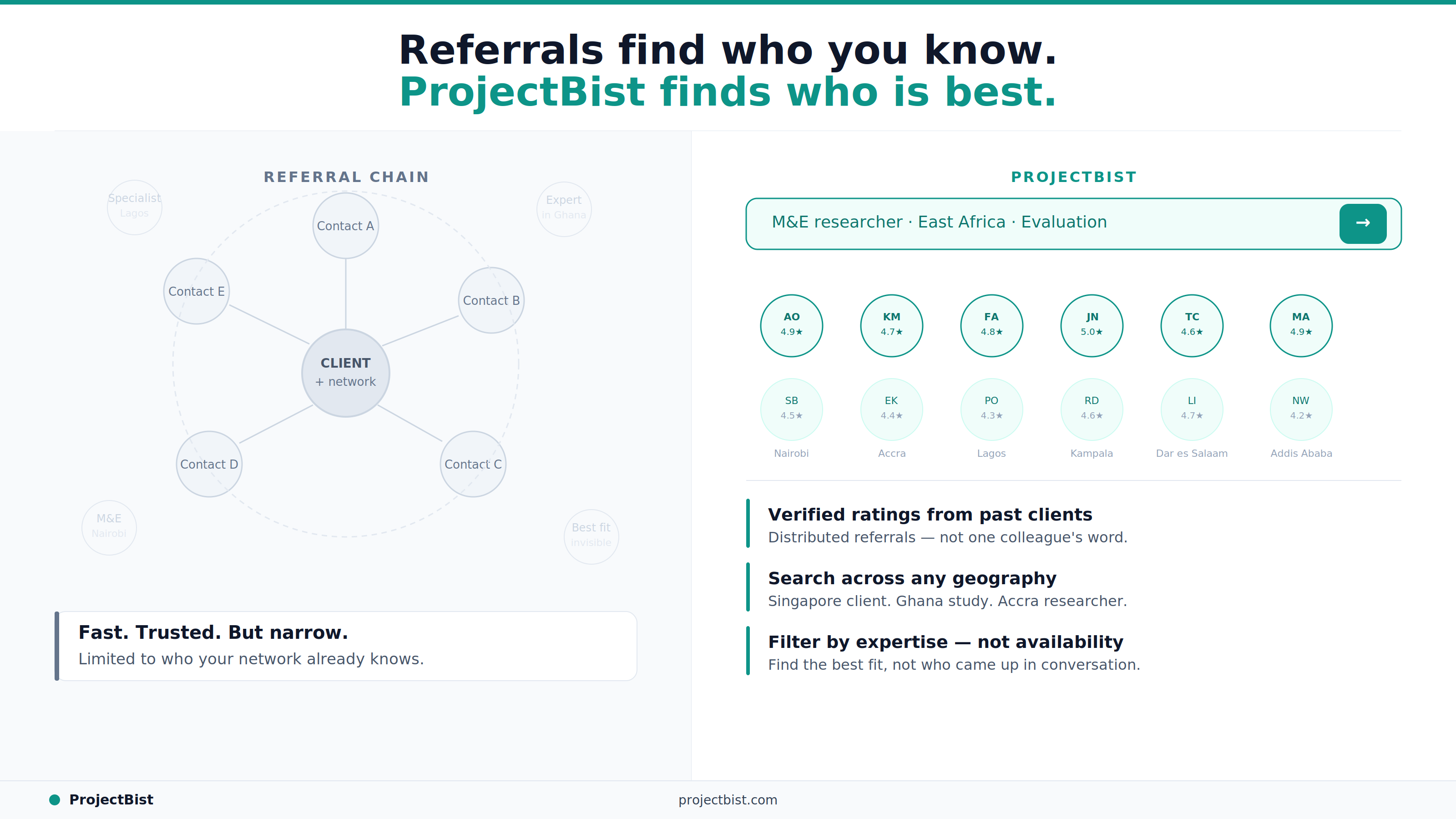
Referrals are not a broken system. They persist because they address a real problem: the research industry has historically lacked the infrastructure to verify quality before hiring. A referral from someone who has worked with a researcher is, in effect, a pre-existing client rating. It tells you something real about delivery quality that a CV or website cannot.
Referrals also carry implicit accountability. The person who gave you the name takes some professional responsibility for the recommendation. That is a form of quality signal that anonymous online listings do not replicate.
The most qualified researcher for a specific project may not know anyone in the client's network. They may be based in a different country. They may not have LinkedIn connections that overlap with the client's circle. They may be excellent and entirely invisible.
Referral chains amplify existing networks. They do not expand them. Over time, this concentrates work among a relatively small group of researchers who are well-connected, not necessarily those who are best suited to specific projects.
When a colleague says a researcher is 'really good,' you cannot easily interrogate what that means. Did they deliver on time? Was the analysis rigorous or just well-presented? How did they handle a challenging scope change? Were their findings accurate in retrospect? Most referrals cannot answer these questions with specificity.
Research networks are more geographically and professionally homogeneous than the research problems they are asked to study. A client in London with a project in East Africa asking their London network for a researcher will most often get names of researchers known to people in London, not necessarily the most capable researchers based in East Africa who know the context directly.
The comparison is not that ProjectBist replaces the quality signal a referral provides. It is that ProjectBist creates a different and more structured version of that signal at a scale referrals cannot match.
Platforms like ProjectBist are only as useful as the quality of the profiles on them. A researcher who has not completed their profile, uploaded credentials, and collected ratings from past clients offers a client much less to evaluate than a well-established referral does. The advantage of the platform model compounds over time as researchers build their track record through completed engagements.
For clients who have reliable referral networks that consistently produce excellent matches for their specific needs, the incremental value of a platform is smaller. For clients whose needs are specialized, whose geographic scope extends beyond their network, or who are commissioning research in a new area: the case for using a platform is significantly stronger.
You might find exactly what you need from someone your network has never mentioned.
Search Verified Researchersarrow_forwardNewsletter
Personalize your updates! Subscribe to ProjectBist's Newsletter and choose from the following categories.
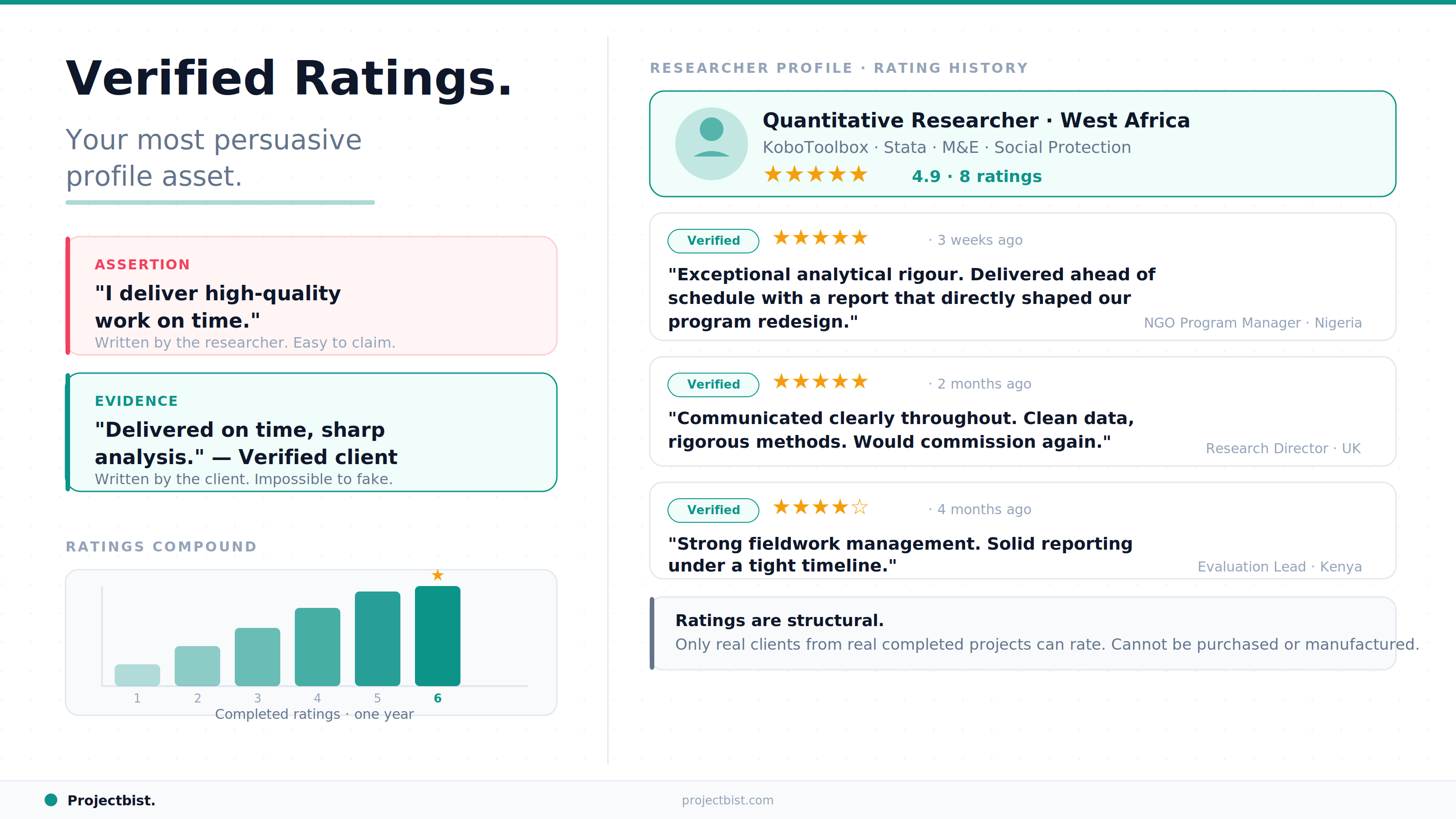
How the ProjectBist Rating System Works and Why Verified Ratings Are the Most Valuable Asset on Your Profile
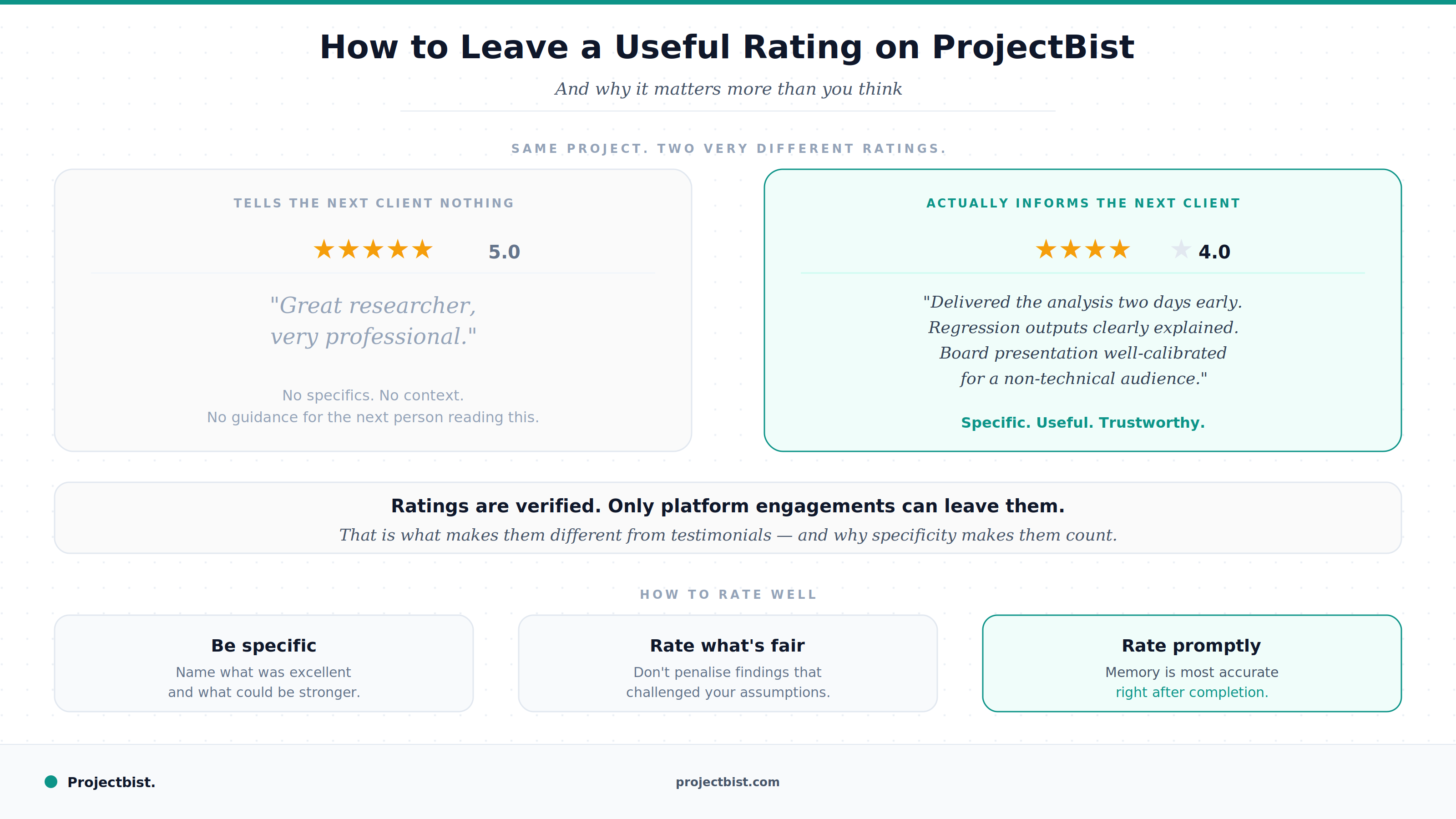
How to Leave a Useful Rating After a Research Engagement on ProjectBist (And Why It Matters More Than You Think)
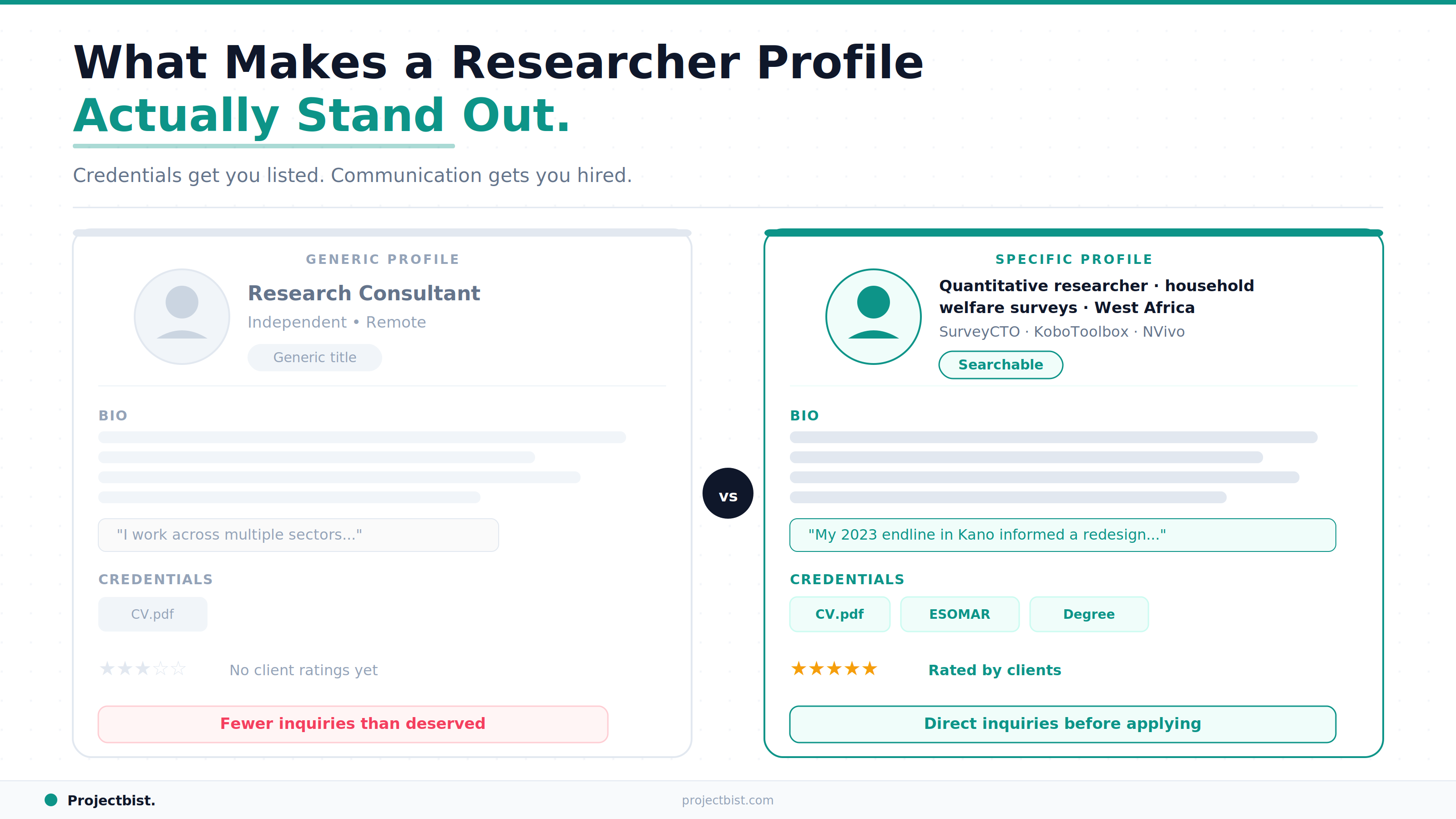
What Makes a ProjectBist Researcher Profile Actually Stand Out: The Complete Optimization Guide